



ICPC Searches El-Rufai’s Abuja Residence as Probe Deepens.
By Bala Salihu Dawakin Kudu
Democracy Newsline, February 20, 2026.
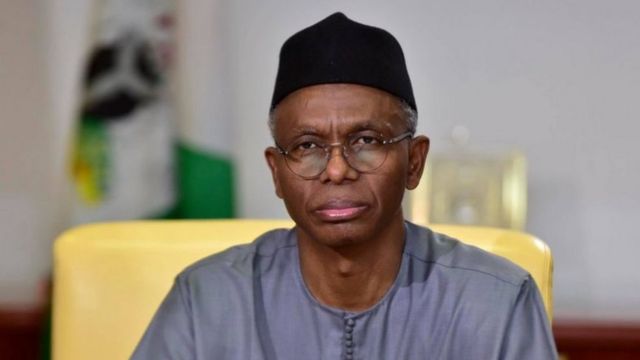
Officials of the Independent Corrupt Practices and Other Related Offences Commission (ICPC) on Thursday conducted a comprehensive search of the Abuja residence of former Kaduna State governor, Nasir El-Rufai, in a dramatic turn in the widening investigation surrounding his tenure in public office.
The operation, which unfolded in the quiet afternoon hours, came barely 24 hours after the Commission formally confirmed that the former governor was in its custody over what it described as an “ongoing investigation.”
- Advertisement -
Security operatives were seen entering the property and systematically inspecting various sections of the residence, including offices and private quarters, according to sources familiar with the development.
In a statement issued on Wednesday evening, ICPC spokesperson John Odey confirmed that the former governor was being held by the Commission.
“Malam Nasiru El-Rufai, former Governor of Kaduna State, is in our custody as of the close of work today, Wednesday, the 18th day of February, 2026. He is in the custody of the Commission in connection with investigations,” Odey stated.
The Commission has yet to publicly disclose the precise nature of the allegations under examination, fueling widespread speculation in political and legal circles.
El-Rufai’s legal team swiftly condemned Thursday’s search. His counsel, Ubong Akpan, described the operation as “unlawful and a clear violation of legal procedures and fundamental rights,” insisting that due process must be strictly adhered to in any democratic society.
“The Constitution guarantees the protection of citizens’ rights, regardless of status,” Akpan said, hinting at possible legal action to challenge the search and detention.
The former governor’s media adviser, Muyiwa Adekeye, disclosed that the search commenced almost immediately after officials arrived at the property and lasted several hours.
The current development marks the latest chapter in a series of high-profile encounters between El-Rufai and Nigeria’s security and anti-corruption agencies.
Only days before his reported detention, the former governor visited the headquarters of the Economic and Financial Crimes Commission (EFCC) in Abuja in response to allegations linked to his administration from 2015 to 2023. Though details remain sparse, the visit underscored mounting scrutiny over his time in office.
Last week, El-Rufai, now a chieftain of the African Democratic Congress (ADC), disclosed that he had received an invitation from the ICPC following what he described as a failed attempt to arrest him.
Reports also indicated that operatives sought to detain him shortly after his return from Cairo, Egypt. In a controversial claim, El-Rufai alleged that the phone of the National Security Adviser, Nuhu Ribadu, had been tapped, enabling him to intercept instructions relating to his arrest.
The Department of State Services (DSS) subsequently filed a three-count charge against him, accusing him of unlawfully intercepting a private communication in violation of the Cybercrimes (Prohibition, Prevention, etc.) (Amendment) Act, 2024. Prosecutors argue that such actions undermine national security and contravene established digital privacy laws.
El-Rufai, who governed Kaduna State for eight years, remains a prominent and sometimes polarizing figure in Nigeria’s political landscape. Known for his reform-driven but often contentious policies, he has maintained a significant voice in national discourse even after leaving office.
Political analysts say the unfolding events could carry far-reaching implications, not only for the former governor’s career but also for Nigeria’s anti-corruption framework. The ICPC and EFCC have faced both praise and criticism over the years, with supporters lauding their enforcement efforts and critics questioning issues of selectivity and due process.
Civil society organizations have called for transparency in the ongoing investigation, urging the Commission to provide clarity while safeguarding constitutional rights.
As of Thursday evening, El-Rufai remained in custody while the search and broader investigations continued. Neither the ICPC nor his legal representatives have indicated how long the former governor may be held or when formal charges, if any, will be filed.
For now, the nation watches closely as the case unfolds — a legal and political drama that could test the strength of Nigeria’s institutions and the resilience of its democratic norms.
(DEMOCRACY NEWSLINE NEWSPAPER, FEBRUARY 20TH 2026)