





Tinubu Appoints Emir Bayero to Head National Ramadan Feeding Committee.
By Bala Salihu Dawakin Kudu
Democracy Newsline | February 20, 2026.
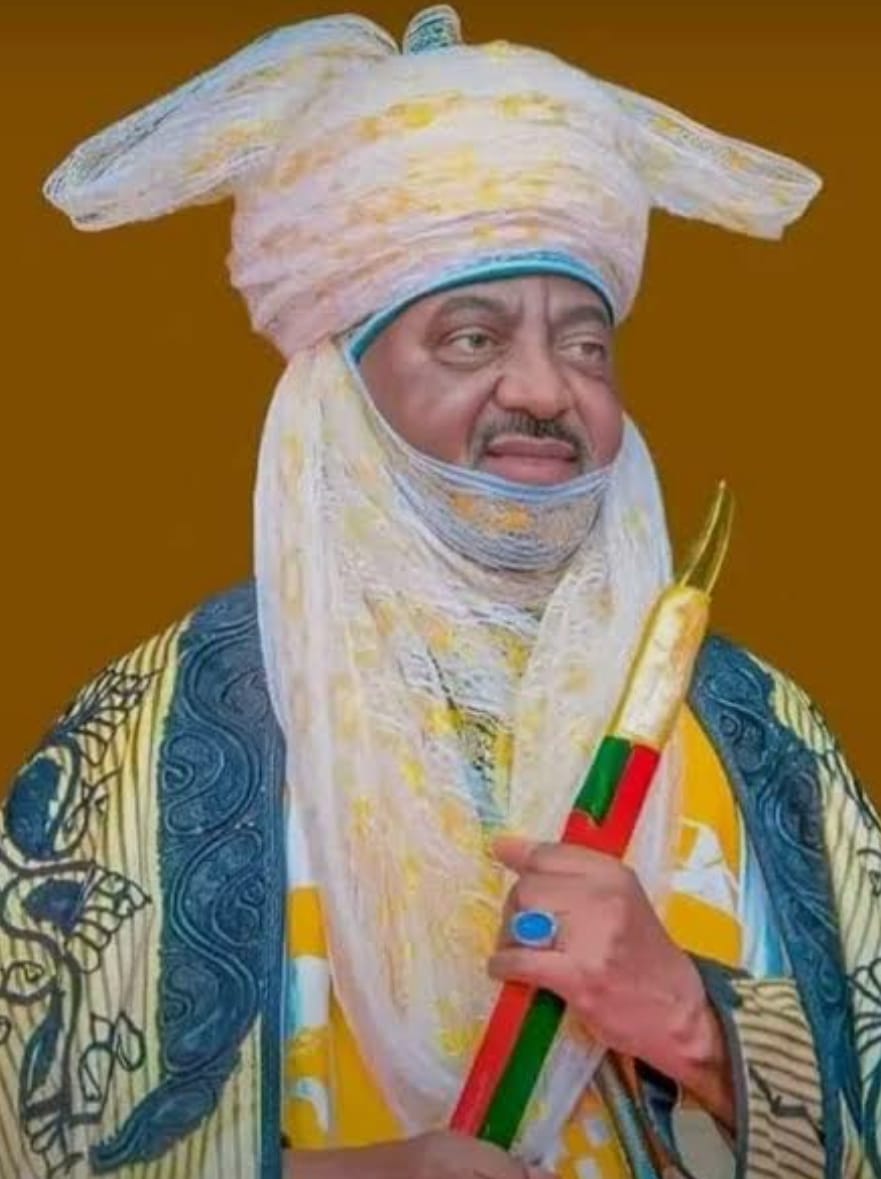
In a move aimed at strengthening social welfare interventions during the holy month of Ramadan, President Bola Ahmed Tinubu has appointed the 15th Fulani Emir of Kano, Aminu Ado Bayero, as Chairman of the National Ramadan Feeding Committee.
The appointment was disclosed on Thursday in a statement issued by the Emir’s spokesperson, Abubakar Balarabe Kofar Naisa, following a high-level federal government visit to the monarch at his palace in Gidan Nassarawa, Kano.
- Advertisement -

The delegation that conveyed the President’s decision included Prof. Muhammad Kabir, National Imam of the Abuja National Mosque; Permanent Secretary Engr. Muhammad Adamu; Deputy Director of Logistics Alhaji Yahaya Abdulhadi—both from the Office of the Secretary to the Government of the Federation (SGF); Malam Muktar Sarki; and Alhaji Alhassan Ibrahim.
According to the statement, the Emir was selected strictly on merit and in recognition of his leadership qualities, administrative experience, and longstanding commitment to humanitarian causes.
“The committee is not political,” the delegation emphasized. “It is a Federal Government initiative designed solely to serve the public during the holy month of Ramadan.”
Traditionally, federal Ramadan activities largely centered around hosting selected leaders and dignitaries for Iftar (breaking of fast) with the President. However, President Tinubu has directed a significant expansion of the initiative to ensure that vulnerable Nigerians directly benefit from essential food supplies.
Under the new framework, the committee will oversee the distribution of staple food items—including rice, millet, and cooking oil—across Nigeria’s six geopolitical zones. The aim is to ease the burden on low-income families who often face increased financial pressure during Ramadan.
The National Ramadan Feeding Committee is a federal government-led body working in collaboration with the management of the National Mosque, Abuja, and members of the National Assembly, including Senator AbdulRahman Kawu Sumaila and Hon. AbdulSamad Sambo Dasuki. The structure also incorporates three Permanent Secretaries and four directors to ensure administrative efficiency and accountability.
In addition, Yahaya Abubakar, the Etsu Nupe and Board Chairman of the National Mosque, has directed all National Imams and key directors—covering administration, finance, and logistics—to lend full institutional support to the committee. The initiative is coordinated under the supervision of the Office of the Secretary to the Government of the Federation.
Observers note that the choice of Emir Bayero reflects a broader strategy of leveraging traditional institutions to enhance national unity and grassroots engagement. Since ascending the throne, the Emir has championed educational development, youth empowerment, and interfaith harmony—qualities seen as vital for managing a nationwide humanitarian programme.
Kofar Naisa quoted the delegation as expressing confidence that the 15th Emir of Kano possesses the “wisdom, reach, and moral authority” required to guide the initiative effectively.
In his remarks, Emir Bayero commended the Federal Government for broadening the scope of the Ramadan feeding initiative, describing it as a timely intervention during a spiritually significant period.
He expressed gratitude to Almighty Allah for the opportunity to serve and prayed for divine guidance in discharging the responsibility entrusted to him.
“This initiative, if sustained, will not only provide immediate relief but also strengthen the bond between leadership and the people,” the Emir stated.
He pledged that the committee would work diligently and transparently to ensure equitable distribution of food items, while also offering strategic advice to enhance the programme’s impact.
With rising food prices and economic pressures affecting many households, the expansion of the Ramadan feeding programme is widely viewed as a proactive step toward cushioning vulnerable populations during the fasting period. Analysts suggest that the success of the initiative will depend on effective coordination, transparency, and grassroots collaboration.
As Ramadan approaches, expectations are high that the National Ramadan Feeding Committee—under the leadership of Emir Bayero—will deliver on its mandate and set a new standard for faith-driven humanitarian outreach in Nigeria.
For many citizens, the programme represents more than food distribution; it symbolizes solidarity, compassion, and the enduring partnership between government and traditional institutions in addressing national challenges.
(DEMOCRACY NEWSLINE NEWSPAPER, FEBRUARY 20TH 2026)