





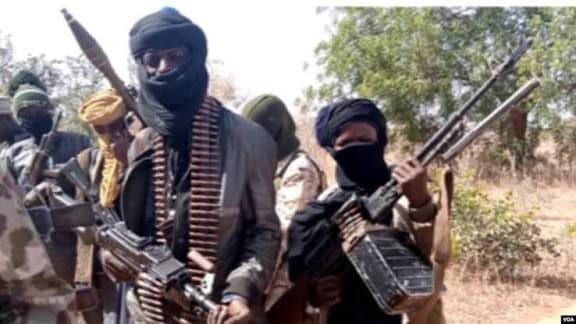

Terrorists Kill 40 Muslim Worshippers in Latest Kebbi Attack.
By Bala Salihu Dawakin Kudu
Democracy Newsline – February 20, 2026.
Grief and fear have once again descended on rural communities in Kebbi State after suspected Lakurawa terrorists killed at least 40 Muslim worshippers in coordinated attacks across villages in Arewa Local Government Area.
The deadly assaults, which occurred on Wednesday, targeted Bui and several neighbouring settlements near Nigeria’s border corridors. Survivors described scenes of horror as heavily armed gunmen stormed their communities in broad daylight, firing indiscriminately and setting off panic among residents who were observing the fasting period.
- Advertisement -


Security sources confirmed that 16 people were killed in Mamunu, five in Awashaka, three in Masama, and two each in five other villages. Many of the victims were reportedly attacked near mosques or within their homes, underscoring the vulnerability of remote agrarian communities that lack sufficient security presence.
Residents said the attackers operated with chilling coordination, splitting into groups and moving swiftly between villages. Witnesses reported that the assailants appeared familiar with the terrain, suggesting prior reconnaissance. The gunmen reportedly retreated toward forested border routes after the attacks.
Security analysts have linked the Lakurawa group to cross-border criminal networks operating between Nigeria and Niger, with some elements believed to have spillover connections to armed groups active in Sokoto State. The porous borders and vast forest belts in the region have long posed security challenges, enabling armed groups to evade capture and regroup after raids.
In recent months, intelligence reports have indicated increased pressure on bandit enclaves in neighboring states, prompting displacement of fighters into less fortified rural territories. Observers say such pressure may explain the shift of attacks into parts of Kebbi previously considered relatively stable.
Security forces, including the Nigerian Armed Forces, have since been deployed to the affected communities. According to military sources, tracking operations are ongoing, with aerial and ground patrols intensified to block escape routes and dismantle suspected hideouts.
Confirming the incident, the Kebbi State Police Public Relations Officer, SP Bashir Usman, stated that investigations were underway and assured residents that reinforcements had been mobilized.
Reacting on behalf of the state government, the Special Adviser to the Governor on Communication and Strategy, Alhaji Abdullahi Idris Zuru, described the killings as “an unprovoked attack by heartless terrorists” who targeted innocent fasting Muslims.
Zuru emphasized that the administration under Governor Nasir Idris was committed to deploying all available resources to restore lasting peace.
“The latest attack by these misguided criminal elements is just the last kick of a dying horse,” Zuru said. “The Kebbi State Government, in collaboration with the Nigerian military, is closing in on the terrorists, who are mostly spillovers and have no permanent base in Kebbi.”
He added that the state government was mourning with the bereaved families and had begun arrangements to provide immediate relief and medical assistance to survivors.
Communities in Mourning
In Bui and surrounding villages, mass burials were conducted amid tears and prayers. Community leaders called for improved intelligence gathering, better communication infrastructure, and the establishment of forward operating security posts in vulnerable settlements.
Local farmers expressed fear about returning to their fields, warning that continued insecurity could disrupt agricultural production in an area that contributes significantly to local food supply chains.
Humanitarian observers note that repeated rural attacks in northwestern Nigeria have compounded displacement, strained local economies, and deepened trauma among residents. Experts argue that beyond kinetic military action, long-term solutions must include border surveillance reforms, rural policing strategies, and economic stabilization initiatives to reduce recruitment opportunities for armed groups.
As Kebbi State grapples with yet another tragedy, the resilience of its people is being tested. For now, families mourn their loved ones, prayers fill the air, and security forces comb the forests in pursuit of those responsible—while a nation watches and hopes that lasting peace will finally take root in the troubled borderlands.
(DEMOCRACY NEWSLINE NEWSPAPER, FEBRUARY 20TH 2026)