



IRAN’S SUPREME LEADER AYATOLLAH ALI KHAMENEI IS DEAD — STATE MEDIA
CONFIRMATION
By Bala Salihu Dawakin Kudu – Democracy Newsline
March 1, 2026.
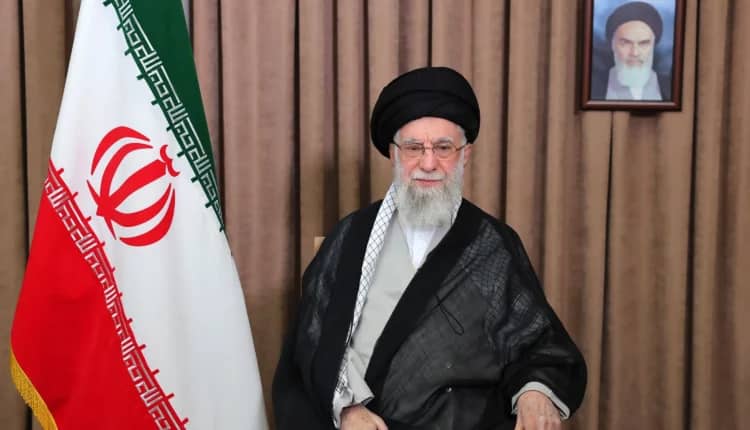
In what may be one of the most consequential events in modern Middle Eastern history, Iran’s Supreme Leader, Ayatollah Ali Khamenei, has died at age 86, Iranian state media confirmed on Sunday morning, marking a dramatic turning point in the eight-day conflict sparked by U.S. and Israeli attacks on the Islamic Republic.
The announcement came after intense and chaotic reporting over the weekend, during which U.S. officials and Israeli leaders asserted that the longtime clerical ruler had been killed in the early hours of Feb. 28 during a massive aerial campaign of strikes across Iran. Iranian state television acknowledged his death early Sunday, initiating a 40-day period of national mourning and displaying black banners of condolence on official broadcasts.
- Advertisement -

U.S. and Israeli Statements, U.S. President Donald Trump and Israeli Prime Minister Benjamin Netanyahu publicly declared that the joint military operation — described by Trump as targeting Iran’s military infrastructure and leadership network — resulted in Khamenei’s death. Trump wrote on social media that the strikes offered the Iranian people a “chance” to “take back” their government and framed Khamenei as a historic threat whose removal would open a new chapter for the region.
Earlier in the crisis, Iranian officials had offered contradictory statements, with some senior ministers indicating that the supreme leader was “alive as far as I know,” underscoring the fog of war amid rapid developments. Nonetheless, by Sunday morning Iran’s state television and leading semi-official agencies affirmed his death following the military offensive.
Witnesses in Tehran and other major cities reported celebrations erupting on the streets as news spread, while hard-line elements within the country’s power structure vowed to respond forcefully. The Islamic Revolutionary Guard Corps (IRGC), the elite military institution that answers directly to the supreme leader, issued statements condemning the attacks and promising retaliation against U.S. and Israeli forces.
Who Was Ali Khamenei?
Ayatollah Ali Khamenei had led Iran since 1989, succeeding Ayatollah Ruhollah Khomeini as Supreme Leader — a position that places him above all elected officials and gives him final authority over foreign policy, the military, security services, and the judiciary. Over his decades in power, Khamenei was a central architect of Iran’s regional strategy, backing militia networks across Iraq, Syria, Lebanon, and Yemen while resisting diplomatic overtures from Western powers to curb Iran’s nuclear ambitions.
His rule was also marked by severe repression of internal dissent, including crackdowns on nationwide protests over economic hardship and personal freedoms. Critics called his governance authoritarian and blamed his policies for stifling reform and weakening the lives of ordinary Iranians. Supporters, however, portrayed him as a stalwart defender of Iran’s sovereignty and ideological identity.
Under Iran’s constitution, the Assembly of Experts, a clerical body subject to vetting by government authorities, is responsible for choosing a successor to the Supreme Leader. With no clear heir apparent publicly announced, the country now faces a constitutional and political challenge that could reshape its domestic and foreign policy trajectory.
In the immediate aftermath, Iranian political authorities indicated that a transitional leadership council — including the president, head of the judiciary, and a jurist from the Guardian Council — would manage affairs until the succession process is completed. The IRGC’s prominence in both political and military spheres suggests that the elite force will play a decisive role in shaping Iran’s future direction.
Regional Repercussions
The reported death of Iran’s supreme leader deepens uncertainty across a volatile region already on edge. Global markets reacted to the news, and world leaders issued calls for restraint as Iran has reportedly retaliated with missile and drone strikes against U.S. bases and allied positions in the region. Analysts warn that the potential for escalation remains high.
The disappearance of the figure who had steered Iran for more than three decades leaves an open geopolitical question: Will Iran pivot toward a different posture, or will hard-lio elements strengthen their grip amid internal and external pressures? Only time — and Tehran’s next moves — will answer this profound question.
(DEMOCRACY NEWSLINE NEWSPAPER, MARCH 1ST 2026)