


Kogi 2027 Budget: CSO Urges Ododo To Prioritise Water, Mass Transit, Housing.
By Abubakar Amuda
The Executive Director of Renaissance Care and Empowerment Foundation (RECEF), Amb. Idris Ozovehe Muraina, has urged the Kogi State Government to prioritise potable water, affordable mass transportation, housing and environmental sanitation in the 2027 budget.
Muraina also called for the alignment of the proposed budget with the Kogi State Development Plan (SDP) 2024–2056, stressing the need for evidence-based planning, effective project implementation and measurable development outcomes.
- Advertisement -
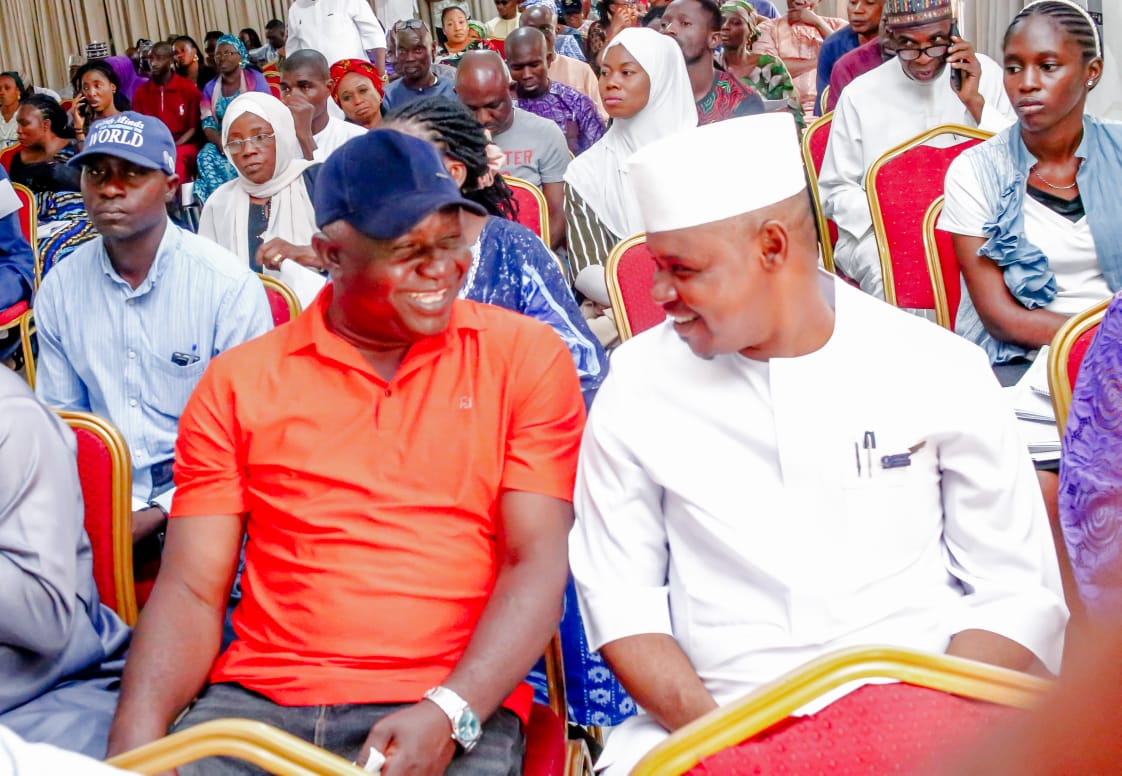
He made the call while presenting a paper titled, “From Budgeting As An Annual Ritual To Budgeting For Transformation: A Civic Call for an Intentional, Evidence-Based and Development-Driven Kogi State 2027 Budget,” at a preparatory town hall meeting on the 2027 budget formulation in Lokoja.
The civil society advocate said the annual budget consultation should go beyond statutory requirements and become a platform for translating citizens’ needs into government policies and spending priorities.
According to him, the value of the engagement will be measured by the extent to which credible proposals submitted by citizens and civil society organisations are reflected in the budget eventually presented, passed and implemented.
“We are not here simply to ask for a bigger budget. We are here to ask for a better-connected budget, a more strategic budget, an evidence-based budget, a development-driven budget and, ultimately, a budget that produces measurable improvement in the lives of the people of Kogi State,” he said.
Muraina noted that although the state had a long-term development framework, the challenge was to translate its aspirations into sectoral priorities, annual budgetary allocations, measurable targets and clear implementation responsibilities.
He called on the government to develop practical, costed and time-bound sector implementation plans, supported by appropriate implementation councils and linked to medium-term sector strategies and annual budgets.
He said every major capital project proposed in the 2027 budget should be linked to specific development objectives, with clear timelines, identifiable beneficiaries, measurable outcomes and institutions responsible for delivery.
The RECEF executive director warned that without such alignment, even a large budget could result in fragmented projects, duplication of interventions and limited long-term impact.
Water, Transportation, Housing
On water supply, Muraina called for a comprehensive audit of existing public water infrastructure, the rehabilitation of viable treatment plants and transmission systems, the repair of damaged distribution networks and the extension of water reticulation to underserved communities.
He said the state should move beyond occasional interventions towards a properly funded and phased programme to restore public water supply and reduce households’ dependence on expensive private water vendors.
On transportation, he urged the government to consider a sustainable mass transit system to ease the financial burden on workers, students, traders and low-income households.
He stressed that such a programme should go beyond purchasing vehicles to include route planning, professional management, transparent operations, maintenance arrangements and a sustainable expansion plan covering Lokoja and other major towns across the state.
The civil society advocate also called for a coordinated urban management strategy to improve waste disposal, drainage systems, environmental sanitation, markets, motor parks and public spaces in Lokoja.
He said the state capital’s physical condition should reflect the government’s development ambitions, adding that adequate funding, clear institutional responsibilities and measurable sanitation standards were necessary to achieve a cleaner and more liveable city.
On housing, Muraina said rising rents and the cost of decent accommodation had become a significant burden on households.
He urged the government to initiate a credible affordable housing programme targeting different income groups through improved access to land, private-sector partnerships, mortgage arrangements and rent-to-own schemes.
According to him, such an initiative could benefit civil servants, young families, artisans and other residents while stimulating employment and economic activities.
Demands Better Development Data
Muraina further stressed the need for a harmonised development data system and stronger coordination of Official Development Assistance (ODA) interventions in the state.
He observed that donor-funded programmes and development interventions had covered sectors such as education, agriculture, climate resilience, rural access, social protection, women’s empowerment and human capital development.
However, he warned that fragmented information across ministries, departments and agencies (MDAs) and implementing partners could lead to duplication, weak coordination and poor targeting of public resources.
He urged the government to identify existing interventions, assess their outcomes, determine underserved communities and establish financing gaps before committing resources to new programmes.
“Evidence should precede expenditure,” he said, advocating a coordinated approach to development planning and resource allocation.
As part of his recommendations for the 2027 budget, Muraina called for adequate funding to complete sector implementation plans and activate relevant implementation councils, with participation from government, civil society organisations, professionals, academia and the private sector.
He also urged the government to make the state development plan the organising framework for the 2027 budget, ensuring that major programmes were linked to its priorities and measurable outcomes.
Other recommendations included prioritising the completion, functionality and maintenance of strategic projects over the indiscriminate introduction of new projects, strengthening development data and ODA coordination, and making water supply, mass transportation, urban sanitation and affordable housing prominent budget priorities.
He further called for transparent budget performance reporting to enable citizens to track appropriations, fund releases, project implementation and development outcomes.
Calls For Sustained Government-CSO Engagement
The RECEF director said engagement between the government and civil society organisations should continue beyond the annual budget town hall meeting to allow credible proposals to be developed, costed and integrated into government programmes.
He acknowledged the contributions of civil society organisations, particularly those working under the Kogi NGOs Network (KONGONET), to policy advocacy, technical support, community engagement and accountability.
However, he stressed that meaningful participation required more than consultation, noting that citizens should be able to identify a clear connection between their submissions and the priorities eventually adopted by the government.
Muraina also called for institutional safeguards to ensure continuity in the implementation of the Kogi State Development Plan 2024–2056 beyond individual administrations.
He advocated consideration of an appropriate legal framework for the plan, arguing that sustainable development should be anchored on strong institutions, reliable data, measurable targets and enduring policies rather than the preferences of successive office holders.
He urged Governor Ahmed Usman Ododo, the Ministry of Finance, Budget and Economic Planning, relevant MDAs and the Kogi State House of Assembly to ensure that the 2027 budget shifted the state’s development approach from projects to outcomes, fragmented interventions to coordinated implementation, and annual promises to measurable progress.
“The State Development Plan has given Kogi State a destination. The 2027 budget preparation must help provide the road, the resources and the discipline to get there,” he said.
DemocracyNewslineNewspaper October 11th, 2026