


Kwankwaso’s Camp Faces Fresh Crisis in Kano as Political Realignments Deepen Uncertainty Ahead of 2027.
By Bala Salihu Dawakin Kudu Democracy Newsline February 18, 2026.
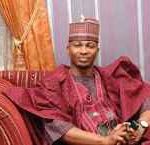
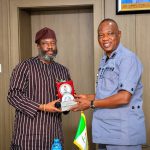
The political atmosphere in Kano State has once again become charged with tension and uncertainty following the public appearance of Hon. Ahmad Garba Bichi alongside prominent figures of the All Progressives Congress (APC).
The development has dealt a psychological and structural blow to the faction loyal to Senator Rabiu Musa Kwankwaso within the New Nigeria Peoples Party (NNPP).
For a movement long anchored on loyalty and the ideological identity of the Kwankwasiyya structure, Bichi’s appearance with APC power brokers is more than symbolic—it signals a potential unraveling of political alliances that once appeared solid.
- Advertisement -
Sources within the NNPP described the development as a “big blow,” noting that Hon. Bichi was widely regarded as a stabilizing pillar capable of holding the faction together amid rising tensions. His alignment with the governor’s camp has fueled speculation that additional defections may follow.
The crisis intensified after the dramatic defection of Governor Abba Kabir Yusuf to the APC in January 2026. The governor cited persistent internal disputes and legal uncertainties within the NNPP as justification for his move. However, his departure triggered a political earthquake: 21 members of the Kano State House of Assembly, eight members of the House of Representatives, and all 44 local government chairmen followed him into the APC.
This mass exodus significantly weakened Kwankwaso’s hold on the state’s political machinery, leaving only a handful of loyalists, including Deputy Governor Aminu Abdussalam Gwarzo, in the NNPP fold.
Kwankwaso himself reportedly reacted with fury, describing the governor’s action as a betrayal and even declaring January 23rd as “World Betrayal Day.” Yet beyond rhetoric, the real challenge lies in rebuilding a fractured political base.
While the APC appears strengthened on the surface, the influx of former NNPP members has generated fresh internal contradictions, including
Power-Sharing Tensions
Following the governor’s defection, APC National Chairman Nentawe Yilwatda announced a 60–40 power-sharing formula between Governor Yusuf’s Kwankwasiyya bloc and the pre-existing APC structure. Though designed to promote unity, this arrangement has instead created resentment among long-standing APC members who fear marginalization.
Old APC loyalists argue that they labored for years to build the party in Kano, only to see strategic positions handed over to recent defectors. Such grievances, if unresolved, could translate into silent sabotage during elections.
Reports indicate that some APC stakeholders are pressuring Deputy Governor Aminu Abdussalam Gwarzo to resign amid fears of divided loyalty. This development exposes deeper cracks within the ruling party. Political observers warn that forcing a resignation could backfire, portraying the APC as intolerant and unstable.
Investigations reveal serious political frictions in local governments such as Dawakin Tofa, Tofa, Rimin Gado, and Kano Municipal. Disagreements over appointments, influence, and recognition of political structures are fueling tensions between old and new APC blocs.
If Governor Yusuf fails to reshuffle his cabinet—including commissioners, managing directors, executive secretaries, local government councils, and special advisers—to reflect balanced inclusion, the administration risks internal paralysis.
Another layer of crisis involves reported tensions between Distinguished Senator Abdulrahman Kawu Sumaila and Rt. Hon. Alhassan Ado Doguwa, who represents Doguwa/Tudun Wada Federal Constituency.
Clashes between influential lawmakers over dominance, constituency control, and 2027 ticket permutations could fragment the APC’s support base. Kano politics has historically revolved around strong personalities, and unresolved rivalries often translate into electoral setbacks.
There are growing whispers that the APC may consider replacing certain members of the State House of Assembly, House of Representatives, or even Senators ahead of the 2027 general elections. Such a move, analysts warn, would be politically risky for several reasons include that
many lawmakers command loyal local structures, Replacing them could fracture ward and local government networks critical during elections.
Disgruntled aspirants and their supporters may either defect or work against the party from within.
Nigeria’s political history shows that primary election disputes often lead to prolonged court cases, weakening party cohesion.
The newly integrated Kwankwasiyya members may feel betrayed if denied tickets, leading to fresh defections or quiet rebellion. Kano remains one of Nigeria’s most politically strategic states due to its voting strength. Any internal implosion within the APC could open opportunities for rival parties to regain ground.
Kano’s political landscape is undergoing one of its most dramatic transformations in decades. While the Kwankwaso-led NNPP faction faces existential uncertainty, the APC must carefully manage its internal contradictions to avoid self-destruction.
Political history in Kano shows that dominance today does not guarantee victory tomorrow. If the APC fails to harmonize its old guard with new entrants, resolve leadership rivalries, and manage candidate replacements prudently, the party risks suffering major setbacks in the 2027 general elections.
In the end, Kano politics remains a chessboard of shifting loyalties, strategic alliances, and high-stakes calculations. Both the Kwankwaso camp and the APC must navigate this fragile terrain carefully—or risk paying a heavy price at the ballot box.
(DEMOCRACY NEWSLINE NEWSPAPER, FEBRUARY 18TH 2026)