





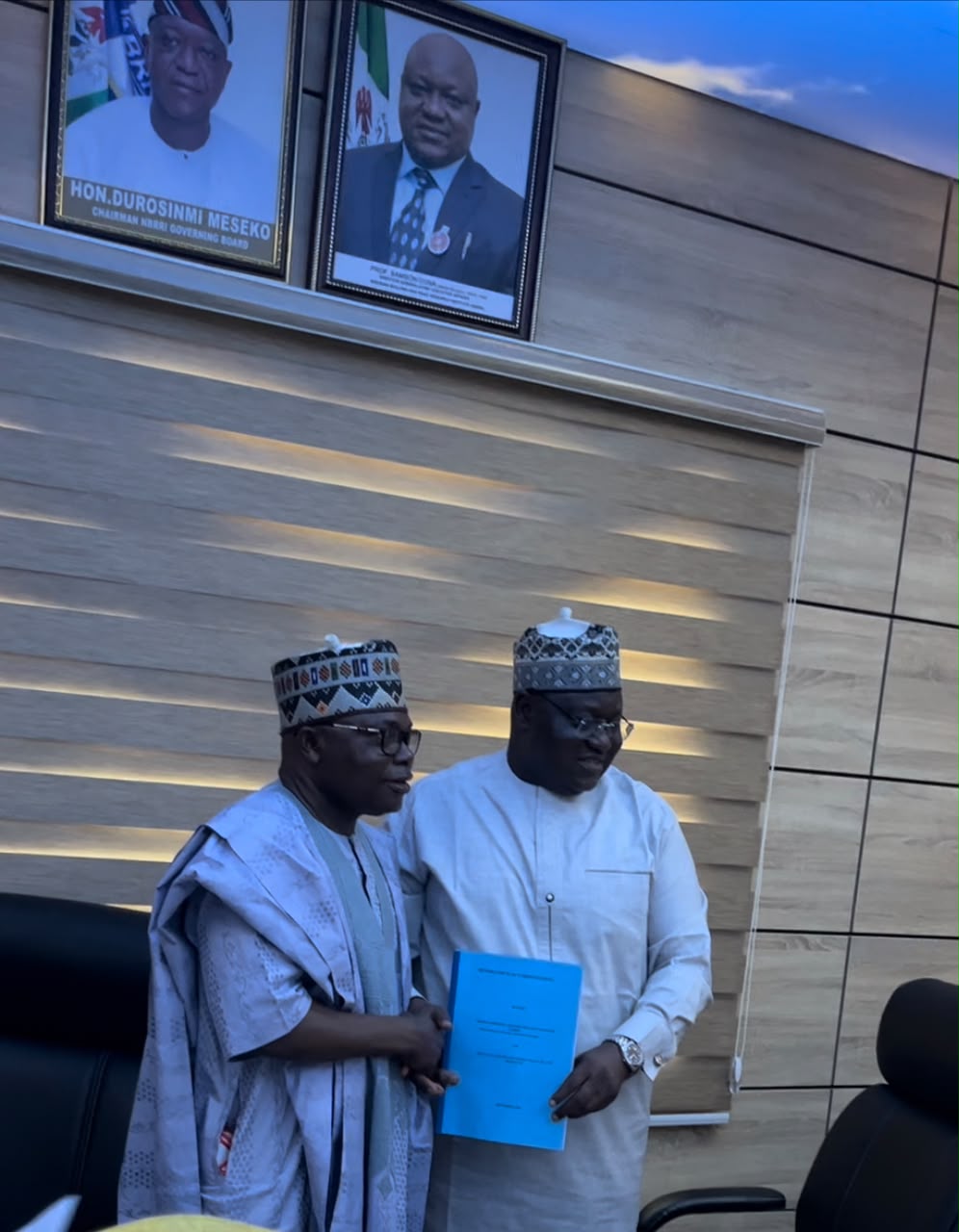

NBRRI, Hawaz 774 Estates Partner on Affordable Housing in Kabba, Kogi State,
MoU targets deployment of indigenous building technologies, reduction in construction costs
By Our Correspondent
ABUJA — The Nigerian Building and Road Research Institute (NBRRI) has entered into a strategic partnership with Hawaz 774 Estates and Diasporan Villas Nigeria Limited for the deployment of indigenous building technologies in the construction of affordable housing estates across the country.
- Advertisement -


The partnership was formalised through the signing of a Memorandum of Understanding (MoU), on Thursday, 24 September, 2026 at the Headquarters of NBRRI located at Jabi, Abuja. The MoU provides a framework for collaboration between the research institution and the private property development company.

The initiative is expected to facilitate the application of appropriate NBRRI-developed technologies, building materials and construction methods in the development of housing projects designed to address affordability, quality and sustainability concerns in Nigeria’s housing sector.
The Director General/CEO of NBRRI, Prof {Engr} Samson Duna, at the occasion welcomed the collaboration between the Institute and the company, as it signifies a shared commitment to translating research, innovation, and indigenous technological development into practical solutions to one of Nigeria’s most pressing challenges: the provision of affordable, safe, durable, and sustainable housing for Nigeria’s teeming population. He expressed the confidence that Hawaz would be able to deliver on the terms of the MoU going by the company’s seriousness and doggedness in the pursuit of the MoU. He promised to give the necessary administrative support for the success of the MoU, as provision of housing to Nigerians is one of the cardinal pillars of the Renewed Hope Agenda of President Bola Ahmed Tinubu, GCFR.
Speaking at the signing ceremony, the Chairman and Chief Executive Officer of Hawaz 774 Estates and Diasporan Villas Nigeria Limited, Chief Tai Hassan Ejibunu, said the agreement represented a major step towards providing affordable and durable housing for Nigerians using the technologies and expertise of NBBRI, which are capable of reducing construction costs and improving the efficiency of the building process.
Ejibunu said “This partnership is not simply about signing an agreement. It is about converting research, innovation and indigenous technology into practical housing solutions that Nigerians can afford, while maintaining acceptable standards of quality, safety and durability.”
According to him, the partnership would also encourage the use of locally available materials and expertise, thereby creating opportunities for Nigerian artisans, contractors, engineers, manufacturers and other professionals within the construction value chain.
Ejibunu confirmed at the signing ceremony that the use of NBRRI’s technologies to build affordable housing estate would soon start in Kabba, Kogi State and in Uganda, the East African country. In his words “With the signing of the MoU, we hope to commence the development of Hawaz Estates in collaboration with NBRRI at Kabba, the Headquarters of Kabba/Bunu Local Government Area of Kogi State, where we have acquired some hectares of land for the housing project.
Equally, we have commenced discussion on the transfer of the technology to Uganda, as there is great interest in adopting NBRRI’s technologies to address the housing deficit in the Pearl of Africa.’’
The collaboration is coming against the backdrop of persistent concerns over the high cost of housing construction in Nigeria, driven by rising prices of building materials, land costs, financing constraints, infrastructure deficits and other challenges confronting the real estate sector.
Industry stakeholders have increasingly advocated the adoption of locally developed technologies and alternative construction methods as part of efforts to make housing more accessible to low- and middle-income Nigerians.
The MoU with Hawaz 774 Estates provides NBRRI with an avenue to support the practical application and wider adoption of relevant technologies developed through its research activities.
The Institute has over the years undertaken research into building materials, alternative construction technologies and other infrastructure-related innovations aimed at addressing Nigeria’s developmental challenges.
Under the new partnership, the parties are expected to collaborate in areas including technology assessment and selection, prototype development, technical support, construction methodologies, quality assurance and capacity development.
The proposed housing projects will also seek to incorporate principles of affordability, durability and environmental sustainability, while taking into consideration the varying housing requirements and climatic conditions across different parts of Nigeria.
Ejibunu said the company’s objective was not limited to putting up houses but to develop functional and sustainable communities that could provide residents with decent living environments.
He noted that the deployment of innovative construction technologies could help reduce construction time and improve efficiency, while creating a pathway for research institutions to have greater impact on society through commercial and community-based applications of their innovations.
The partnership is also expected to deepen collaboration between the public research sector and private enterprise, particularly in converting research outputs into commercially viable products and services.
Stakeholders at the ceremony expressed optimism that the initiative could provide a model for stronger collaboration between Nigerian research institutions and private developers in tackling some of the country’s infrastructure and housing challenges.
For Hawaz 774 Estates and Diasporan Villas Nigeria Limited, the agreement represents part of its broader commitment to exploring innovative approaches to housing development and expanding access to affordable accommodation.
The company said its engagement with NBRRI would focus on the practical deployment of suitable technologies rather than research for its own sake, with emphasis on delivering housing projects that meet required technical and quality standards.
As implementation of the MoU progresses, attention is expected to shift from the signing ceremony to the identification of specific NBRRI technologies, pilot housing designs, project locations, financing arrangements and implementation timelines.
The success of the initiative, observers say, will ultimately depend on how effectively the partnership translates technological innovation into houses that are genuinely affordable, structurally sound and accessible to the intended beneficiaries.
The NBRRI-Hawaz partnership consequently places research, indigenous innovation and private-sector investment at the centre of a renewed effort to explore practical responses to Nigeria’s housing challenge.
DemocracyNewslineNewspaper September 25, 2026