




NIESV Seeks Stronger Govt Partnership to Unlock Kogi’s Wealth Through Asset Valuation
The Nigerian Institution of Estate Surveyors and Valuers (NIESV) has called for deeper collaboration with government *and property investors to* unlock Kogi State’s vast but underutilised wealth through professional asset valuation, describing it as a critical pathway to sustainable prosperity.
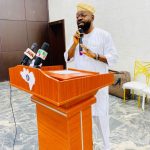
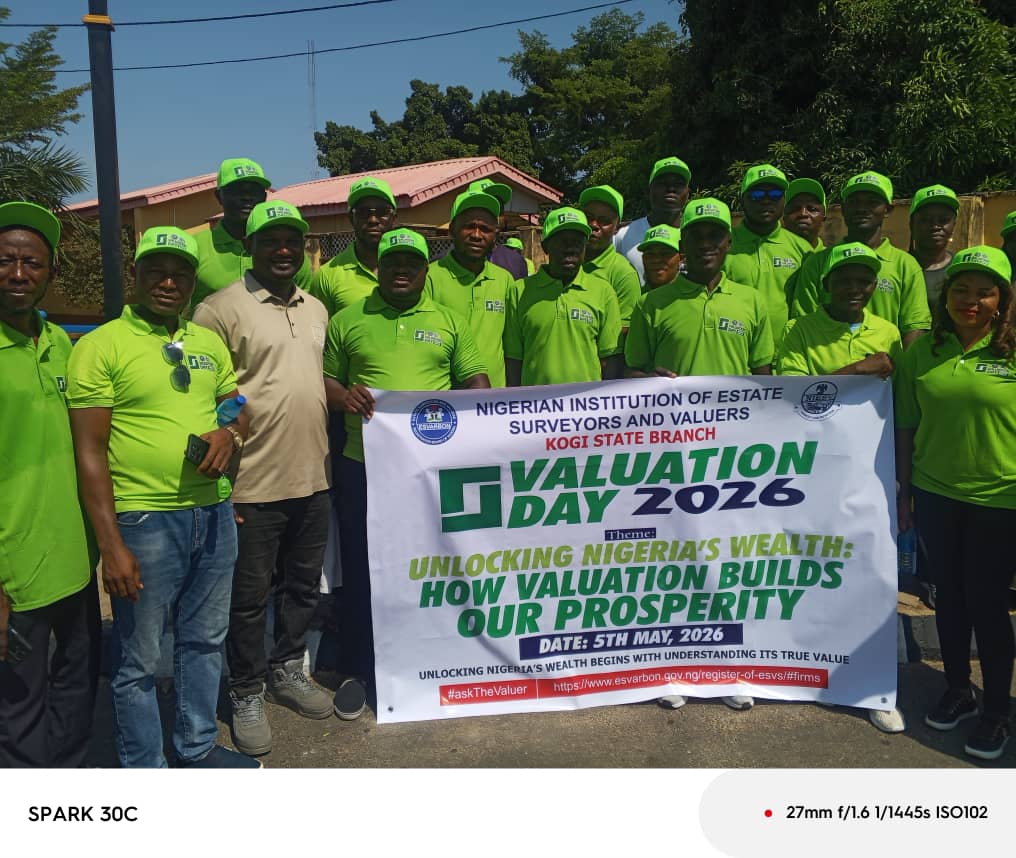
Speaking at the 2026 Valuation Day, themed “Unlocking Nigeria’s Wealth: How Valuation Builds Our Prosperity,” the Kogi State Chairman of NIESV, ESV John Eniwaiye, said the theme was both timely and instructive, stressing that Nigeria’s economic future extends far beyond oil.
“Nigeria is richly endowed with land, minerals, real estate, infrastructure and human capital,” he said. “Yet much of this wealth remains locked, under-utilised or poorly accounted for because we have not properly identified, measured and valued it.”
- Advertisement -


He added, “Prosperity begins with knowing what we have and using it wisely. Valuation is the key that unlocks that door. NIESV stands ready to partner with government and citizens of Kogi State to build lasting prosperity.”
Eniwaiye described valuation as the professional determination of the monetary worth of assets including land, buildings, businesses and intangible holdings arguing that it is foundational to wealth creation and economic planning.
“You cannot manage what you do not measure. You cannot tax, trade, insure or collateralise what you do not know the value of,” he said. “As estate surveyors and valuers, we are the nation’s wealth diagnosticians.”
Highlighting the economic potential of proper valuation, he noted that it could unlock “dead capital,” boost internally generated revenue, attract investment and support fair compensation processes.
“The World Bank estimates Nigeria has over $300 trillion in dead capital—assets that cannot generate economic activity because they are untitled, unvalued or unregistered,” he said. “With proper valuation and titling, these can be converted into bankable assets.”
On revenue generation, he added: “Accurate property valuation ensures fair ground rents, tenement rates and taxes. For Kogi State, this translates into more revenue for roads, schools and hospitals without overburdening citizens.”
Eniwaiye also emphasised the role of valuation in building investor confidence. “Investors need certainty. A professionally valued asset gives banks confidence to lend and investors confidence to commit capital. That is how we move from potential to prosperity,” he said.
He called for the creation of a comprehensive State Asset Register, implementation of Land Use Charge, and strict adherence to professional valuation in public land acquisitions.
“Kogi is strategically located as the Confluence State, with immense agricultural, mineral and tourism potential,” he said. “Imagine the wealth we can unlock if every hectare of land, every mining licence and every public asset is properly valued and captured in a digital register. That is how we fund development without excessive borrowing.”
The NIESV chairman also urged financial institutions to insist on valuation reports prepared by certified professionals before approving loans.
“Banks must rely on credible valuation reports. This protects both lenders and borrowers and strengthens the financial system,” he noted.
Addressing private citizens and businesses, he advised property owners to be more informed. “Know the value of what you own. Do not sell family land cheaply. Valuation is not just for the rich—every landowner, trader and farmer needs it,” he said.
Eniwaiye further raised concerns over the growing exploitation of tenants by landlords and agents, calling for urgent government regulation to protect residents.
“Arbitrary rent increases are forcing many families out of their homes and worsening economic hardship,” he said. “Every property should have a professionally determined rental value, but many landlords ignore this, leading to unchecked rent hikes.”
He attributed the trend partly to unqualified practitioners. “Quackery remains a major challenge. Many landlords rely on informal advice rather than engaging certified professionals. This must change,” he warned.
He cautioned that the consequences could be far-reaching. “When people are displaced due to excessive rent, it can fuel social vices, including crime. This is why urgent government intervention is necessary,” he said.
Eniwaiye also urged the Kogi State Government to invest in affordable housing to ease pressure on the property market.
“Government must step in with housing schemes for workers and residents. This will reduce pressure on existing housing stock and curb excesses in the system,” he said.
In his remarks, a former Kogi State Chairman of NIESV, ESV Ekundayo Ayodele, supported the call for stronger regulation and collective action.
“We must work together to check the excesses of individuals making life difficult for residents,” Ayodele said. “As professionals, we are committed to ensuring fairness, transparency and that no citizen is exploited.”
He reaffirmed the institution’s commitment to public enlightenment. “We will continue to sensitise the public on the importance of engaging qualified estate surveyors and valuers. This is key to restoring sanity in the sector,” he added.
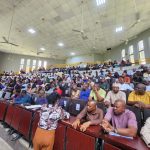
Activities marking the 2026 Valuation Day in Kogi included a road walk to raise public awareness and a free valuation clinic, where professionals visited selected offices across the metropolis on May 5, 2026.
(DEMOCRACY NEWSLINE NEWSPAPER, MAY 6TH 2026)