





Political Defections and the Danger of a One-Party State in Nigeria.
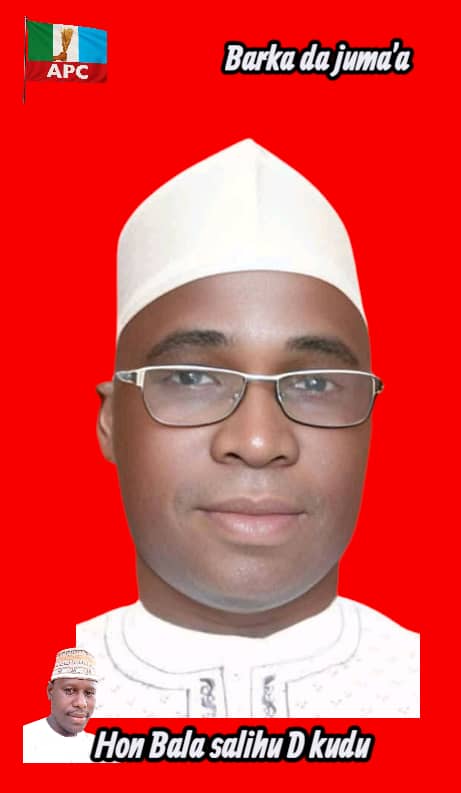
By Bala Salihu Dawakin Kudu
Northern Bureau Chief.
January 4, 2026.
At a time when politicians in Nigeria are increasingly defecting from their original political parties to the ruling party out of fear of losing their seats, political analysts have begun to warn about the growing risk of Nigeria drifting toward a de facto one-party state—an outcome that could seriously undermine the survival of democracy in the country.
According to experts in politics and democratic governance, a political system dominated by a single party, without a strong and credible opposition, is often a sign of political failure. It reflects a lack of fairness, limited political inclusion, and restricted competition, all of which directly weaken democratic sustainability.
- Advertisement -


Currently, Nigeria’s ruling party, the All Progressives Congress (APC), controls about 30 out of the 36 states in the federation. This dominance followed the recent defection of Plateau State Governor Caleb Mutfwang from the Peoples Democratic Party (PDP) to the APC, alongside growing speculation that Kano State Governor Abba Kabir Yusuf may also defect from the New Nigeria Peoples Party (NNPP) to the ruling party.
Following Mutfwang’s defection, the APC now controls 28 states, a figure that mirrors the peak dominance once enjoyed by the PDP after the 2003 general elections—before the party later experienced internal crises and electoral decline.
Meanwhile, Governor Dauda Lawal of Zamfara State (PDP) and Governor Alex Otti of Abia State (Labour Party) remain outside the APC but are reportedly being courted by the ruling party.
While ruling parties at all levels of government often celebrate defections as signs of strength, political analysts argue that such developments are deeply harmful to the country’s democratic health.
Why Politicians Defect?,
Experts link the frequent defections largely to a lack of political ideology among politicians. Whether in power or in opposition, many politicians switch parties not because of policy differences, but for personal survival and advantage.
Some of the major reasons for defections include:
Protection of political seats ahead of elections,
Access to government resources and funding,
Fear of political persecution or marginalization, and
Internal party conflicts and factional crises. As the ruling party grows stronger, it gains the ability to impose decisions regardless of public approval, thereby weakening democratic accountability.
Turning Nigeria into a one-party political system would pose serious dangers to democracy and national development. Multi-party democracy exists to provide choices, ensure checks and balances, and protect the interests of diverse citizens.
The consequences of a one-party system include,
Weakening of democracy, and Citizens lose meaningful choices during elections.
Corruption and abuse of power Without strong opposition, leaders act without fear of accountability.
One party can dominate all arms of government and Poor representation, Minority groups and regions lose their political voice,
Lack of competition and Governance quality declines when there is no political rivalry. Increased risk of unrest and instability
Slowed political and economic development
Political scholars worldwide agree that democracy cannot thrive without competition.
In a diverse country like Nigeria, a one-party system would almost certainly deepen injustice and erode public trust in government. You think in Nigeria Defection is a Betrayal of Voters?. The answer is both yes and no, depending on circumstances:;It is a betrayal when elected officials defect purely for personal gain, ignoring the will of the voters.
It may not be a betrayal if the move is forced by severe party crises or is genuinely aimed at protecting public interest. However, in most cases in Nigeria, citizens view defections as a betrayal of their votes, since voters often choose political parties, not just individuals.
Several countries provide cautionary examples of one-party dominance:
China – Operates under a single ruling party (Communist Party), with restricted freedom of expression, North Korea – An extreme one-party authoritarian system with no real electoral choice,
Zimbabwe (under Robert Mugabe) – Prolonged one-party dominance contributed to economic collapse, inflation, and political repression,
Tanzania (in earlier decades) – A one-party system reduced political competition and slowed democratic development, and Cameroon – Long-term dominance by one party has weakened institutions and fueled political tensions.
Several leaders who benefited from one-party or near one-party dominance later faced serious like
Robert Mugabe (Zimbabwe) – Eventually removed through military intervention after decades in power,
Hosni Mubarak (Egypt) – Overthrown after years of one-party dominance led to mass protests, Mobutu Sese Seko (Zaire/DR Congo) – His one-party rule ended in state collapse and exile, and
Muammar Gaddafi (Libya) – Ruled without party competition; his regime collapsed violently.
These cases show that suppressing opposition does not guarantee stability—it often delays, but worsens, political crises.
Nigeria needs strong political parties and a credible opposition for democracy to flourish. Frequent defections without principled justification weaken the political system, while the drift toward a one-party state risks plunging the country into the same political, economic, and social crises experienced by other nations.
For Nigeria’s democracy to survive and mature, political competition, accountability, and respect for voters’ choices must be preserved—not sacrificed for short-term political convenience.
Write by Bala Salihu Dawakin Kudu Democracy Newsline Newspaper can be reach via email; balasalihudawakinkudu@gmail.com 08060017934
(DEMOCRACY NEWSLINE NEWSPAPER, JANUARY 4TH 2026)