





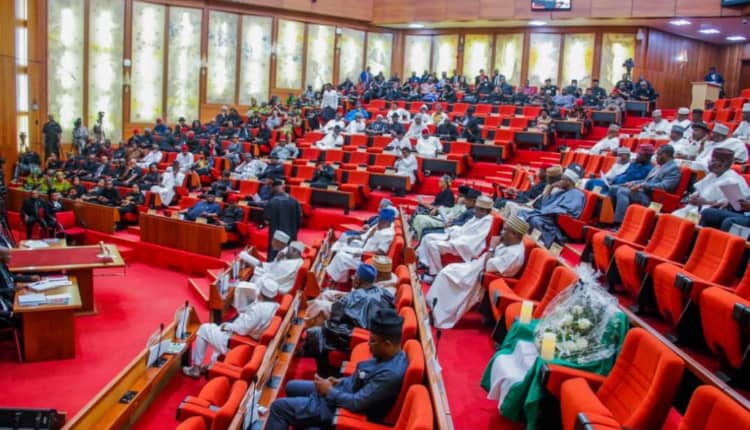

Senate Urges Tinubu to Sack CAC Registrar-General, Hussaini Magaji.
By Bala Salihu Dawakin Kudu
Democracy Newsline | February 26, 2026.
In a dramatic session that underscored growing tensions between the legislature and key government agencies, the Senate on Thursday called on President Bola Ahmed Tinubu to remove the Registrar-General of the Corporate Affairs Commission (CAC), Hussaini Ishaq Magaji, SAN, from office.
The resolution followed a heated motion moved by Senator Orji Uzor Kalu during an appearance by members of the President’s economic team before the Senate Committee on Finance. What began as a routine oversight engagement quickly escalated into a stern rebuke of the CAC leadership over what lawmakers described as persistent disregard for legislative invitations.
- Advertisement -

Proceedings opened on a tense note as committee members took stock of agency heads present to defend their 2026 budget proposals and respond to audit queries. The conspicuous absence of the CAC Registrar-General drew immediate criticism from senators, many of whom argued that the commission plays a pivotal role in Nigeria’s revenue framework and business regulatory environment.
Senator Kalu, visibly displeased, moved a motion calling for Magaji’s immediate removal, accusing him of repeatedly shunning the committee’s summons.
“Since I came to the Senate, he has always given excuses that he is in the Villa,” Kalu said, suggesting a pattern of non-compliance that he described as unacceptable and disrespectful to the National Assembly.
The Chairman of the Senate Committee on Finance, Senator Sani Musa, reinforced the concerns, citing unresolved discrepancies in the reconciliation of CAC revenues. According to him, the Registrar-General had failed on several occasions to appear before the committee to clarify key financial questions, thereby hindering effective legislative oversight.
Adding weight to the debate, former Edo State Governor and Senator Adams Oshiomhole proposed a more forceful response. He suggested that beyond calling for Magaji’s removal, the Senate should consider withholding approval of the CAC’s 2026 budget until the agency demonstrates full compliance with legislative processes.
The proposal drew strong backing from several lawmakers, who argued that oversight is not optional but a constitutional responsibility designed to promote transparency and accountability in public institutions.
The motion urging President Tinubu to remove the CAC Registrar-General was subsequently adopted by voice vote.
The CAC, established to regulate and manage the formation and administration of companies in Nigeria, is a critical institution in the country’s drive to improve its business climate. In recent years, the commission has spearheaded digital reforms aimed at simplifying company registration, reducing bureaucratic bottlenecks, and enhancing revenue generation.
However, tensions between the legislature and heads of government agencies are not new. The National Assembly has consistently emphasized its constitutional authority to conduct oversight, particularly regarding revenue-generating bodies whose operations directly impact the federal treasury.
Observers note that the Senate’s latest action reflects heightened scrutiny of agencies under the current economic reform agenda. With Nigeria grappling with fiscal pressures and ambitious revenue targets, lawmakers appear determined to ensure that institutions like the CAC operate transparently and in alignment with national priorities.
As of press time, neither Magaji nor the CAC had issued an official response to the Senate’s resolution. It also remains unclear how the Presidency will react to the call for his removal.
Political analysts suggest that President Tinubu faces a delicate balancing act—maintaining confidence in appointed officials while preserving cooperative relations with the legislature at a time when collaboration is crucial for implementing economic reforms.
For now, the Senate’s decision sends a clear message: accountability to elected representatives is non-negotiable. Whether the Presidency acts on the recommendation or seeks a conciliatory path forward may shape the dynamics between the executive and legislative arms in the months ahead.
(DEMOCRACY NEWSLINE NEWSPAPER, FEBRUARY 26TH 2026)