

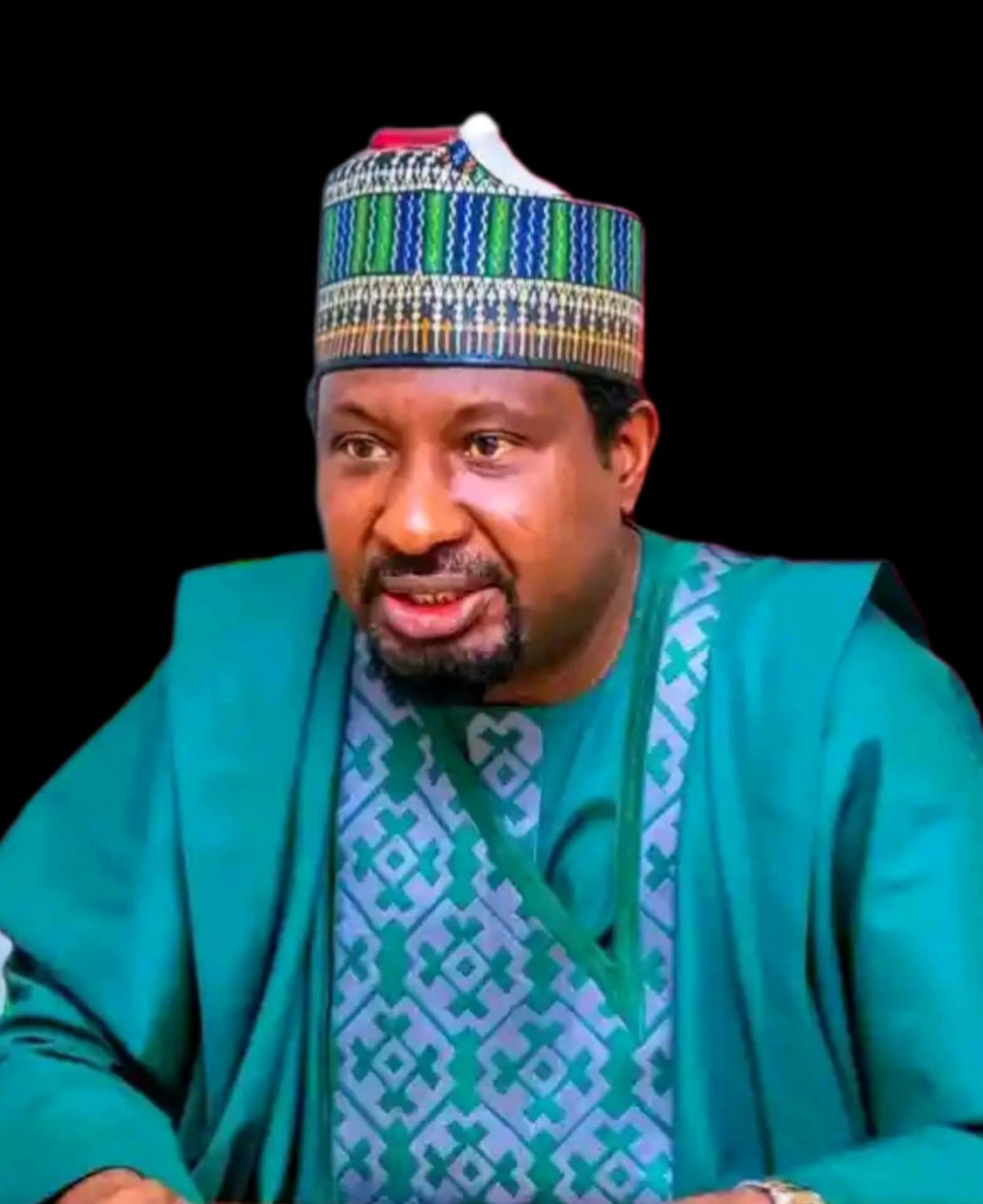

Senator Barau and the Spirit of Unity in Kano APC.
By Bala Salihu Dawakin Kudu
Democracy Newsline Newspaper.
February 26, 2026.
Democracy, in its truest sense, is not merely a game of numbers or a contest of popularity. It is a system built on balance, foresight, tolerance, and the ability of political actors to coexist peacefully within a structured and principled framework. At its best, democracy thrives when ambition is moderated by wisdom and competition gives way to collaboration for the common good.
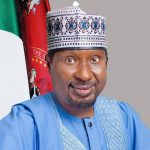
It is against this backdrop that recent political developments in Kano State deserve thoughtful reflection—particularly the role being played by the Deputy President of the Senate, Barau I. Jibrin, following the defection of Kano State Governor Abba Kabir Yusuf to the All Progressives Congress (APC).
Observers of Kano politics will agree that Senator Barau’s recent actions go far beyond routine party engagement.
- Advertisement -

His movements, consultations, and strategic interventions reflect a clear objective: to consolidate the APC in Kano, prepare the party for victory in the 2027 general elections, and reposition it as a platform anchored on stable policies and inclusive leadership.
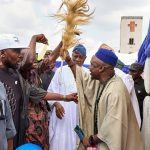
What many considered a defining moment was Senator Barau’s public declaration that he had withdrawn his own governorship ambition. He made this announcement openly during the formal reception ceremony welcoming Governor Yusuf into the APC. It was not a reluctant compromise, nor was it presented as the outcome of pressure.
Rather, it was a voluntary sacrifice—one framed as necessary for unity and collective progress.
More significantly, he declared his full and unwavering support for the incumbent governor and instructed his political base to do the same. In democratic politics, such gestures are rare. They require maturity, discipline, and a long-term vision that places party cohesion above personal aspiration. That singular decision laid a foundation for renewed trust within the APC’s Kano chapter.
At the same event, former Kano State Governor and National Chairman of the APC, Abdullahi Umar Ganduje, revealed that he had consulted with other aspirants eyeing the governorship ticket. According to him, they had all agreed to step aside in support of the incumbent governor.
Among those widely understood to have made that sacrifice were respected figures such as Nasiru Yusuf Gawuna and Murtala Sule Garo. Their decision reinforces an important truth: politics need not be a do-or-die affair. Leadership sometimes demands stepping back so that the larger structure can move forward.
In many ways, this collective realignment appears designed to grant Governor Yusuf the political stability necessary to govern effectively. It signals to the public—and to party members—that internal rivalry has given way to cooperation. It also explains the emergence of a unifying slogan: “Kano First.” The message is simple yet powerful. Above party factions, personal loyalties, or historical grievances stands a singular priority—the development and peace of Kano State.
Encouragingly, the governor himself has shown signs of reciprocating this spirit. Observers note his increasing alignment with party structures at ward and local government levels, as well as his respect for internal party processes. So far, there have been no significant allegations of undue interference in grassroots leadership arrangements, an approach that strengthens internal democracy and fosters trust.
On his part, Senator Barau has intensified efforts to reinforce party structures across Kano North Senatorial District and beyond. In a practical demonstration of support, he distributed vehicles to party executives within his constituency and extended similar assistance to leaders in other zones. Reports indicate that local government chairmen in the 13 local governments under Kano North also benefited from logistical support.
These gestures were not selective. They were extended to both longstanding APC members and newcomers who joined alongside Governor Yusuf from the New Nigeria Peoples Party (NNPP). For Senator Barau, party membership now supersedes political history. All are equal stakeholders in the APC’s future.
Perhaps what stands out most is the senator’s political maturity. He understands that within a democracy, supporting a lawful political direction is legitimate. Equally legitimate is constructive opposition conducted within the bounds of law and order. This balanced perspective has earned him credibility across political divides.
Notably, many who defected with Governor Yusuf from the NNPP have publicly acknowledged that Senator Barau’s support appears sincere. They believe his commitment to the governor’s success is genuine and rooted in a broader desire for APC stability in Kano.
And therein lies a crucial political calculation: the success of Governor Yusuf is inseparable from the success of the APC in Kano. Strengthening one ultimately strengthens the other.
As Kano moves toward another electoral cycle, the actions of its political leaders will continue to shape public confidence. If unity is sustained, and if the “Kano First” philosophy is translated into tangible governance outcomes, the state may well witness a new phase of political cooperation—one where ambition is harmonized with responsibility.
In the final analysis, Senator Barau’s recent choices illustrate a powerful democratic lesson: sometimes the greatest show of strength is the willingness to yield for the sake of unity. And in a political environment often characterized by fragmentation, such restraint may prove to be the most strategic move of all.
Anwar— Written from Kano, February 26, 2026
(DEMOCRACY NEWSLINE NEWSPAPER, FEBRUARY 26TH 2026)