





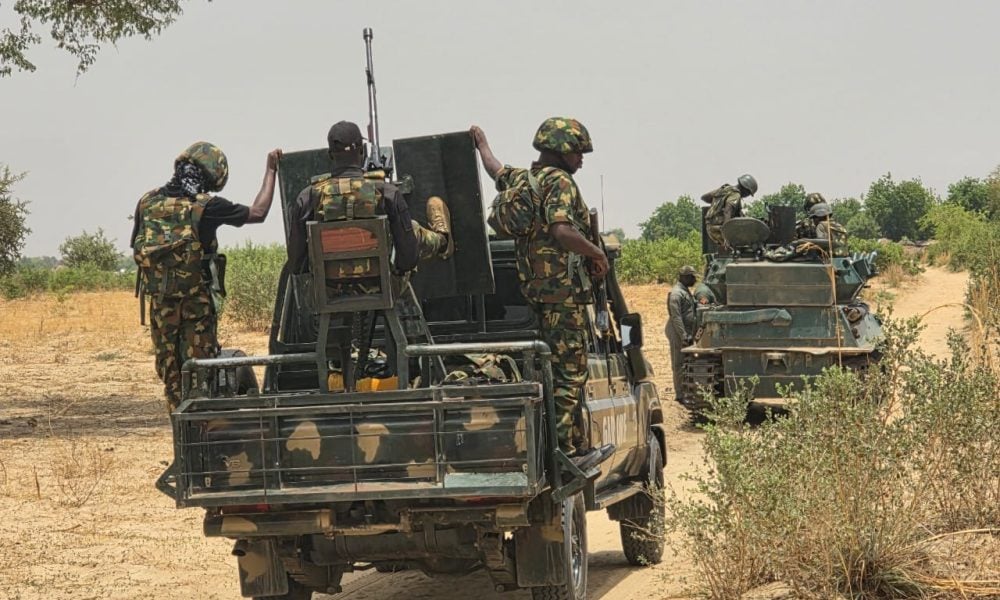

THE KIDNAP ECONOMY: HOW RANSOM, TERRORISM AND COMMUNITY COMPLICITY ARE FUELLING NIGERIA’S SECURITY CRISIS.
By Bala Salihu Dawakin Kudu
Northern Bureau Chief
September 17,2026.
Kidnapping, Boko Haram, ISWAP and Lakurawa: Why Nigeria Cannot Defeat Insecurity Without Confronting the Criminal Economy Behind It.
By Bala Salihu Dawakin Kudu
Northern Bureau Chief
September 17, 2026
- Advertisement -


Nigeria’s worsening security crisis demands a conversation that goes beyond the familiar question of what government is doing — or failing to do.
Government unquestionably has a constitutional and moral responsibility to protect lives and property. The military, police, intelligence agencies and other security institutions must be adequately equipped, properly coordinated and held accountable for protecting citizens.
But there is another uncomfortable reality that Nigerians must confront: violent crime survives not only because criminals possess weapons, but because some criminal networks are able to obtain information, money, shelter, recruits, transportation, supplies and social protection from within the communities in which they operate.
This is particularly evident in the expanding phenomenon of kidnapping for ransom.
The disturbing question is no longer simply: Who is carrying the gun?
It is also: Who supplies the information? Who provides the hideout? Who facilitates communication? Who moves the money? Who knows the perpetrators but remains silent? And what happens when criminal wealth begins to look like legitimate success?
These are difficult questions, but Nigeria cannot permanently solve its security crisis while avoiding them.
When Kidnapping Becomes an Economy
Kidnapping for ransom has evolved in parts of Nigeria from an isolated criminal act into an organised economic activity.
According to SBM Intelligence’s report The Capture of Nigeria’s Kidnap Economy, covering July 2025 to June 2026, Nigeria recorded 1,411 kidnapping incidents involving approximately 7,825 victims, while at least ₦7.78 billion was paid in ransom. The report also recorded 963 deaths, including 68 security personnel.
The report is particularly significant because the ransom figure increased substantially from the previous year, even though the total ransom demanded reportedly declined. That distinction matters: the criminal economy is not necessarily driven simply by the number of demands; a relatively small number of high-value kidnappings can generate enormous revenue.
SBM Intelligence reported that Jama’atu Ahlis Sunna Lidda’awati wal-Jihad, commonly known as Boko Haram/JAS, accounted for about 90 per cent of the ransom paid in the incidents examined in that period — approximately ₦7 billion from eight incidents.
These figures should not be interpreted as suggesting that every kidnapping in Nigeria is conducted by Boko Haram or another terrorist organisation. Nigeria’s kidnapping landscape includes different criminal and militant actors whose motives, structures and geographical areas differ.
Nevertheless, the figures demonstrate an important reality:
Kidnapping can generate substantial financial resources for violent organisations. And whenever a criminal activity produces money, there will be people prepared to participate in the supply chain.
The Hidden Network Behind the Gunmen, The public usually sees the armed men, We do not always see the network behind them.
A kidnapping operation may depend upon someone identifying a potential victim, someone providing information about the victim’s movements, someone communicating with relatives, someone arranging transportation, someone providing temporary accommodation and someone facilitating the movement or concealment of money.
This does not mean that communities as a whole support criminality. They do not. Millions of Nigerians are victims of kidnapping, banditry and terrorism and have suffered enormously because of these crimes.
But criminal groups do not operate in a vacuum. They operate within territories populated by ordinary people. Consequently, community resilience is one of the most important weapons Nigeria possesses against organised crime.
Where communities refuse to provide information, shelter or social legitimacy to criminals, criminal networks become more difficult to sustain. Where communities tolerate them, fear them, protect them or benefit financially from their activities, the criminal ecosystem becomes harder to dismantle.
The Dangerous Normalisation of Criminal Wealth. Perhaps one of the most disturbing aspects of Nigeria’s security crisis is the gradual normalisation of unexplained wealth.
When a young person sees an individual suddenly acquire expensive vehicles, build houses, marry several wives or display large amounts of cash — and everyone knows, or strongly suspects, that the money comes from criminal activities — society has a choice. It can ask questions Or it can remain silent.
Worse still, it can celebrate the individual, That is where a serious social problem begins, Criminal wealth must never become social status.
A society that condemns kidnapping publicly but privately admires the wealth generated from kidnapping is sending contradictory messages to its young people. We must therefore change the culture around illicit wealth.
Money obtained through extortion, kidnapping, terrorism, armed robbery or other violent crime is not a model for economic advancement.
Boko Haram and ISWAP: Beyond Ideology to Financial Survival
Boko Haram and Islamic State West Africa Province (ISWAP) are fundamentally terrorist organisations with ideological, military and territorial objectives. But like many armed organisations, their ability to survive depends partly on access to resources.
That is why the financing dimension of terrorism deserves greater attention. Security analysts have increasingly examined the relationship between violent extremism and criminal economies in the Lake Chad Basin.
The Institute for Security Studies has also reported on Boko Haram’s intelligence networks and the importance of disrupting the systems through which terrorist organisations gather and process information.
A terrorist organisation does not necessarily need hundreds of informants. A small number of strategically positioned individuals can provide information that has enormous operational value.
That is why communities must understand that providing information to criminals is not a harmless favour. It can become part of the machinery of violence.
The emergence and expansion of Lakurawa provide another important lesson. Research by the Institute for Security Studies describes Lakurawa as a hybrid jihadi-criminal organisation operating across Nigeria’s fragile borderlands and exploiting weak state presence, insecurity, poverty and governance gaps.
.
ISS, the group initially presented itself in some communities as a protective force against banditry before developing into an insurgent organisation. This development should concern every Nigerian.
Because it demonstrates how an armed group can exploit a genuine community security problem, gain some level of local acceptance and eventually transform itself into another source of insecurity.
ISS has reported that Lakurawa has imposed taxes, exercised forms of social control and become increasingly involved in kidnapping for ransom.
When the state withdraws from a territory, somebody will attempt to occupy the vacuum. If government security and justice institutions are absent, armed groups may present themselves as alternative authorities.
Initially, they may claim to protect the population.
Eventually, they may demand money, impose rules, control movement and punish dissent. That is how a security vacuum can become a governance crisis.
The Community Must Not Become the Recruitment Ground
One of the greatest dangers confronting Nigeria is the recruitment of young people into criminal and extremist networks.
Poverty, unemployment, poor education, displacement, lack of opportunity and exposure to violence can make some young people vulnerable to recruitment.
But poverty alone does not automatically produce terrorism or kidnapping.
Millions of Nigerians live in poverty without becoming criminals.
The real challenge is the combination of vulnerability with criminal opportunity, weak institutions, ideological manipulation, access to weapons and the perception that crime provides quicker rewards than legitimate work.
This is why counter-terrorism cannot be separated completely from economic and social policy.
A young person needs more than a warning not to join a criminal group.
He or she needs a realistic alternative,Education, Skills, Employment, Entrepreneurship,
Community support, A functioning justice system, And a society that respects legitimate achievement more than illicit wealth, The Information War, Security agencies can deploy soldiers and police officers, but they cannot be everywhere.
Residents often know when unfamiliar armed men enter an area.
They may know which individuals suddenly acquire weapons.
They may know who is communicating with criminals.
They may notice suspicious movements before government agencies do.
But intelligence only works when people are willing and able to report safely.
The answer, therefore, is not for citizens to confront suspected criminals themselves.
Citizens should not take the law into their own hands.
Instead, there must be trusted and confidential mechanisms through which credible information can reach security agencies without exposing informants to retaliation.
Community leaders, religious leaders, youth organisations and civil society groups can help build that culture.
Holding communities accountable must never become an excuse for government failure.
The state remains the principal institution responsible for protecting citizens.
Government must therefore:
strengthen intelligence gathering and analysis, improve coordination among security agencies,
secure vulnerable rural and border communities, strengthen border management, investigate and prosecute kidnappers and their financiers, trace and disrupt criminal financial networks, improve witness and informant protection, strengthen the criminal justice system, expand legitimate economic opportunities for vulnerable young people, support communities displaced by terrorism and banditry, and improve cooperation with neighbouring countries.
The transnational nature of groups such as Lakurawa makes regional cooperation particularly important. ISS has emphasised the need for stronger intelligence sharing and coordinated operations among Nigeria and its neighbours, especially in border areas involving Niger and Benin. Security cannot stop at a national boundary when criminal and extremist networks do not respect those boundaries.
One of the most important changes Nigeria needs is a stronger focus on the financial architecture of organised crime.
For years, public attention has understandably focused on arresting or neutralising armed criminals.
But if the financial infrastructure remains intact, another group can emerge.
Therefore, authorities must ask:
Who receives ransom money?
Who transfers it?
Who conceals it?
Who converts it into property or businesses?
Who provides financial services knowingly to criminal networks?
Who purchases assets with unexplained criminal proceeds?
Nigeria’s counter-terrorism legislation already criminalises certain forms of financing intended to support terrorism.
The practical challenge is enforcement: identifying the networks, gathering admissible evidence, tracing proceeds and securing convictions.
This is why financial intelligence should stand alongside military and police operations.
The Role of Banks, POS Operators and Informal Financial Networks
The modern criminal economy does not necessarily depend on suitcases of cash.
Money can move through formal and informal channels.
This creates a responsibility for financial institutions, payment operators and other participants in the financial system to comply with applicable anti-money-laundering and counter-terrorist-financing requirements.
At the same time, enforcement must be evidence-based.
Not every cash transaction, POS operator or informal transfer is connected to criminality.
The objective should be to identify suspicious patterns and criminal networks without unfairly criminalising legitimate economic activity.
Why Blaming Only Government Will Not Solve the Problem
It is easy to ask:
“What is the government doing?”
It is a legitimate question.
But there is another question Nigerians must ask:
“What are we doing to prevent criminals from succeeding?”
If a government deploys thousands of security personnel but communities continue to provide criminals with information and shelter, the problem will remain difficult.
If security forces arrest one criminal but the financial network supporting that criminal remains untouched, another criminal can replace him.
If society condemns terrorism publicly but secretly provides criminals with social protection, the battle becomes much harder.
This is not an argument for blaming ordinary Nigerians for the failures of the state.
It is an argument for recognising that national security is a shared responsibility, although responsibilities are not equal.
The state has the primary duty to protect.
Citizens have a responsibility not to facilitate those who threaten the country.
What Communities Can Do
The response must begin at the grassroots.
First, communities must stop celebrating unexplained criminal wealth.
Second, credible information should be reported through safe and lawful channels.
Third, traditional and religious leaders should consistently condemn kidnapping, terrorism, banditry and the glorification of criminals.
Fourth, parents should pay attention to the company their children keep, unexplained sources of income and sudden behavioural changes.
Fifth, young people must be encouraged to reject the false promise that criminality is a shortcut to prosperity.
Sixth, government and the private sector should expand legitimate opportunities for young people in vulnerable communities.
Seventh, security agencies should investigate not only the people carrying weapons but also the networks financing, informing, supplying and protecting them.
Eighth, communities should cooperate with lawful security structures while rejecting vigilantism and mob justice.
Nigeria’s insecurity is not caused by a single organisation.
Boko Haram, ISWAP, Lakurawa, bandit networks and kidnapping gangs have different histories, ideologies, structures and geographical areas of operation.
They should therefore not be treated as one identical phenomenon.
But there is a common lesson:
Violent organisations survive when they can access people, territory, money and information.
Cutting those four lifelines is therefore critical.
The fight against insecurity is not merely a battle between soldiers and gunmen.
It is a battle over the economics, information, legitimacy and social environment that allow violent organisations to survive.
The Question Every Nigerian Must Ask
Perhaps the most important question is no longer simply:
“What will government do?”
It is:
“What can I do to ensure that I am not part of the criminal ecosystem?”
The answer does not mean confronting armed criminals.
It means refusing to provide them with information.
It means refusing to hide them.
It means refusing to celebrate their wealth.
It means refusing to recruit young people into criminal networks.
It means reporting credible information through lawful channels.
It means teaching children that dignity comes from legitimate work rather than illicit wealth.
And it means demanding that government fulfil its responsibility to protect citizens.
Nigeria will not defeat insecurity through military force alone.
Nor will it defeat insecurity through public speeches alone.
The country needs effective security institutions, functioning justice systems, responsible communities, economic opportunity, regional cooperation and a determined campaign against the financial networks that make organised violence profitable.
The ordinary Nigerian is not the enemy.
But any citizen who knowingly provides criminals with information, money, shelter, logistics or protection becomes part of the problem.
That is the uncomfortable truth we must confront.
Kidnapping must never become a profession. Terrorism must never become an alternative economy. Criminal wealth must never become social status. And communities must never become safe havens for those who destroy the same people among whom they live.
The fight against insecurity will become more effective when government and citizens recognise their respective responsibilities and work together to deny criminals the resources they need to survive.
Nigeria does not merely need more guns and uniforms. Nigeria needs to make violence less profitable, criminality less socially acceptable, intelligence easier to obtain, justice more certain, and legitimate opportunity more accessible. And that battle belongs to all of us.
By Bala Salihu Dawakin Kudu
Northern Bureau Chief
September 17, 2026
08060017934
DemocracyNewslineNewspaper, September 17, 2026