




Tidi Fires Back at DESOPADEC Critics: Says Published Budgets Disprove “No Funding” Allegation
By Wilson Macaulay
WARRI
Former Chairman of Warri South Local Government Area, Hon. Dr. Michael Tidi, has challenged recent allegations over the funding and administration of the Delta State Oil Producing Areas Development Commission (DESOPADEC), insisting that the published budgetary records of the Delta State Government contradict claims that the Commission was denied funding.
- Advertisement -
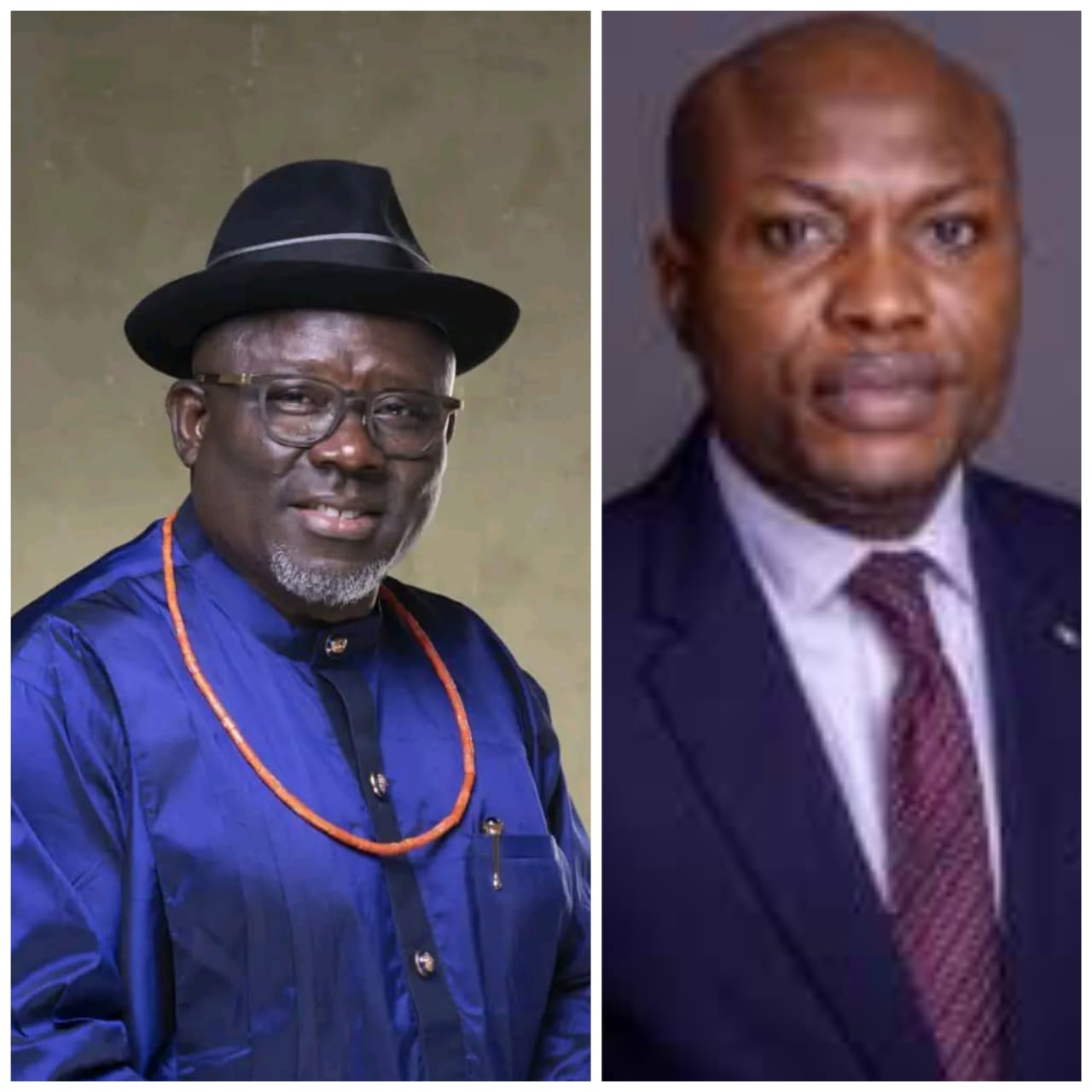
Hon. Dr. Michael Tidi, who is currently in Canada on vacation, spoke to the Daily Independent via WhatsApp in reaction to a statement by Swill Mavua on DESOPADEC and the utilisation of derivation funds. He said concerns raised by oil-producing communities about development, accountability and the utilisation of resources meant for them were legitimate and deserved serious attention.
However, he cautioned against presenting political assertions and calculations as established facts, stressing that the debate over DESOPADEC must be anchored on law, accounting records and verifiable evidence.
According to him, “there is a difference between asking legitimate questions and manufacturing conclusions. There is an even greater difference between political rhetoric and established fact.”
Tidi said his intervention was informed by his direct institutional and professional experience, having served as a pioneer senior staff member of DESOPADEC, media assistant to former Governor Ifeanyi Okowa and subsequently as Chairman of Warri South Local Government Area.
He also described himself as a lawyer, economist and public policy scholar with a longstanding interest in the development of the Niger Delta.
He, clarified that his intervention was not an official response on behalf of Governor Sheriff Oborevwori or his administration.
Tidi’s major concern was the claim that ₦277.73 billion was “statutorily due” to DESOPADEC.
He argued that the figure could not be established merely by multiplying Delta State’s derivation receipts by 50 per cent and automatically declaring the outcome a statutory debt.
“The enabling law, the precise derivation figures relied upon and the applicable accounting treatment must first be established before anyone can properly pronounce a particular amount as unlawfully withheld,” he said.
The former Warri South Council Chairman stressed that appropriation, release, transfer and expenditure were different stages in public financial management and should not be treated as interchangeable concepts.
“A calculator can produce a figure; it cannot interpret a statute,” he declared.
Tidi therefore posited that until the legal and accounting basis for the ₦277.73 billion claim was clearly established, the figure remained a calculation rather than an automatically enforceable debt owed by the state government to DESOPADEC.
The former Warri South Chairman also took particular exception to the allegation that there was “no budget line” for DESOPADEC under the Oborevwori administration.
He said the published Delta State budget documents directly contradicted such a claim.
According to Tidi, the official budget records show that ₦40 billion was provided for DESOPADEC in 2024, ₦65 billion in the approved 2025 budget and ₦80 billion in the approved 2026 budget.
He further cited the official first-quarter 2025 budget performance report, which, he said, recorded ₦5.5988 billion in expenditure against the ₦65 billion DESOPADEC provision.
“Whatever legitimate debate there may be about adequacy, releases, implementation or outcomes, the claim that there was simply ‘no budget line’ cannot survive the published record,” he said.
Tidi acknowledged that the existence of budgetary provisions did not, by itself, resolve every question about DESOPADEC funding.
He said stakeholders could legitimately demand explanations regarding the adequacy of allocations, actual releases, implementation and the impact of expenditure on oil-producing communities.
But he insisted that such legitimate questions should not be transformed into the categorical claim that DESOPADEC received no budgetary provision.
He noted that the published figures showed that DESOPADEC remained part of the state’s budgetary architecture under the present administration.
Tidi also questioned the description of the Oborevwori administration as operating in “secrecy” over DESOPADEC funding.
He argued that public finance transparency should be evaluated against available budget documents, fiscal reports, public disclosures and established accountability mechanisms rather than political accusations.
According to Dr. Tidi, the publication of annual budgets, appropriation documents and budget performance reports by the Delta State Government provides an important basis for public scrutiny.
He, however, acknowledged that the publication of budget documents did not mean every question surrounding DESOPADEC had automatically been answered.
Rather, he said, the available records should form the starting point for a serious and evidence-based debate.
₦8.4bn Contractor Liabilities
On the reported ₦8.4 billion intervention to settle inherited contractor liabilities, Tidi rejected the interpretation that the payment constituted an “admission of guilt” by the present administration.
He maintained that the settlement of an inherited financial obligation did not automatically mean that the administration making the payment was responsible for creating the liability or had violated the law.
“If the contracts were irregular, the evidence should establish that. If the liabilities were fraudulent, the evidence should establish that,” he said.
According to him, describing the payment as “damage control” did not constitute proof that the Oborevwori government had committed wrongdoing.
He urged critics to distinguish between an inherited obligation, the circumstances under which it arose and the decision of a subsequent administration to settle it.
Tidi equally challenged the allegation that DESOPADEC had become a “political settlement centre.”
He said such a serious allegation should be backed by specific evidence rather than political rhetoric.
“If there are unlawful appointments, procurement violations, diversion of DESOPADEC resources or abandonment of statutory functions, the specific evidence should be produced,” he stated.
He stressed that political appointments, by themselves, did not establish illegality, diversion or violation of DESOPADEC’s statutory mandate.
Tidi also acknowledged complaints reportedly raised by HOSTCOM, Itsekiri leaders, traditional rulers and other stakeholders, saying such concerns deserved to be heard.
But he cautioned that stakeholder complaints should not automatically be treated as equivalent to audit findings or judicial pronouncements.
“A stakeholder complaint is not an audit report, just as a political statement is not a judicial finding,” he said.
Tidi also criticised the attempt to frame the DESOPADEC debate around the description of Governor Oborevwori as a “godson” of former Governor Okowa.
He described the narrative as unnecessary political colouring in an issue that should principally concern law, public finance, institutional governance and development.
He acknowledged that Governor Oborevwori’s political emergence from the structure of the Okowa administration was part of Delta State’s political history.
However, he explained that governance was a continuum and that DESOPADEC’s institutional challenges had existed across successive administrations.
“DESOPADEC, in particular, predates both administrations and its institutional challenges have traversed successive governments,” he said.
Tidi, who served under the Okowa administration, said he had no interest in allowing the former governor’s record to be rewritten for contemporary political convenience.
At the same time, he said Governor Oborevwori’s administration should be assessed independently on the basis of its own record.
The former Warri South Chairman further called for greater factual discipline as the country approaches the 2027 general elections.
He acknowledged that political narratives would naturally become sharper as the electoral process progresses, but warned that the election season should not become an environment where figures are presented without proper context or allegations are treated as convictions.
According to him, oil-producing communities deserve development, justice and accountability, but they also deserve advocacy founded on facts and credible evidence.
“DESOPADEC is too important to be reduced to campaign arithmetic, and the legitimate expectations of oil-producing communities are too serious to be turned into political ammunition,” he said.
Tidi concluded by stressing that critics of the Oborevwori administration were fully entitled to ask questions, but that such questions must be addressed with evidence rather than political assumptions.
“The opposition is entitled to ask questions. It is not entitled to manufacture answers,” he declared.
“A calculation is not a debt, an inherited liability is not a confession, a complaint is not an audit finding, and a published budget cannot honestly be described as no budget.”
He said maintaining that distinction was essential to ensuring that the debate over DESOPADEC remained a responsible discussion about the development and welfare of Delta State’s oil-producing communities rather than a vehicle for partisan political attacks.
(DEMOCRACY NEWSLINE NEWSPAPER, AUGUST 22ND, 2026)