



Tinubu Urges Constitutional Amendment for State Police, Seeks Stronger Security Architecture.
By Bala Salihu Dawakin Kudu
Democracy Newsline | February 26, 2026.
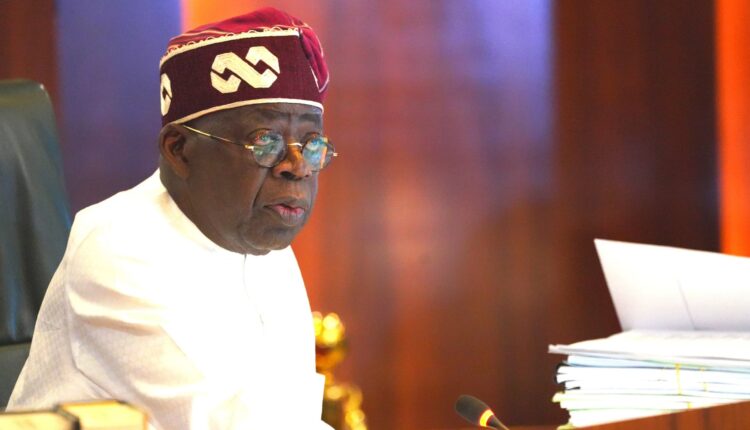
At a solemn interfaith breakfast held inside the historic halls of the Presidential Villa in Abuja, President Bola Ahmed Tinubu made a passionate appeal to the leadership of the 10th Senate, urging lawmakers to initiate constitutional amendments that would pave the way for the establishment of State Police across Nigeria.
The call, delivered against the backdrop of prayers and reflections from leaders of different faiths, underscores what the President described as an urgent national priority: restructuring Nigeria’s security architecture to effectively confront terrorism, banditry, kidnapping, and insurgency.
According to a statement issued by Presidential Spokesperson Bayo Onanuga, the President emphasized that decentralised policing is no longer a matter of political debate but a practical necessity dictated by evolving security threats.
- Advertisement -

“We are facing terrorism, banditry and insurgency. But we will never fail to make the right response,” President Tinubu declared. “What I will ask for tonight is for you to start thinking how best to amend the Constitution to incorporate State Police.”
Nigeria currently operates a centralized policing system under the Nigeria Police Force, controlled at the federal level. For years, security experts, state governors, and civil society organisations have argued that the structure limits rapid response to local threats, particularly in rural communities and forested regions where criminal networks often operate unchecked.
President Tinubu noted that empowering states to establish and manage their own police formations would strengthen grassroots intelligence gathering, improve community trust, and enable quicker operational responses.
He stressed that forests across the country must be secured from criminal elements who exploit difficult terrains as safe havens. According to him, a decentralised model would enhance surveillance, reinforce state-level accountability, and free citizens from fear.
Security analysts say the proposal, if successfully implemented, would require clear constitutional safeguards to prevent abuse of power by state authorities while ensuring effective coordination with federal security agencies.
President Tinubu commended the cordial working relationship between the executive arm and the National Assembly, describing it as essential for national stability and reform.
“It is a good thing that we are working in harmony, looking forward to a country that protects all,” he said.
The President specifically thanked the Senate for supporting his administration’s economic reform agenda, noting that without legislative backing, key policy decisions would not have been possible.
Among the reforms referenced was the removal of fuel subsidy — a long-debated policy that successive administrations hesitated to implement due to its political sensitivity. Tinubu described the subsidy regime as a channel of “monumental corruption and foreign exchange arbitrage,” arguing that its removal has contributed to fiscal stability.
“What we are enjoying is a stable economy, and prosperity is beckoning us. We need to work hard,” he stated.
President of the Senate, Godswill Akpabio, commended the President for hosting the interfaith breakfast, describing it as a symbolic gesture of unity in a diverse nation.
Akpabio noted that reforms undertaken by the administration have led to increased revenues flowing to sub-national governments, enabling them to invest more in infrastructure development and social services.
He assured the President of the Senate’s continued cooperation in pursuing policies that enhance national security and economic growth.
In his remarks, Akpabio also offered prayers for the President and for peace, unity, and prosperity across the federation.
Amending Nigeria’s Constitution requires significant legislative consensus, including approval by two-thirds of both chambers of the National Assembly and ratification by at least two-thirds of State Houses of Assembly. Observers say the process will test political will across party lines.
Supporters of State Police argue that true federalism demands security decentralisation, while critics caution against potential misuse by state governments for political purposes. Nonetheless, the renewed push from the Presidency signals that the debate may soon move from rhetoric to formal legislative action.
complex security and economic challenges, the President’s call reflects a broader conversation about governance reforms aimed at strengthening institutions and restoring public confidence.
The interfaith gathering closed with prayers for national unity — a reminder that beyond policy and politics, the quest for peace remains a shared aspiration among Nigerians of all backgrounds.
DEMOCRACY NEWSLINE NEWSPAPER, FEBRUARY 26TH 2026)