


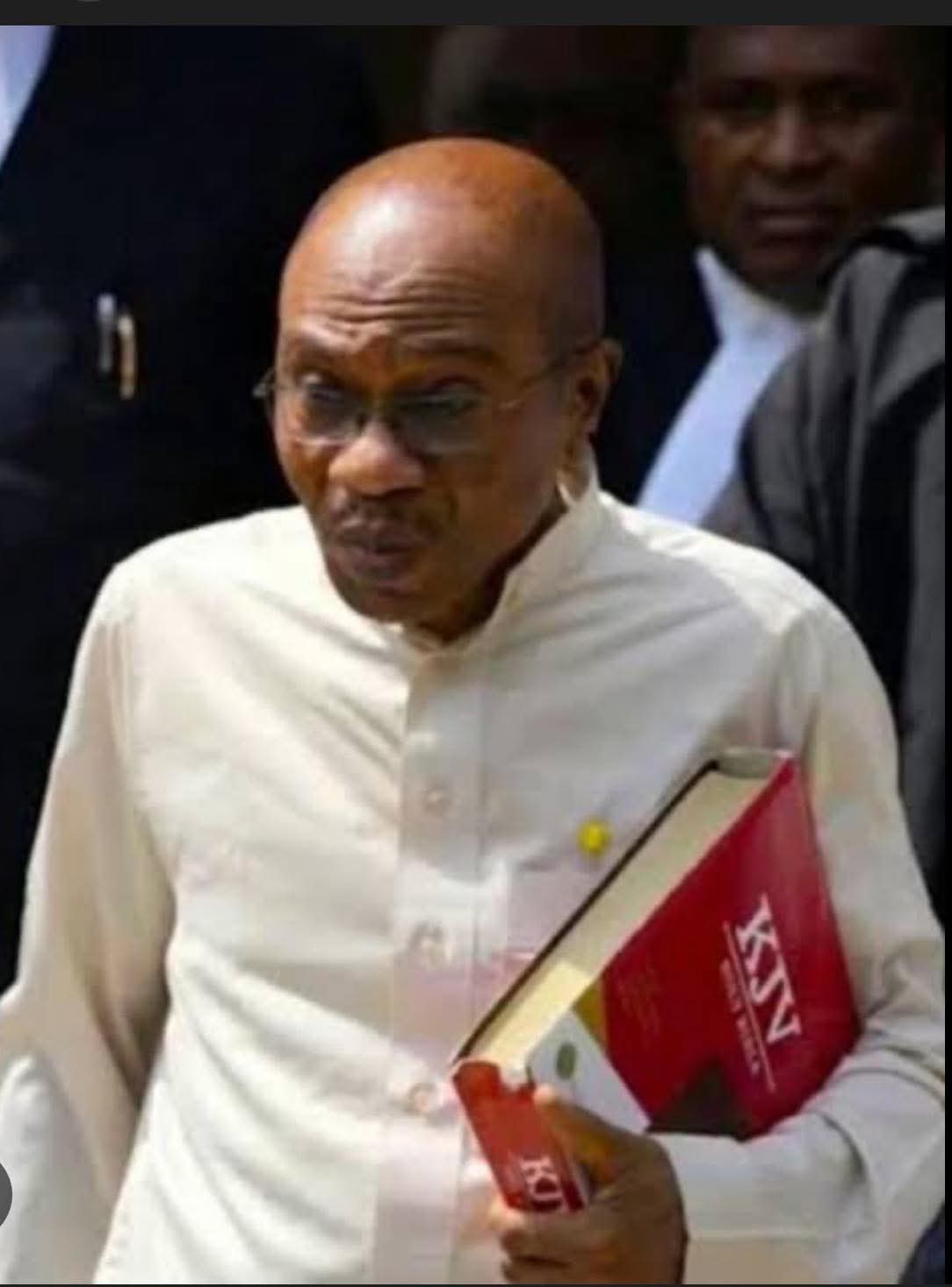

Trial of Former CBN Governor Deepens as Witness Alleges $6.23 Billion Diversion for 2023 Election Observers.
By Bala Salihu Dawakin Kudu Democracy Newsline
Northern Bureau Chief
April 28, 2026.
ABUJA — Fresh revelations emerged on Monday, April 27, 2026, at the Federal Capital Territory High Court in Maitama, as a prosecution witness detailed how a staggering sum of $6.23 billion was allegedly moved from the vaults of the Central Bank of Nigeria (CBN) under questionable circumstances tied to the 2023 general elections.
Testifying before Justice Hamza Muazu, the witness, Chinedu Eneanya, narrated a complex web of financial manipulation, forged authorisations, and institutional breaches allegedly linked to former CBN Governor Godwin Emefiele.
- Advertisement -
Eneanya, who appeared as the 13th prosecution witness (PW13), told the court that he was part of an investigative team assembled by the Economic and Financial Crimes Commission (EFCC). The team, he said, uncovered evidence suggesting that the funds were withdrawn under the pretext of financing foreign election observers for Nigeria’s 2023 polls.
Led in evidence by prosecution counsel Rotimi Oyedepo, SAN, Eneanya explained that the investigation involved interviewing key individuals connected to the transactions and retrieving internal documents from the CBN. These documents, he said, purportedly authorised the release of the funds.
However, a critical twist emerged: forensic examinations revealed that the signatures attributed to former President Muhammadu Buhari and former Secretary to the Government of the Federation Boss Mustapha were forged.
“The forensic analysis clearly established that the signatures were not genuine,” Eneanya stated, adding that the falsified endorsements were instrumental in facilitating the controversial disbursement.
The courtroom fell silent as the implications of the testimony sank in—suggesting not just financial misconduct, but a deliberate attempt to exploit the credibility of Nigeria’s highest offices.
Under cross-examination by defence counsel Matthew Burkaa, SAN, the witness disclosed that five CBN officials involved in signing the internal memo tied to the transaction had since been suspended by the bank. This, he noted, was part of the institution’s internal response to the unfolding scandal.
Earlier in the proceedings, Burkaa raised concerns about what he described as prosecutorial delays, urging the court to consider foreclosing the case if the remaining witnesses were not presented at the next hearing. He argued that the delays were prejudicial to his client and undermined the integrity of the trial process.
In response, Oyedepo countered that the prosecution was not acting in bad faith but was encountering logistical challenges in securing the attendance of key witnesses located outside the court’s jurisdiction, specifically in Benin City and Lagos.
Justice Muazu, maintaining a measured stance, advised both parties to reserve their arguments until the final address stage. He further directed the prosecution to work with the court registrar to issue subpoenas aimed at compelling the attendance of the outstanding witnesses.
The case was subsequently adjourned to Tuesday, April 28, 2026, for continuation of trial.
The trial of Emefiele has become one of Nigeria’s most closely watched legal battles, reflecting broader concerns about governance, financial accountability, and the integrity of public institutions. The allegation that billions of dollars could be diverted under the guise of electoral support raises serious questions about oversight mechanisms within critical national institutions like the CBN.
Legal analysts note that if proven, the case could redefine standards for public office accountability and strengthen anti-corruption frameworks. Conversely, delays and procedural disputes highlight the persistent challenges facing Nigeria’s judicial system in handling high-profile cases.
As proceedings continue, the nation watches closely—aware that the outcome may not only determine the fate of one man but also signal the strength of Nigeria’s fight against corruption at the highest levels.
(DEMOCRACY NEWSLINE NEWSPAPER, APRIL 28TH 2026)