

Why Kwankwaso Will Lose Kano in 2027, Says Ganduje.
By Bala Salihu Dawakin Kudu
Democracy Newsline Northern Bureau Chief
July 24, 2026
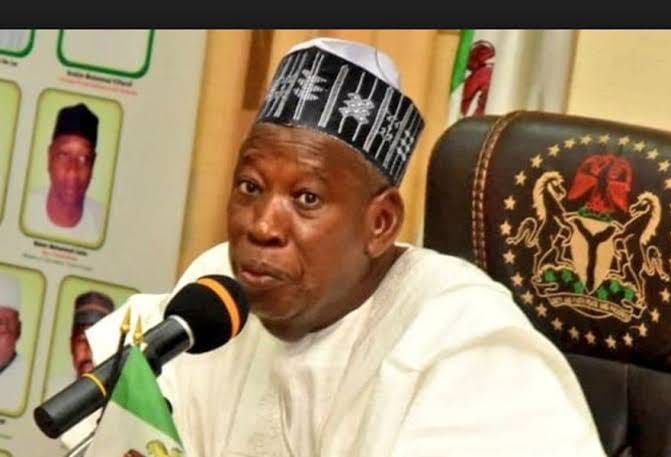
ABUJA — Former National Chairman of the All Progressives Congress (APC) and former Governor of Kano State, Dr. Abdullahi Umar Ganduje, has expressed confidence that the presidential ticket of Peter Obi and Senator Rabiu Musa Kwankwaso under the Nigeria Democratic Congress (NDC) will fail to secure victory in Kano State during the 2027 general election.
Speaking with journalists in Abuja on Tuesday, Ganduje dismissed the alliance as politically weak, insisting that it lacked the leadership credentials, political structure, and electoral appeal required to win the support of Kano voters.
“I don’t think Peter Obi and Kwankwaso’s ticket will succeed in Kano. It will not succeed. In fact, it is dead on arrival,” Ganduje declared.
- Advertisement -
The former APC National Chairman argued that Peter Obi’s record as Governor of Anambra State did not demonstrate the level of leadership and administrative competence needed to govern Nigeria.
“Because Peter Obi was a governor in the South-East geopolitical zone, a governor in Anambra State. What did he do as a governor? What legacy did he leave as a governor?” he asked.
“And from that, what other responsibility in governance did he hold that he made a mark to the extent that we believe he will be able to manage this country effectively and efficiently?”
Turning his attention to Kwankwaso, Ganduje questioned the former Kano governor’s political achievements, stressing that he was unable to secure two consecutive terms in office unlike other governors in the state’s democratic history.
“Kwankwaso too, he was a governor of Kano State. He was not able to be a governor back-to-back,” Ganduje said.
“So far, the two other governors in Kano were able to win elections back-to-back. Mallam Ibrahim Shekarau was able to spend eight years straight. Myself, I was able to spend eight years straight.”
According to Ganduje, longevity in office reflected the confidence voters placed in a leader’s performance, adding that Kwankwaso’s inability to achieve that milestone raised questions about his political strength.
He further maintained that Kwankwaso had not left behind a legacy capable of persuading Kano residents or Nigerians that he possesses the qualities required to serve as Vice President or occupy higher national office.
“So I don’t think, even in Kano, what legacy specifically can you say that he has left in Kano that will convince the people of Kano, will convince the people of Nigeria that he will be a successful vice-president of the Federal Republic of Nigeria?” Ganduje stated.
The comments come amid increasing political realignments ahead of the 2027 general elections, with major political actors positioning themselves for what is expected to be one of Nigeria’s most competitive electoral contests. Kano State, one of the country’s most populous states with one of the highest voting populations, remains a crucial battleground whose outcome could significantly influence the presidential election.
Kwankwaso, who enjoys a loyal grassroots following through the Kwankwasiyya political movement, remains one of the most influential political figures in northern Nigeria. Peter Obi, meanwhile, continues to command substantial support among young voters and sections of the urban electorate following his strong showing in the 2023 presidential election.
Political analysts believe that any alliance involving Obi and Kwankwaso would reshape the dynamics of the 2027 race, particularly in the North-West and South-East, although its electoral viability will ultimately depend on party cohesion, grassroots mobilisation, and voter sentiment.
As of the time of filing this report, neither the Nigeria Democratic Congress (NDC) nor representatives of Peter Obi and Senator Rabiu Musa Kwankwaso had responded publicly to Ganduje’s remarks. Political observers expect both camps to intensify consultations and nationwide campaigns as preparations for the 2027 elections gather momentum.