

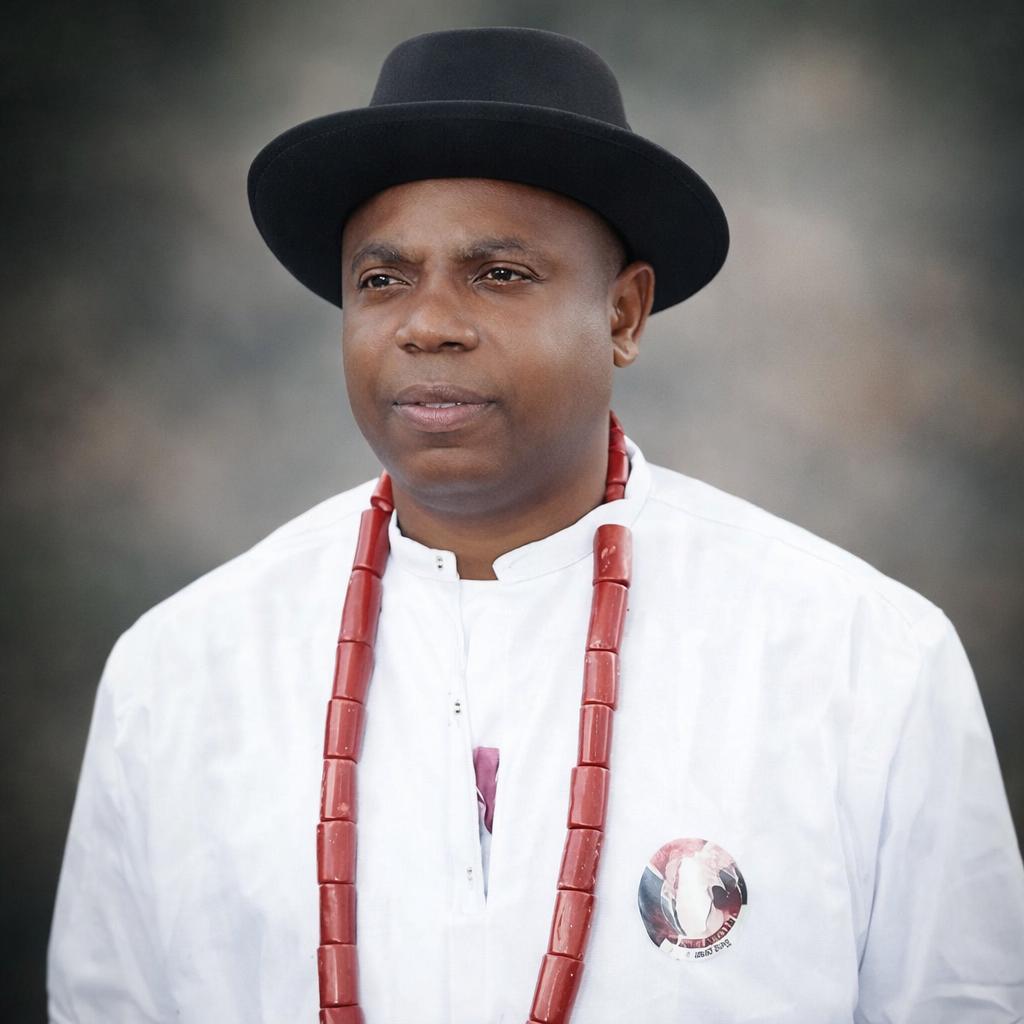

2027: TIME TO CHOOSE BY DR AUSTIN ORETTE
Another election year is upon us, and once again, the political merchants have begun beating their drums, displaying their familiar wares and presenting the same old political acolytes to Nigerians. Their methods may change in appearance, but the game remains largely the same.
Nigeria has endured serious storms throughout its relatively short history as a republic. From military coups and counter-coups to the devastating civil war and years of military dictatorship, our national journey has been marked by trauma, instability and setbacks.
When the military eventually relinquished power, many of the actors and structures of that era remained influential in the political process. The irony was profound: those who had governed without democratic accountability became some of the very people involved in shaping our democracy. How can dictatorship successfully teach democracy?
- Advertisement -
The years of military rule severely traumatized our national psyche and truncated our value system. Like a sick child learning to walk again, Nigeria has had to struggle to rediscover the meaning of democratic governance, justice, accountability and responsible citizenship.
The wounds are still visible. From the execution of young Nigerians through retroactive decrees to the killing of Ken Saro-Wiwa and others, the Nigerian experience under military rule left a collective trauma. The injuries inflicted on our national consciousness have not completely healed.
Nigeria must not remain a prisoner of her past. We must reject the dangerous notion that military coups are a legitimate alternative to democratic government. Treason must never become lucrative in Nigeria. The Nigerian people must insist that political power comes through the ballot box and not through the barrel of a gun.
Unfortunately, remnants of authoritarian thinking continue to manifest in our public institutions. Too often, force is preferred to reason, intimidation to dialogue, and power to the rule of law.
Across the country, ordinary citizens encounter checkpoints, insecurity, extortion and harassment. Instead of feeling protected by the state, many Nigerians feel occupied by it.
Between kidnappers, criminals and abusive security personnel, citizens are increasingly left wondering whom they can trust. Governors sometimes exercise enormous powers without sufficient regard for judicial oversight or the rights of citizens. Legislative institutions can also become arenas where political majorities are used to silence dissent rather than strengthen democracy. These realities make a mockery of the republic we aspire to build.
Our greatest tragedy, however, is not simply that Nigeria has experienced bad governance. It is that years of poor governance have weakened our confidence in ourselves. We have become accustomed to importing what others produce, consuming what others create, and celebrating the ingenuity of other nations while our own productive capacity remains underdeveloped. But even in these difficult circumstances, Nigeria remains standing.
The fact that we are still standing is a testament to the resilience of the Nigerian people and our determination to make this country work.
The years of military rule can rightly be described as years of locust. They deepened divisions, weakened institutions and fostered an anti-intellectual culture in which brute force was often mistaken for leadership.
Today, we continue to grapple with insecurity, poverty, ethnic and religious divisions, unemployment and institutional weakness. In some parts of the country, criminality has become so entrenched that kidnappers and other criminals operate sophisticated financial networks. What a country! Yet, our response cannot be to romanticize authoritarianism or return to the past.
In the aridity of our present circumstances, it can be tempting to look backward for salvation. Some look nostalgically at authoritarian systems. Others believe that religious extremism or theocratic models hold the answers to modern problems. Still others are tempted by the idea that Nigeria needs a strongman rather than strong institutions. We must reject all of these distractions.
Democracy is our opportunity to choose a different future.
Every election gives Nigerians the opportunity to renew the direction of the nation. It gives us the power to replace leaders who have lost their democratic compass and to elect people who understand the value of constitutional government, the rule of law, accountability and service. The coming election is particularly significant because Nigeria’s youth constitute a decisive force in determining the country’s future. Many young Nigerians have grown up without personally experiencing military dictatorship. Some may therefore underestimate the enormous difference between democratic government and authoritarian rule.
There is a difference. Democracy allows citizens to speak, organize, criticize their leaders and replace them through elections. Dictatorship silences opposition, concentrates power and makes the citizen a subject rather than a participant in government. We must never forget that distinction.
This election therefore presents us with a choice—not merely between political parties or personalities, but between competing visions of Nigeria. We can choose politics of intimidation, patronage and personal enrichment, or we can choose competence, character, education, accountability and genuine service.
We must choose leaders who understand that political office is not a reward but a responsibility. We must also understand that democracy does not end when we cast our ballots. The prize of democracy is eternal vigilance. Citizens must guard their votes. We must monitor those we elect. We must demand accountability. We must speak when institutions fail. We must refuse to surrender our democratic rights for temporary benefits.
Our people must also resist the politics of vote buying. No amount of money exchanged during an election can compensate for years of bad governance. A bag of rice, a few naira notes or a temporary political favour cannot be worth four years of insecurity, unemployment, poor infrastructure and economic hardship.
Our vote is more valuable than any temporary inducement. The youth, especially, must make this their battle cry: rescue your generation from redundancy, poverty, insecurity and decay.
Do not allow anyone to convince you that your vote does not matter. One vote may appear insignificant, but millions of individual votes determine the direction of a nation. We must therefore rise above ethnic, religious, personal and pecuniary interests. We must move beyond the politics of the area boy and embrace the politics of citizenship. Nigeria does not need citizens who merely complain. Nigeria needs citizens who participate.
The question before us is simple: What kind of Nigeria do we want to leave for the next generation? This is our time to choose. Let us choose democracy over authoritarianism. Let us choose competence over mediocrity. Let us choose character over corruption. Let us choose service over self-enrichment. Let us choose the rule of law over impunity. Let us choose development over decay. And above all, let us choose leaders who understand that the Nigerian people are not subjects to be controlled, but citizens whose dignity, rights and aspirations must be respected.
The ballot is our voice. The vote is our power. The future is our responsibility. Nigeria can be redeemed. But redemption will not come by chance. We must choose it.
DR AUSTIN ORETTE, AFRICAN DEMOCRATIC CONGRESS (ADC) DELTA SOUTH SENATORIAL CANDIDATE, WRITES FROM OWHELOGBO IN ISOKO NORTH LOCAL GOVERNMENT AREA.
(DEMOCRACY NEWSLINE NEWSPAPER, AUGUST 22ND, 2026)