
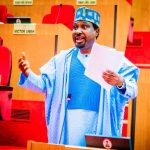






APC To Produce Youngest House of Reps Member In Coming Days: Kogi In Focus
By Ralph Alabi
Lokoja, May 19, 2026
All eyes are on Kogi Central as the All Progressives Congress (APC) weighs a decision that could see 29-year-old *Comrade Moses Omeiza Audu* emerge as the youngest member of the House of Representatives in the coming days.
- Advertisement -


The former National President of the National Association of Kogi State Students (NAKOSS) is leading a youth-backed push for due process and constitutional compliance following the Okene/Ogori-Magongo Federal Constituency primary.

Audu contested the primary on Saturday and emerged as the highest-ranking _cleared_ aspirant with 1,141 votes.
Stakeholders say his standing reflects a growing demand among APC delegates for candidates who meet the party’s constitutional requirements ahead of the 2027 general elections.
The controversy stems from the results announced at the state level, where Hon. Sanni Salau Ogembe was declared winner with 31,651 votes, and incumbent lawmaker Hon. Ozigi Muhammed Tijani polled 349 votes.
However, members of the APC Youth Group and stakeholders in Kogi Central said in a statement issued Tuesday in Lokoja that Ogembe was officially listed as “Not Cleared” by the APC National Screening Committee before the primaries.
“The major question currently being asked by party members and important stakeholders is: why should a disqualified aspirant be presented as the flag bearer of our party?” the group stated.
They pointed to an earlier directive from the APC National Working Committee barring state National Assembly Primary Election Committees from announcing final results pending ratification by the National Secretariat.
According to the stakeholders, votes recorded for a candidate declared “Not Cleared” remain subject to the final directives of the national leadership.
“It is therefore deeply concerning that the Kogi State APC Secretariat proceeded to declare Hon. Ogembe as winner despite his disqualification status remaining unresolved,” the statement read.
For Obervers, the issue is framed as one of principle rather than personal ambition. Supporters argue that this position underscores a commitment to party rules and national interest over individual gain.
“This is not merely a political argument; it is a call for due process, fairness, internal democracy, respect for the rule of law, and the protection of the democratic values upon which the All Progressives Congress was founded,” the group emphasized.
The stakeholders cited similar cases in Ondo State and other constituencies where the party upheld constitutional provisions by recognizing cleared aspirants next in line when disqualified winners stepped aside.
They warned that unresolved irregularities could expose APC to legal challenges before 2027 and urged the state and national leadership to recognize Audu as the valid flag bearer, subject to constitutional procedures and final ratification.
Beyond the immediate dispute, Audu’s candidacy has resonated with young people across Okene/Ogori-Magongo. His tenure as NAKOSS National President gave him early exposure to advocacy and grassroots mobilization in Kogi’s tertiary institutions, and he has built his campaign around three pillars:
*Youth Inclusion*, creating pathways for young people to participate in governance as decision-makers; *Constituency Development*, prioritizing infrastructure, education, and skills acquisition to reduce unemployment and rural-urban migration.
*Unity and Stability*, working to unite party members across factions to retain the seat for APC.
Supporters describe Audu as vibrant, astute, and courageous, qualities they say have earned him respect beyond Kogi Central.
While pressing for adherence to party rules, Audu’s supporters have also acknowledged efforts by APC leadership to expand opportunities for young people.
They congratulated former Governor Alhaji Yahaya Adoza Bello on securing the APC ticket for Kogi Central Senatorial District, calling it a well-deserved victory.
They also commended Governor Alhaji Ahmed Usman Ododo and the APC for sustaining political openings for youth participation across the state.
The development comes against Nigeria’s demographic reality.
With a median age under 18 but an average age in the National Assembly above 50, stakeholders argue that closing the representation gap is essential for policies that reflect the lives of young Nigerians.
For many in Kogi and beyond, the Okene/Ogori-Magongo case is now a test of whether APC will match its youth inclusion rhetoric with action.
“The younger generation is ready,” the youth group stated. “The question is: is the system ready for them?”
End
(DEMOCRACY NEWSLINE NEWSPAPER, MAY 20 TH 2026)