




APC’s Path to Renewal and Victory in Kano: Unity, Strategy, and Grassroots Strength Ahead of 2027.
By Bala Salihu Dawakin Kudu
Northern Bureau Chief
Democracy Newsline
5th April 2026.
When one carefully observes the political landscape of Kano State under the leadership of Governor Abba Kabir Yusuf, it becomes evident that the state remains one of Nigeria’s most politically vibrant arenas—home to seasoned power brokers, influential grassroots mobilizers, and emerging leaders shaping the future of Northern politics.
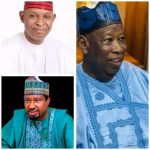
Among the towering figures in this landscape is former governor and ex-national chairman of the All Progressives Congress (APC), Abdullahi Umar Ganduje, alongside the Deputy President of the Senate, Barau I. Jibrin. Their influence, combined with that of Senator Abdulrahman Kawu Sumaila and other prominent lawmakers, has continued to position the APC as a formidable force in Kano politics.
- Advertisement -

The party’s strength is further reinforced by key members of the House of Representatives, including Alhassan Ado Doguwa, Abdulmummuni Jibrin Kofa, Kabiru Alhassan Rurum, and Abba Abubakar Bichi, among others. These individuals, often described as the “political engines” of the APC, provide both institutional experience and grassroots reach.
The APC in Kano is not lacking in leadership; rather, it is overflowing with it. From former deputy governors like Murtala Sule Garo to influential stakeholders such as Abdussalam Abdulrahman Zaura, Shaaban Sharada, and Baffa Babba Dan’agundi, the party boasts a deep bench of political heavyweights.
However, political analysts argue that this abundance of leadership could either be APC’s greatest strength—or its biggest liability. Without unity of purpose, coordination, and mutual respect among these actors, internal divisions may weaken the party’s electoral prospects.
There is broad consensus among observers that if APC leaders—especially Barau I. Jibrin and Abdullahi Umar Ganduje—can harmonize their political structures and align interests, the party stands a strong chance of reclaiming dominance in the 2027 elections.
Their partnership represents both experience and strategic depth. Barau’s legislative influence and grassroots engagement, combined with Ganduje’s organizational control and political network, create a powerful synergy capable of reshaping the party’s fortunes.
Addressing Internal Conflicts
One of the most pressing challenges facing the APC in Kano is internal discord at the local level. For instance, tensions in Tudun Wada between Alhassan Ado Doguwa and local leadership figures highlight the urgent need for conflict resolution mechanisms.
Similarly, political friction in key local government areas such as Kano Municipal, Kura, Garko, Takai, Albasu, Gaya, and Wudil threatens party cohesion. These areas are strategically important due to their voting strength and concentration of influential stakeholders.
To move forward, APC must establish reconciliation committees, promote inclusive decision-making, and ensure fairness in party leadership structures across all levels.
One of the strongest assets of the APC in Kano is its tradition of grassroots mobilization. Leaders like Barau I. Jibrin have earned public admiration for consistent empowerment programs and direct engagement with constituents.
Similarly, Abba Abubakar Bichi has demonstrated impactful community support initiatives, reinforcing APC’s presence at the local level. These efforts create political loyalty that often translates into electoral success.
To replicate this success across the state, all elected and appointed APC officials must adopt a people-centered approach—supporting party members and constituents without discrimination. The role of youth cannot be overstated. Leaders such as Murtala Sule Garo have built strong connections with young people, a demographic that will future elections.
APC must expand youth-focused programs, invest in political mentorship, and create pathways for young leaders to participate actively in governance and party affairs. A rejuvenated youth base could prove decisive in 2027.
Strategic Recommendations for APC Success in Kano
Strengthen Internal Unity: reconciliation among factions led by key figures,
Enhance Grassroots Programs, Expand empowerment initiatives across all local governments, Promote Inclusive Leadership, and avoid marginalization within party structures.
Kano remains a critical battleground in Nigerian politics. With its vast population, political consciousness, and history of electoral influence, victory in Kano often signals broader national momentum.
If leaders such as Barau I. Jibrin and Abdullahi Umar Ganduje can rise above internal divisions and work collaboratively, the APC is well-positioned to stage a strong comeback.
Ultimately, the path to success lies not just in political strength, but in unity, service, and strategic vision. The groundwork laid today will determine whether APC reclaims Kano in 2027—or cedes ground to its rivals. The choice, as always in politics, rests with leadership.
(DEMOCRACY NEWSLINE NEWSPAPER, APRIL 5TH 2026)