




Beyond Survival: The Silent Education Crisis in Sokoto’s IDP Camps Demands Urgent Action, Displaced Children Deserve More Than Shelter—They Deserve a Future.
By Bala Salihu Dawakin Kudu
Democracy Newsline Northern Bureau Chief
July 4th, 2026
Hidden behind the daily headlines on insecurity and humanitarian emergencies lies another crisis that receives far less attention but carries consequences that could last for generations—the growing education gap among children living in Internally Displaced Persons (IDP) camps in Sokoto State.
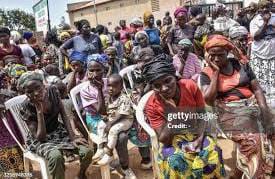
For thousands of displaced children, life has become a painful cycle of uncertainty. While humanitarian interventions have provided temporary shelter, food, and basic healthcare, one of the most fundamental rights of every child—the right to education—continues to slip away.
- Advertisement -


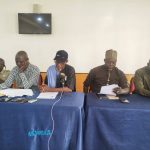
During a recent visit to the Ramin Kura and Guiwa Eka IDP camps, the Chairman of the Nigeria Union of Journalists (NUJ), Sokoto State Council, Usman Mohammed Binji, witnessed scenes that painted a disturbing picture of neglect. Instead of classrooms filled with learning and laughter, he encountered school-age children roaming the streets, begging for alms, and spending their days without access to structured education.
These are not children without dreams. They are children whose dreams have been interrupted by circumstances beyond their control.
Every child sitting idle today represents a future teacher, doctor, engineer, journalist, entrepreneur, or community leader whose potential is slowly fading due to lack of opportunity. Each passing day outside the classroom widens the educational gap and exposes these vulnerable children to exploitation, child labour, abuse, early marriage, radicalization, and other social dangers that threaten their future.
Education is more than reading and writing. It restores dignity, builds confidence, heals emotional wounds, and offers hope to children who have already endured unimaginable trauma. For displaced children, a classroom can become the first safe space where they begin to rebuild their lives.
Binji’s observations serve as a powerful reminder that humanitarian assistance should not end with providing food and shelter. Sustainable recovery must include quality education, psychosocial support, and opportunities that empower children to become productive members of society.
The responsibility of addressing this silent crisis cannot rest solely on government shoulders. While authorities have the constitutional obligation to provide education for every Nigerian child, communities, development partners, civil society organizations, religious institutions, philanthropists, and corporate organizations all have vital roles to play.
Islam, like many faith traditions, places enormous value on knowledge, compassion, and caring for the vulnerable. The first revealed word in the Holy Qur’an was “Read.” This timeless message underscores the central role education plays in human development. Supporting displaced children is therefore not merely an act of charity; it is both a moral obligation and a religious responsibility.
Islamic organizations, scholars, charitable foundations, and community associations can complement government efforts by establishing learning centres within IDP camps. Such centres would provide basic formal education, Qur’anic studies, moral instruction, life skills, counselling, and psychosocial support to help children regain confidence and purpose.
Volunteer teachers, retired educators, youth organizations, and university students can equally make meaningful contributions by offering literacy classes, mentoring programmes, and vocational training. Simple educational materials such as books, school bags, exercise books, pens, uniforms, and learning aids may appear modest, but they can transform a child’s future.
History has shown that societies investing in children’s education during times of crisis recover faster and emerge stronger. Conversely, neglecting education creates a generation vulnerable to poverty, crime, unemployment, and social instability.
The situation unfolding in Sokoto’s IDP camps should therefore concern every Nigerian. These children are not statistics. They are sons and daughters of the nation whose aspirations deserve protection. Their future should not be determined by displacement, insecurity, or poverty.
As Usman Mohammed Binji passionately observed, “These young survivors deserve more than survival. They deserve education. They deserve protection. Above all, they deserve a future filled with opportunity, purpose, and hope.”
His words should resonate beyond the camps and into government offices, religious institutions, community associations, corporate boardrooms, and every home where compassion still exists.
The time for sympathy has passed. What is required now is collective action.
Every classroom built, every volunteer recruited, every scholarship awarded, every book donated, and every child returned to school is an investment in peace, security, and national development.
The silent crisis in Sokoto’s IDP camps is no longer someone else’s problem. It is a shared responsibility that demands immediate attention.
The question before us is simple but profound:
Will we allow a generation of displaced children to lose their future, or will we rise together to give them the education, hope, and opportunities they deserve?
The answer lies in the actions we take today.
If you’d like, I can also adapt this into an editorial, a front-page feature, or a 2,000-word investigative newspaper article with interviews, statistics, and stronger human-interest storytelling.
(DEMOCRACY NEWSLINE NEWSPAPER, JULY 4TH 2026)