
Dr. Mahmoud: A Political Economist Who Lives the Work of Governance.
By Abdul Mohammed Lawal.
Political economy is often discussed in classrooms, conferences, and policy papers. It is presented as theory, something to be studied and debated. But in reality, political economy is far more than that. It is the force that shapes how power is used, how decisions are made, and how resources are share. At the very ordinary, it even comes down to how individuals live and go about their daily businesses.
It determines who gets what, how they get it, and why.
- Advertisement -
And in a country like Nigeria, where governance is deeply tied to influence, negotiation, and access, political economy is not an academic concept. It is everyday life. The real challenge, however, is that while many speak about political economy, very few truly understand it. And even fewer know how to work within it to deliver real results.
This is where leadership often fails.
We have seen leaders who speak well but cannot deliver. We have seen those who make promises but lack the understanding of systems required to fulfil them. We have seen individuals who mistake political visibility for governance capacity. It’s safe to say that the issue has never been a lack of ideas, it has always been a lack of understanding. Because governance is not guesswork. It is not noise. It is a system; complex, layered, and driven by interests that must be carefully managed and aligned.
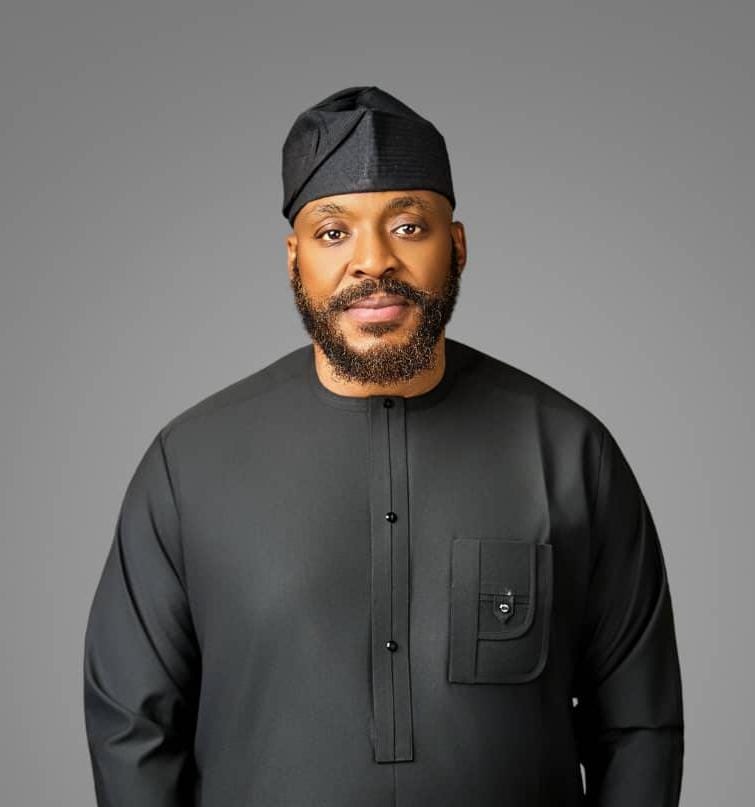
To lead effectively within that system, one must do more than participate in politics. One must understand power, engage it, and use it to achieve results. This is what separates theory from practice, and this is where Dr. Mahmoud Bala Alfa stands apart.
He is not just a political economist by training. He is a practitioner of governance whose career has been built within the very systems that define how policy, power, and development interact.
With over two decades of experience across the public sector, private finance, and international development, his work has spanned Nigeria, the United Kingdom, and the United Arab Emirates. From early roles in structured finance at HSBC in the UAE and Standard Bank in the UK, to managing public-sector banking relationships at Stanbic IBTC in Nigeria, his foundation was built on understanding how capital moves and how institutions function.
But his real impact has been within governance and policy reform.
As Adviser to the World Bank on Nigeria’s Distribution Sector Recovery Programme (DISREP), he worked at the centre of efforts to reform the power sector; supporting investment planning, regulatory improvements, and institutional coordination. In a sector that affects millions of Nigerians daily, this was practical engagement with one of the most complex challenges in the country.
Before that, as Team Lead under the UK-funded Nigeria Infrastructure Advisory Facility (UKNIAF), he worked across power, roads, and public-private partnerships; engaging senior government officials and contributing to reforms that improved infrastructure planning and delivery.
His work under the DFID Partnership to Engage, Reform and Learn (PERL) programme further deepened his role in governance reform. There, he contributed to national efforts aimed at improving transparency, accountability, and service delivery. He supported key policy areas, including health financing reforms and legislative processes such as the Disability Bill, while promoting inclusive governance across different regions.
At the state level, his role as Policy Adviser in Kaduna State helped introduce zero-based budgeting, saving the state an average of ₦11 billion while improving financial discipline and transparency. At the federal level, he contributed to Nigeria’s climate policy framework, supporting the development of the Climate Change Bill and the country’s commitments at the United Nations General Assembly.
These are measurable interventions. They show a man who has not only studied governance but has worked within it, shaped it, and improved it. But, even beyond this technical depth lies an even more critical strength that defines real leadership in Nigeria’s political space. The ability to negotiate.
Dr. Mahmoud Bala Alfa is not just trained to understand systems; he is equipped to engage them. A natural negotiator, he understands how interests are aligned, how decisions are influenced, and how outcomes are secured. Over the years, he has built visibility and credibility within the northern elite social and political space, placing him in circles where real decisions are made and where influence matters. He is not an outsider looking in. He is already part of the conversation.
And this matters, because representation is not only about speaking at home. It is about being heard where it counts. It is about having the voice that carries the concerns of your people into rooms where outcomes are decided. It is about having the access to open doors. It is about having the courage to negotiate for prosperity without fear, and the competence to secure it. This is the difference between presence and influence.
Many may have experience, but not all experience prepares a leader to deliver results. There is experience that follows systems, and there is experience that shapes systems. There is experience that observes power, and there is experience that engages power.
Kogi East must understand this difference. The 2027 election is not a routine exercise. It is a decision point. A moment that will determine whether the region continues with familiar patterns or moves towards real progress. This is not the time to experiment. This is not the time to recycle routine leadership. This is the time to choose real, tested, and proven capacity.
Dr. Mahmoud Bala Alfa represents more than a candidacy. He represents preparedness built over decades across finance, governance, policy reform, and international development. He represents a leadership style grounded in knowledge, strengthened by experience, and driven by results.
His message is simple:
Leadership must work. Governance must deliver. The people must benefit. And, Kogi East must be great again.
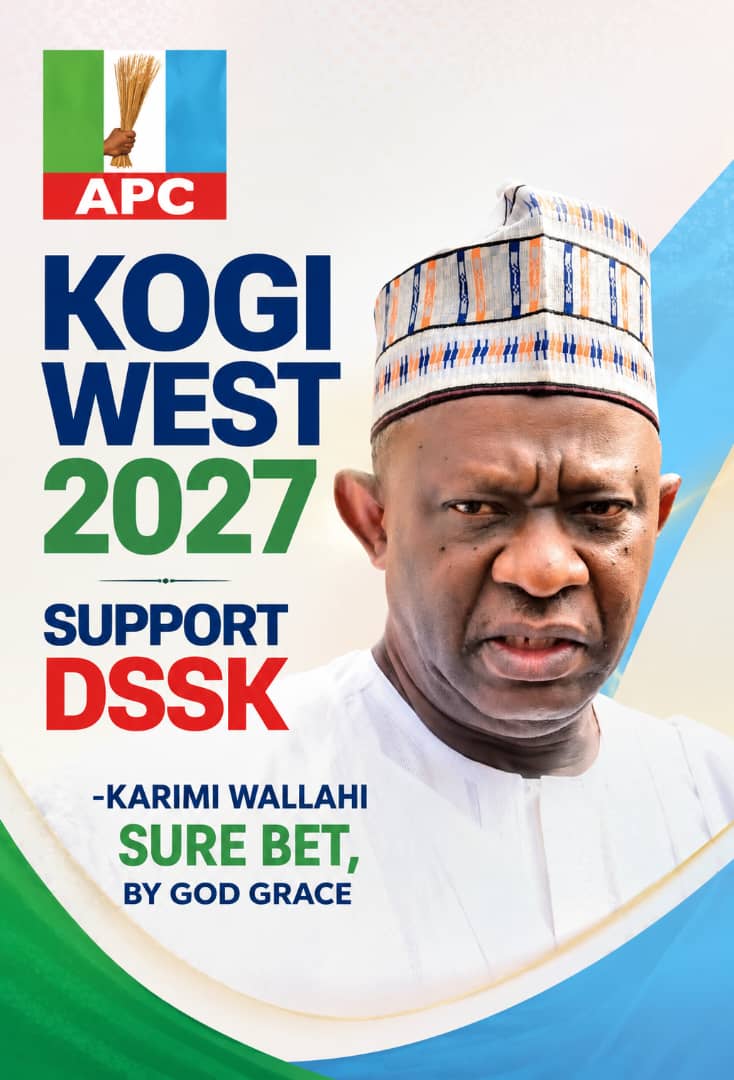
After decades of working within systems, he has now stepped forward to serve directly, declaring his intention to contest the 2027 Kogi East Senatorial election. This is not a leap into the unknown, it is a transition from influence to representation. And it comes at a time when Kogi East needs exactly that.
Because in the end, Kogi East does not just need a politician. It needs a political economist who understands power, lives governance, and can deliver real outcomes.
And in 2027, that difference must matter.
And in 2027, Dr. Mahmoud Bala Alfa must matter.
(DEMOCRACY NEWSLINE NEWSPAPER, APRIL 14TH 2026)