




ABUJA – JUST IN: INEC Releases Revised 2027 Elections Timetable, Presidential Poll to Hold January.
By Bala Salihu Dawakin Kudu
Democracy Newsline Newspaper
February 26, 2026.
In a significant development that sets the tone for Nigeria’s next political transition, the Independent National Electoral Commission (INEC) has unveiled a revised timetable for the 2027 General Elections, announcing that the presidential poll will now hold on Saturday, January 16, 2027.
The adjustment, described by the Commission as a necessary compliance measure, follows the repeal of the Electoral Act, 2022 and the enactment of the Electoral Act, 2026 — a sweeping reform signed into law by President Bola Tinubu earlier this month.
- Advertisement -
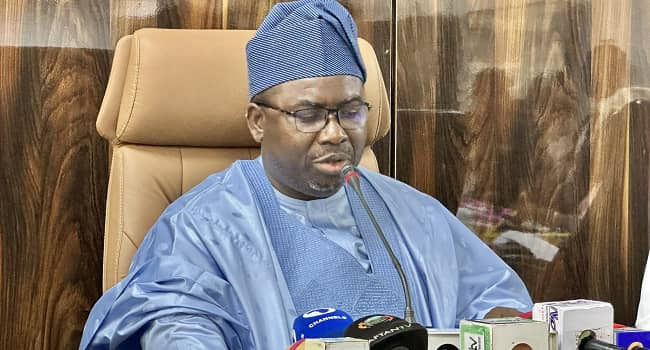
The announcement was contained in a statement issued Thursday and signed by the National Commissioner and Chairman of the Information and Voter Education Committee, Malam Mohammed Kudu Haruna.
New Dates Announced
Under the revised schedule:
Presidential and National Assembly Elections – Saturday, January 16, 2027 and Governorship and State Houses of Assembly Elections – Saturday, February 6, 2027.
The Commission had earlier fixed February 20 and March 6, 2027, for the two categories of elections, respectively. However, the repeal of the previous electoral framework necessitated what INEC termed a “realignment of statutory timelines.”
“Following the repeal of the Electoral Act, 2022 and the enactment of the Electoral Act, 2026, the Commission has reviewed and realigned the Schedule to ensure full compliance with the new legal framework,” Haruna stated.
Key Milestones Toward 2027
INEC also outlined critical pre-election activities:
-Party Primaries (including dispute resolution): April 23 – May 30, 2026,
-Campaigns for Presidential & National Assembly -Candidates: Begin August 19, 2026
Governorship & State Assembly Campaigns: Begin September 9, 2026
In line with the law, all campaigns must end 24 hours before election day.
Political parties were urged to strictly adhere to the timetable, with the Commission warning that it would enforce compliance without hesitation.
According to INEC, the revised schedule aligns with provisions of the 1999 Constitution of Nigeria and the Electoral Act, 2026. The timetable has already been uploaded to the Commission’s official platforms to ensure public access and transparency.
The development marks one of the first major administrative consequences of the newly enacted electoral framework.
Ramadan Concerns and Public Reaction.
The initial February date had drawn criticism from citizens and political stakeholders who noted its proximity to the Muslim holy month of Ramadan. Observers argued that holding nationwide elections during a major religious fasting period could affect voter turnout and logistics, particularly in predominantly Muslim communities.
Although INEC did not directly attribute the revision to those concerns, the new January date effectively resolves the controversy.
Osun, Ekiti Adjustments
INEC also announced a minor shift in the Osun State governorship election, moving it from August 8 to August 15, 2026.
While certain processes for the Ekiti and Osun governorship elections had already commenced, the Commission assured that all remaining procedures would comply fully with the new Electoral Act.
The revised timetable comes barely 13 days after INEC first announced the earlier 2027 dates on February 13, 2026, and just eight days after the President assented to the Electoral Act, 2026, following months of deliberation by the National Assembly.
Political analysts say the early release of a revised schedule provides clarity and allows parties ample time to reorganize strategies, conduct primaries, and mobilize supporters.
Haruna emphasized that the success of the 2027 elections will depend not only on INEC but on collective national responsibility.
“The successful conduct of the forthcoming elections remains a collective responsibility. The Commission calls on all stakeholders to cooperate in ensuring peaceful, credible, and inclusive elections that reflect the sovereign will of the Nigerian people,” he said.
With the 2027 election cycle formally underway, Nigeria enters another defining democratic moment under a reformed legal structure. Political parties must now recalibrate campaign plans, aspirants must intensify grassroots consultations, and voters must prepare to exercise their civic duties earlier than initially anticipated.
For a nation of over 200 million people, the revised calendar is more than a shift in dates — it is a reminder that democracy is an evolving process, shaped by law, public input, and institutional responsibility.
As January 16, 2027, draws closer, all eyes will remain on INEC, political actors, and the Nigerian electorate to determine how effectively the new framework translates into a credible, peaceful, and transparent democratic exercise.
(DEMOCRACY NEWSLINE NEWSPAPER, FEBRUARY 27TH 2026)