
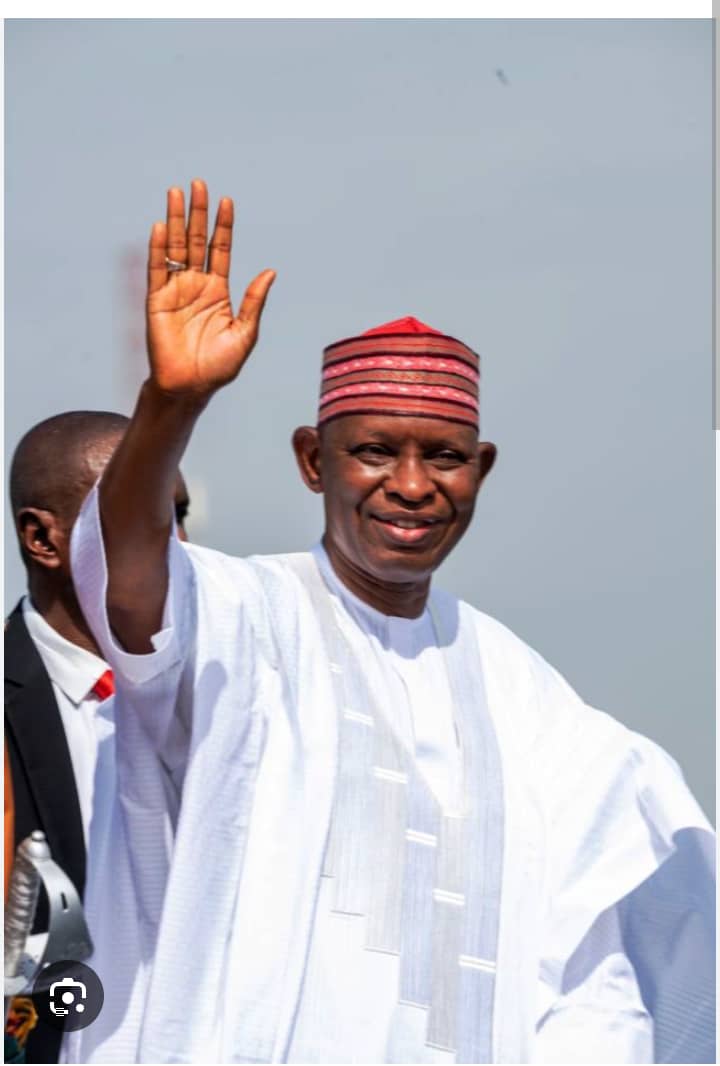

Kano Defection: “I Believe in Action, Not Too Much Talk” – Gov Yusuf Tells Stakeholders.
By Bala Salihu Dawakin Kudu
Democracy Newsline
January 11, 2026.
Kano State Governor, Abba Kabir Yusuf, has broken his silence amid intense political speculation surrounding his alleged plan to defect from the New Nigeria People’s Party (NNPP) to the ruling All Progressives Congress (APC), a move widely reported to be scheduled for January 12.
Although the Governor stopped short of confirming or denying the defection, his remarks—captured in a now-viral video—have further fueled debate across Kano’s political landscape and beyond.
Speaking to a group of stakeholders in what observers believe was a private interaction, Governor Yusuf explained his long silence on the matter, saying he deliberately avoided public commentary because he does not believe in excessive talk.
“I have never commented on the discussions that follow the issues at stake, because I don’t believe in talking too much,” the Governor said.
While Democracy Newsline could not independently verify the exact date and location of the recording, the statement clearly referenced the ongoing controversy surrounding his political future.
- Advertisement -
Drawing from local wisdom and popular culture, Governor Yusuf described how the issue had grown far beyond its initial scope.
“What started small has been magnified, as said by a Hausa singer, Karamar magana ta zama babba. As everyone knows, I don’t believe in talking too much,” he added.
Reinforcing his governing philosophy, the Governor emphasized performance over rhetoric, portraying himself as a leader driven by results rather than political noise.
“I’m always an action man. The actions that will help my people, as seen by everyone, that is what I believe in—not too much talk.”
Political Calculations and Mixed Reactions
Governor Yusuf’s comments come at a time of deep political division within Kano State. Supporters of the rumored defection argue that aligning Kano with the party controlling the federal government would bring tangible benefits, including improved access to federal projects, infrastructure funding, and political leverage at the national level.
“This is about Kano’s interest, not personal ambition,” said a senior political figure aligned with the pro-defection camp. “Politics is dynamic, and alignment with the centre has always mattered.”
However, the possible move has triggered strong resistance within the NNPP, particularly among loyalists of the Kwankwasiyya movement, which played a decisive role in Yusuf’s election victory.
Many party faithful see the rumored defection as a betrayal of trust and a direct affront to the movement’s leader and former Kano State Governor, Dr. Rabiu Musa Kwankwaso, whose political structure delivered massive grassroots support in the 2023 elections.
“This mandate belongs to the people and the Kwankwasiyya ideology,” a senior NNPP chieftain said. “Leaving the party amounts to abandoning the very platform that brought him to power.”
Political analysts believe Governor Yusuf’s carefully worded remarks suggest a deliberate strategy—one that prioritizes timing and action over public reassurance. His refusal to categorically deny the defection has been interpreted by many as a sign that negotiations may already be at an advanced stage.
As Kano residents await clearer direction, the state stands at a political crossroads, with potential implications for party structures, legislative alignments, and the balance of power ahead of future elections.
Whether Governor Yusuf ultimately defects or remains with the NNPP, one thing is clear: his next move will redefine Kano’s political trajectory—and test the limits of loyalty, pragmatism, and political survival in Nigeria’s ever-shifting democratic landscape.
Democracy Newsline will continue to monitor developments and provide updates as the situation unfolds.
(DEMOCRACY NEWSLINE NEWSPAPER, JANUARY 12TH 2026)