




Kano Governor Yusuf’s Looming APC Defection: Power Shift, Party Fault Lines, and the Uncertain Future of Kwankwasiyya.
By Bala Salihu Dawakin Kudu
Northern Bureau Chief
Jan 3, 2026.
Kano State stands on the brink of a major political realignment as Governor Abba Kabir Yusuf is set to formally join the ruling All Progressives Congress (APC) on Monday.
If confirmed, the defection will not only redraw the political map of Kano but could also ignite fresh disputes within the APC family, weaken the once-dominant Kwankwasiyya movement, and redefine the future of two of the most influential political actors in the state: Rabiu Musa Kwankwaso and Abba Yusuf himself.
- Advertisement -
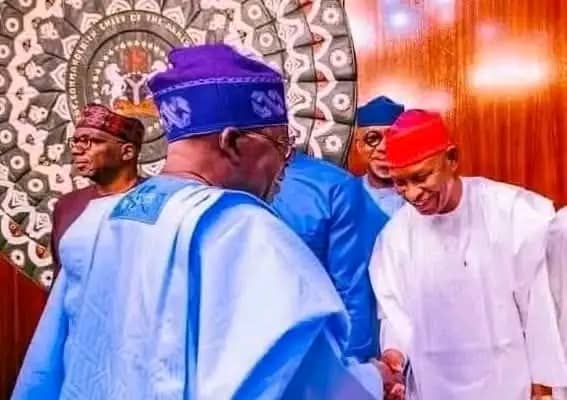
Governor Yusuf’s anticipated reception by Vice President Kashim Shettima and APC National Chairman Yitwalda Nentawe in Abuja signals that this is no routine defection. It is a move with national implications. Kano, Nigeria’s most populous state and a perennial electoral battleground, has long been a prize that major parties covet.
By absorbing a sitting governor elected on the platform of the NNPP, the APC would not only consolidate power at the centre but also neutralize one of the most potent opposition structures in the North-West.
President Bola Tinubu’s initial hesitation—reportedly tied to the absence of Yusuf’s political godfather, Rabiu Kwankwaso—underscores the strategic importance of the Kwankwasiyya movement.
Kwankwaso’s refusal to defect alongside his protégé suggests that what is unfolding is not merely a party switch, but a generational and ideological rupture.
While the APC may publicly celebrate Yusuf’s entry, the party in Kano is far from monolithic. The recall of Abdullahi Ganduje and the hurried return of state chairman Abdullahi Abbas reflect the urgency—and anxiety—within the party hierarchy.
Ganduje remains a towering figure in Kano APC, with loyalists who endured years in opposition before reclaiming federal relevance. Yusuf’s sudden arrival as a sitting governor could trigger internal rivalries over control of party machinery, appointments, and the 2027 ticket. Long-standing APC members may resist any attempt to sideline them in favour of Yusuf’s former NNPP allies, especially if mass defections accompany the governor.
This tension raises the real possibility of an internal APC crisis—one driven not by ideology, but by competing ambitions, mistrust, and the struggle for supremacy in a post-defection Kano APC.
For over a decade, Kano politics revolved around the Ganduje–Kwankwaso rivalry. Yusuf’s move threatens to upend that binary. If the governor defects without Kwankwaso, Kano could witness the gradual dismantling of the Kwankwasiyya structure within government, even if its grassroots loyalty remains intact.
This would mark a shift from a personality-driven movement to a more conventional party-based politics dominated by the APC. State institutions, patronage networks, and local government structures are likely to tilt toward the ruling party, potentially weakening NNPP’s operational capacity ahead of future elections.
However, Kano’s politically conscious electorate has a history of resistance. Any perception that Yusuf’s defection betrays the mandate that brought him to power could fuel public discontent, protests, or a quiet rebellion at the ballot box.
Rabiu Kwankwaso’s political future now enters a defining phase. Though out of office, his cult-like following remains his greatest asset. By refusing to defect, Kwankwaso positions himself as the moral anchor of opposition politics in Kano and beyond.
In the short term, he may lose access to state power, but in the long term, he could emerge as the rallying point for disaffected NNPP members, civil society actors, and even disgruntled APC factions. Whether he chooses to rebuild, merge forces with other opposition blocs, or bide his time for 2027 will determine whether Kwankwasiyya survives as a movement or fades into political nostalgia.
For Governor Yusuf, joining the APC offers immediate advantages: federal backing, smoother centre–state relations, and insulation from political isolation. Yet it is a high-stakes gamble. His legitimacy among Kwankwasiyya loyalists is already under strain, and managing an APC coalition in Kano will require deft political balancing.
If he fails to harmonize interests within the APC or alienates his original support base, Yusuf risks becoming a governor without a solid political home—caught between a resentful old base and a skeptical new one.
Governor Abba Yusuf’s expected defection to the APC may appear, on the surface, as a triumph for the ruling party. But beneath the handshakes and photo opportunities lie unresolved tensions that could reshape Kano politics in unpredictable ways.
Whether this moment ushers in stability or sparks a new cycle of political crisis will depend on how inclusively the APC manages its expanded family, how Kwankwaso repositions himself, and how the people of Kano interpret this dramatic turn in their state’s political journey. In Kano, history suggests that no political move goes unanswered for long.
Wrote by Bala Salihu Dawakin Kudu from Democracy Newsline Political Desk, 08060017934
(DEMOCRACY NEWSLINE NEWSPAPER, JANUARY 3RD 2026)