



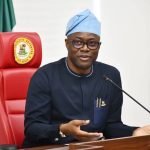



State Police: A Timely Reform That Demands Strong Safeguards
Former Kogi Attorney General Prince Ben Ikani Backs State Police, Calls for Broad-Based Consultation
Ahiaba Douglas,Abuja
A former Attorney General and Commissioner for Justice of Kogi State, Prince Ben Ikani, has thrown his weight behind the decision of the President Bola Ahmed Tinubu-led Federal Government to establish State Police, describing the initiative as a timely and necessary response to Nigeria’s growing security challenges.
- Advertisement -
Ikani, a respected legal practitioner and former Director of Prosecution at the National Drug Law Enforcement Agency (NDLEA) and the Economic and Financial Crimes Commission (EFCC), argued that Nigeria’s enormous size and population make it unrealistic to rely solely on the Nigeria Police Force, which operates predominantly under federal authority, to provide effective policing across the country.
According to him, with Nigeria’s population now exceeding 230 million, the country requires a more decentralized and responsive policing structure capable of maintaining a visible security presence within communities.
He maintained that, in a federal system of government such as Nigeria’s, the existence of policing structures at the federal, state and potentially local levels is both necessary and expedient.
“Police visibility automatically translates to policing itself,” Ikani noted, stressing that a strong and visible police presence can serve as an important deterrent to crime.
However, while expressing support for State Police, the former Kogi Attorney General cautioned against ignoring the serious risks associated with the proposed system. He acknowledged concerns that State Police could be subjected to political manipulation, particularly by politicians who may seek to use security agencies against political opponents.
Ikani stressed that these concerns should not be interpreted as an argument against the establishment of State Police. Rather, he said, they should motivate policymakers to develop adequate constitutional, legal and institutional safeguards to prevent abuse.
He therefore called for broad consultation before the proposed legislation is concluded, urging the National Assembly to seek the contributions of all relevant segments of Nigerian society.
According to him, Civil Society Organisations (CSOs), professional bodies, legal practitioners, security experts, traditional institutions and other relevant stakeholders should be given meaningful opportunities to contribute to the process.
He warned that restricting discussions on such a sensitive national issue largely to members of the National Assembly could reinforce the apprehensions already expressed by many Nigerians.
Such an oversight, he argued, could ultimately jeopardize public confidence in the reform and undermine the prospects of a successful State Police system.
The former Director of Prosecution also expressed concern over what he described at the speed with which the bill establishing State Police is being considered by the National Assembly.
While acknowledging assurances that adequate “political safeguards” would be introduced to prevent State Governors from using State Police for political purposes or to victimize opponents, Ikani said the concerns of Nigerians remain genuine and deserve serious attention.
For him, the success of State Police will ultimately depend not only on the strength of the legislation establishing it, but also on the quality of leadership at the state level.
He argued that the political will, integrity and moral rectitude of State Governors would be critical to the reliability, effectiveness and survival of the proposed system.
Governors, he stressed, must be willing to remain neutral and resist the temptation to interfere in the professional and operational affairs of State Police formations.
Ikani’s position therefore presents State Police as both an opportunity and a constitutional challenge: an opportunity to bring policing closer to the people and improve security, but also a challenge requiring robust safeguards against political abuse.
As Nigeria continues to grapple with insecurity across its vast territory, the debate over State Police is likely to remain a major issue in the country’s ongoing constitutional and security-sector reforms. For Ikani, the objective should not merely be to establish another layer of policing, but to create a system that is effective, accountable, professional, politically neutral and ultimately responsive to the security needs of Nigerians.
(DEMOCRACY NEWSLINE NEWSPAPER, AUGUST 23RD, 2026)