

“Storm Over Kano North: Development, Rivalry, and the Battle for 2027”
A Political Storm Brews in Kano North.
By Bala Salihu Dawakin Kudu Democracy Newsline Northern Bureau Chief
April 22, 2026.
As the winds of political change begin to gather momentum across Kano State, particularly in the Kano North Senatorial District, the atmosphere is thick with anticipation, rivalry, and sharp divisions. What should ordinarily be a season of democratic engagement is instead shaping into a contest defined by influence, loyalty, and competing narratives of development.
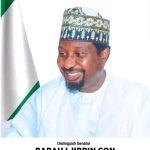
At the center of this unfolding story stands Barau I. Jibrin, the Deputy Senate President, whose tenure has been widely associated with infrastructural projects and social interventions across Kano North. From roads and educational initiatives to empowerment programs, many residents view his leadership as a cornerstone of progress in the region.
Yet, in politics, visibility often invites opposition.
- Advertisement -
As political tensions rise in Kano State—especially in Kano North—it is becoming increasingly surprising to imagine anyone stepping forward to challenge Deputy Senate President Barau I. Jibrin in the 2027 elections, given the scale of development projects attributed to him in the zone.
An investigation conducted by Democracy Newsline reveals that Kano North is home to some of the most prominent political heavyweights in the state, including Abdullahi Umar Ganduje, a former governor and past national chairman of the APC; Abubakar Abba Bichi; Hon. Bala Tsanyawa; Tijjani Muhammed Gwarzo; Engr. Rabiu Sulaiman Bichi; and Architect Aminu Dabo.
Despite this concentration of influential figures, critics argue that the district suffers from a lack of elder statesmanship. Instead of fostering unity and development, some leaders are accused of fueling political disputes driven by personal ambition, rivalry, and resentment.
Observers note that if genuine development is the goal, it raises an important question: what fault can truly be found in Senator Barau’s stewardship? Across Kano State, his contributions have earned widespread recognition.
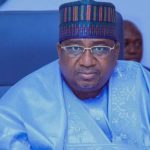
Further findings from Democracy Newsline indicate that Abdullahi Tijjani Muhammad Gwarzo, a former local government chairman, deputy governor, and Minister of State for Housing and Works, is preparing to contest the Kano North senatorial seat.
His entry into the race, however, has sparked controversy.
Some community members allege that his candidacy is less about public service and more about political retaliation. The narrative traces back to his removal from ministerial office under Bola Ahmed Tinubu, after which rumors circulated suggesting that Senator Barau influenced the decision—claims reportedly echoed by certain political figures in the region.
Critics are asking difficult questions: what tangible projects did Gwarzo deliver during his tenure as minister, particularly across the 16 local government areas of Kano North?
According to the investigation, no widely acknowledged development projects have been identified within that period. Even in his home local government, evidence of significant federal interventions remains scarce.
This has led some political analysts to argue that encouraging such a candidacy may reflect a lack of genuine commitment to the region’s progress. Instead, they see it as an extension of internal political rivalries.
Residents from Gwarzo Local Government have reportedly described his senatorial ambition as an act of political vendetta rather than a people-driven movement. One associate, speaking anonymously, suggested that Gwarzo struggled to maintain political cohesion even during his time as deputy governor, raising doubts about his ability to unify a broader constituency.
A Region at a Crossroads
Political analysts emphasize that the Kano North senatorial seat has evolved beyond a local position—it now carries broader significance for both Northern Nigeria and the country at large. The performance of Senator Barau is often cited as a benchmark, with many arguing that continuity could sustain ongoing development.
On the other hand, the entrance of a challenger introduces the possibility of political competition, which—if constructive—can strengthen democracy. However, if driven by resentment and factionalism, it risks plunging the region into unnecessary conflict.
The unfolding political drama in Kano North highlights a familiar dilemma in democratic societies: the tension between continuity and change.
While some see the challenge against Senator Barau as an opportunity for choice, others interpret it as a distraction fueled by internal disputes among elites. What remains clear is that the people of Kano North will ultimately decide whether their future lies in sustaining current development efforts or embracing a new political direction.
As 2027 approaches, the district stands at a critical juncture—one that will test not only the strength of its leaders but also the priorities of its people.
—To be continued
(DEMOCRACY NEWSLINE NEWSPAPER, APRIL 22ND 2026)