





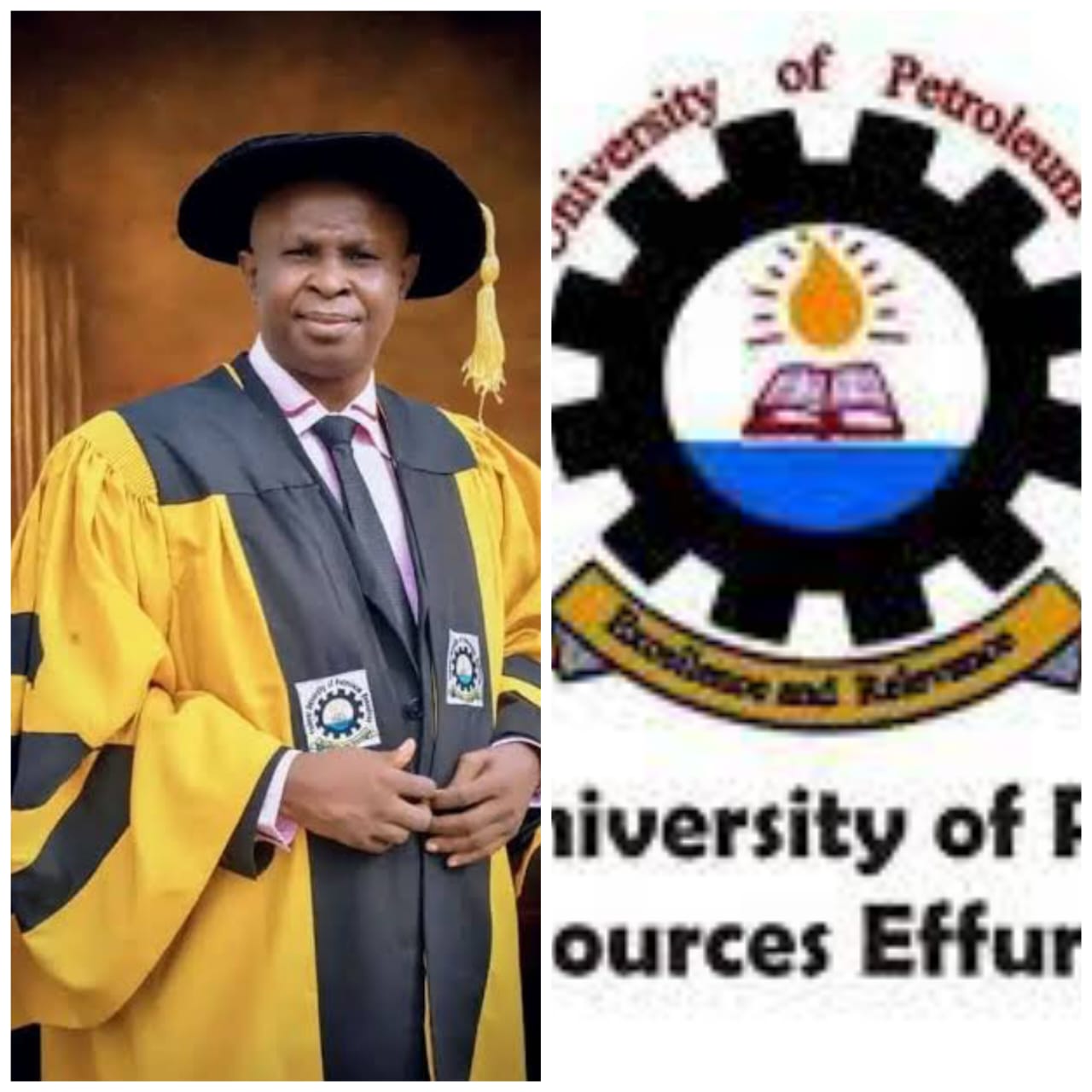

The Laudable Story of How Federal University of Petroleum Resources Partnered With Edo Refinery and Petrochemicals Company Limited For Assets Management and Capacity Development Training
By Wilson Macaulay
In the contemporary global energy industry, the strength of any nation’s petroleum sector is no longer measured merely by the abundance of crude oil reserves beneath its soil, but increasingly by the quality of its human capital, the sophistication of its technological competence, and the institutional capacity available for sustainable industrial growth. Across the world, universities with specialized mandates have become strategic engines for industrial transformation through research, manpower development, technical innovation, and capacity enhancement. In Nigeria, one institution that has steadily distinguished itself in this regard is the Federal University of Petroleum Resources, popularly known as FUPRE.
During the university’s media briefing held on May 4, 2026, the Vice Chancellor of FUPRE, Professor Ezekiel Oghenenyerhovwo Agbalagba, highlighted several landmark achievements of the institution, including the strategic partnership between FUPRE and Edo Refinery and Petrochemicals Company Limited in the area of Assets Management and Capacity Development Training. That revelation further underscored the rising national and international relevance of FUPRE as a specialized institution capable of providing world-class technical support to the petroleum and energy industry.
The collaboration between FUPRE and Edo Refinery represents a shining example of the productive relationship that can exist between academia and industry when both institutions are united by a common vision of excellence, innovation, and sustainable development. It is a model partnership that deserves commendation, not only because of its immediate benefits to Edo Refinery, but also because it demonstrates the immense potential available to corporate organizations willing to strategically engage Nigerian universities for operational advancement and workforce optimization.
From an academic and industrial perspective, the significance of this partnership cannot be overstated. Asset management within the petroleum refining sector is a highly technical discipline involving the strategic planning, maintenance, monitoring, optimization, and lifecycle management of industrial facilities, equipment, and operational systems. Poor asset management often results in operational inefficiencies, safety failures, production downtime, environmental hazards, and massive financial losses. Therefore, organizations operating in the oil and gas industry require not just experienced personnel but highly trained professionals equipped with current technical knowledge and global best practices.
This is precisely where FUPRE has continued to demonstrate exceptional institutional value.
Established as Nigeria’s premier petroleum university, first in Africa Sixth in the World, FUPRE is specifically designed to bridge the manpower and technological gaps within the nation’s oil and gas industry. Over the years, the institution has evolved into a center of excellence in petroleum engineering, offshore engineering, geosciences, environmental management, maritime studies, energy economics, safety engineering, and industrial research. Its specialized academic structure uniquely positions it to provide industry-driven solutions tailored to the operational realities of the energy sector.
The partnership with Edo Refinery therefore reflects a strategic recognition of FUPRE’s technical credibility and professional competence. Through this collaboration, the university have provided specialized training and capacity-building programs aimed at enhancing operational efficiency, technical expertise, asset sustainability, maintenance culture, and workforce productivity within the refinery ecosystem.
Capacity development remains one of the most important drivers of industrial growth in the twenty-first century. In a highly competitive energy market, industries that fail to continuously train and retrain their workforce risk technological obsolescence and declining productivity. Human capital development is now universally acknowledged as a critical determinant of organizational success. This is why advanced economies invest heavily in partnerships between universities and industries.
FUPRE’s collaboration with Edo Refinery therefore aligns with global best practices where universities serve not merely as academic institutions but as innovation hubs and industrial solution centers.
One of the most commendable aspects of the partnership is its emphasis on practical industry-oriented training rather than purely theoretical instruction. Modern refining operations require specialized competencies in areas such as predictive maintenance, reliability engineering, industrial safety systems, process optimization, digital asset monitoring, corrosion control, risk management, and energy efficiency systems. FUPRE, with its reservoir of seasoned academics, researchers, engineers, laboratory facilities, and industry-linked programs, possesses the intellectual and technical capacity to provide such high-level professional training.
The collaboration also demonstrates the growing confidence of private-sector players in indigenous institutions. For many years, Nigerian industries excessively depended on foreign consultants and overseas training programs for technical manpower development. While international collaborations remain valuable, there is increasing recognition that local institutions like FUPRE possess the contextual understanding and technical expertise necessary to provide cost-effective and sustainable solutions tailored to Nigeria’s industrial environment.
By partnering with FUPRE, Edo Refinery have not only invested in human capital development but also contributed to strengthening Nigeria’s local content aspirations within the petroleum industry. This aligns strongly with the objectives of the Nigerian Oil and Gas Industry Content Development Board framework, which seeks to deepen indigenous participation in all aspects of the energy sector.
Furthermore, the collaboration carries enormous economic implications. Efficient asset management directly translates into reduced operational costs, improved equipment lifespan, minimized downtime, enhanced productivity, and increased profitability. In the refining business where operational interruptions can result in colossal financial losses, effective capacity development becomes indispensable. Through professional training programs coordinated by FUPRE, operational personnel acquire the technical knowledge required to maximize refinery performance while ensuring compliance with international safety and environmental standards.
Beyond Edo Refinery, the broader implication of this success story is that many other corporate organizations across Nigeria can equally benefit immensely from strategic partnerships with FUPRE. The university possesses enormous untapped potential capable of supporting sectors beyond conventional petroleum operations. Industries in power generation, petrochemicals, manufacturing, maritime operations, environmental remediation, renewable energy, engineering services, logistics, industrial safety, and infrastructure development can all leverage FUPRE’s expertise for workforce development and technical consultancy.
For instance, organizations can collaborate with FUPRE in areas such as:
Executive professional training programs
Industrial safety certification
Research and development initiatives
Equipment maintenance and reliability studies
Environmental impact assessment
Artificial intelligence applications in energy operations
Renewable energy technology development
Pipeline integrity management
Offshore operational safety
Process engineering optimization
Technical workforce certification
Digital oilfield solutions
Industrial automation systems
These areas of collaboration can significantly improve operational efficiency, reduce waste, enhance productivity, and boost profitability for corporate organizations.
Another remarkable dimension of the FUPRE-Edo Refinery partnership is its contribution to national development. Nigeria’s quest for economic diversification and industrialization cannot succeed without strong institutions capable of supplying competent technical manpower. Universities like FUPRE therefore occupy a strategic position within the national development architecture. Through industry partnerships, FUPRE is helping to close the long-existing gap between classroom knowledge and industrial application which is the Triple Helix model.
The university is also contributing to reducing unemployment by producing highly skilled graduates who are industry-ready. In many developing economies, one of the major challenges facing employers is the disconnect between academic training and practical workplace demands. FUPRE’s industry-focused curriculum and corporate collaborations are gradually addressing this challenge by ensuring that students and trainees acquire relevant technical competencies aligned with current industrial realities again the triple helix model makes it perfect.
Equally noteworthy is the visionary leadership of the university management under the administration of Professor Ezekiel Agbalagba. Under his stewardship, FUPRE has continued to expand its visibility, strengthen industry relationships, promote research excellence, and position itself as a globally competitive petroleum institution. The partnership with Edo Refinery is therefore is not an isolated achievement but part of a broader institutional strategy aimed at transforming FUPRE into a leading center for energy education, research, innovation, and industrial solutions in Africa and globally.
The success of the partnership should also serve as a wake-up call to government agencies, multinational corporations, indigenous oil companies, and industrial stakeholders across Nigeria. Rather than looking outward for every technical solution, there is an urgent need to maximize the enormous intellectual resources available within Nigerian universities. Institutions like FUPRE possess highly qualified professionals, sophisticated laboratories, technical research capabilities, and industry-focused academic frameworks that can support national industrial transformation.
Indeed, the FUPRE-Edo Refinery collaboration is more than just a training arrangement; it is a strategic model for sustainable industrial growth, local content development, knowledge transfer, and national capacity enhancement. It reflects what becomes possible when academia and industry work together toward a common developmental objective.
As Nigeria continues to pursue economic modernization, energy security, industrial efficiency, and technological advancement, partnerships of this nature will become increasingly indispensable. FUPRE has clearly demonstrated through this collaboration that Nigerian universities can effectively serve as catalysts for industrial innovation and operational excellence.
The story of how FUPRE partnered with Edo Refinery for Assets Management and Capacity Development Training is therefore not merely a corporate success narrative. It is a testimony to the transformative power of knowledge, institutional vision, technical competence, and strategic collaboration.
It is a laudable achievement worthy of national recognition and emulation.
For corporate organizations seeking operational efficiency, workforce excellence, industrial sustainability, and technological advancement, the message is clear: FUPRE stands as a dependable partner for capacity development, technical innovation, and industrial progress in Nigeria’s evolving energy landscape.
Wilson Macaulay is a Journalist Author, good Governance and development advocate Contact @08030886420 Whatsapp only
- Advertisement -

(DEMOCRACY NEWSLINE NEWSPAPER, MAY 21ST 2026)