



WHEN PERFORMANCE SPEAKS, PROPAGANDA FADES: SUNDAY KARIMI AND THE NEW POLITICS OF REPRESENTATION IN KOGI WEST
By Gideon Ayodele
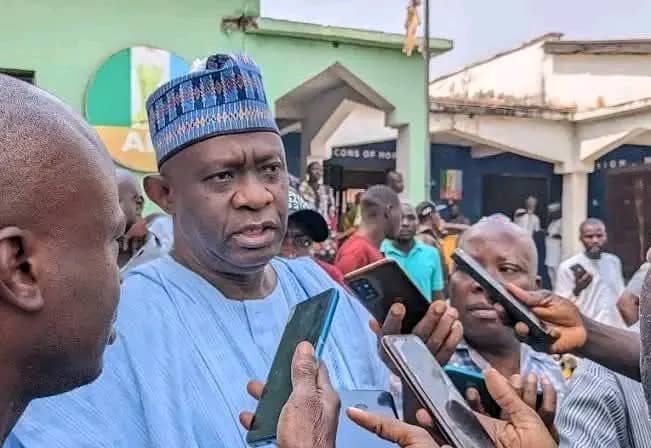
There is a familiar saying in public life: performance needs no introduction. In Kogi West, the political career of Senator Sunday Steve Karimi is increasingly being presented by his supporters through that prism—a record they say is defined less by rhetoric and more by projects, legislative interventions and sustained engagement with constituents.
- Advertisement -

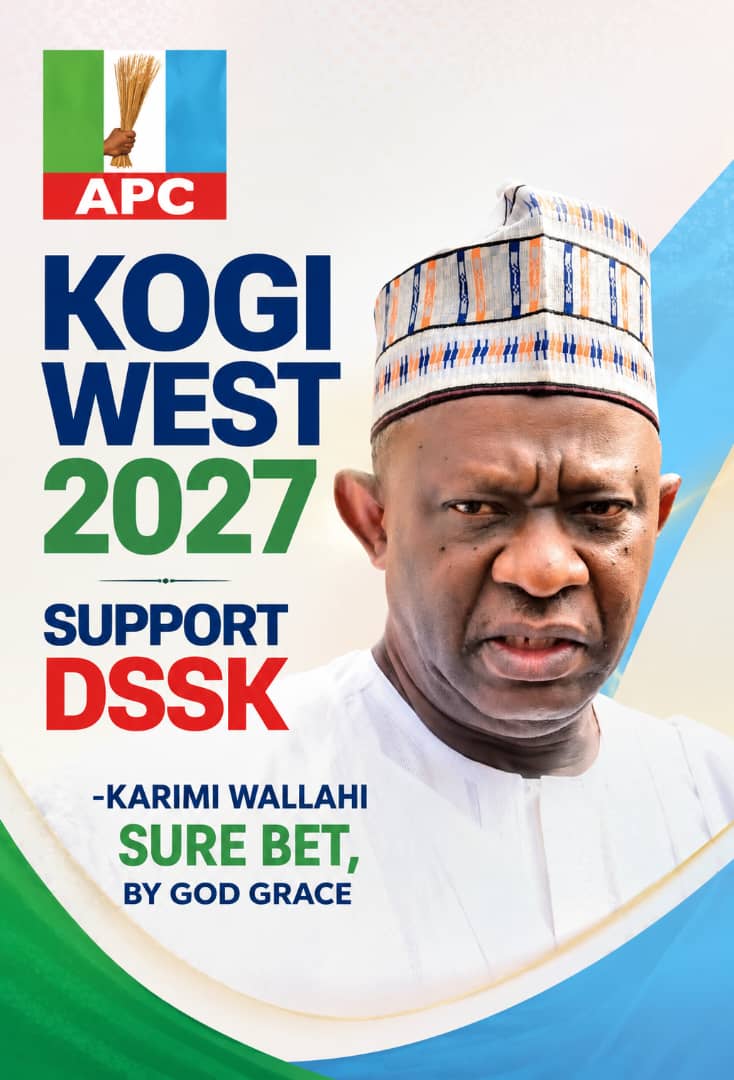
Since his election to the Senate in 2023, Karimi has sought to build on the legislative experience he acquired during his two terms in the House of Representatives. His supporters argue that the transition from representing Yagba Federal Constituency to representing the wider Kogi West Senatorial District has broadened both the scale and scope of his interventions.
Indeed, official National Assembly records document several bills sponsored by Karimi, including the Federal Highway Act (Amendment) Bill, Electoral Act (Amendment) Bill and the Federal University of Agriculture, Kabba (Establishment) Bill.
But beyond the chambers of the National Assembly, the political narrative surrounding Karimi has increasingly centred on what constituents can physically see in their communities.
FROM LEGISLATIVE PRESENCE TO GRASSROOTS IMPACT
For his admirers, Karimi’s defining political proposition is simple: representation should be measurable.
Water projects, electricity infrastructure, roads, education interventions, security initiatives, healthcare support and empowerment programmes have consequently become central features of the narrative around his tenure.
Recent reporting, for instance, documented the commencement of seven industrial boreholes in Lokoja following a commitment made by the senator during his August 2026 engagement with traditional and community stakeholders.
That intervention sits within a broader water agenda attributed to the senator across Kogi West.
His supporters point to the rehabilitation and construction of boreholes and solar-powered water schemes in communities across the district, arguing that such interventions address one of the most basic requirements of rural development: access to potable water.
And there is a powerful political lesson in that.
A completed borehole does not need a campaign speech to explain what it does. When water begins to flow where residents previously depended on distant or unreliable sources, the infrastructure itself becomes the message.
LIGHTING UP COMMUNITIES
Electricity and rural connectivity have similarly featured prominently in the account of Karimi’s representation.
His supporters cite the provision and rehabilitation of transformers, alongside solar-powered streetlights, as interventions designed not only to improve domestic electricity access but also to stimulate evening commerce and enhance community security.
In political communication, this is significant.
The traditional politician often seeks visibility through rallies, declarations and media appearances. The infrastructure-focused politician seeks visibility through the physical footprint of government intervention.
Karimi’s supporters insist that his model belongs to the latter category.
ROADS, CONNECTIVITY AND A NEW FEDERAL PRESENCE
Perhaps the most consequential development associated with Karimi’s current political narrative is the Federal Executive Council’s approval of ₦128.7 billion for two major road projects affecting Kogi West.
The approved projects include the ₦104 billion rehabilitation of the Ilorin–Omu-Aran–Egbe–Kabba–Obajana Road and the ₦24.7 billion Kabba–Omuo–Ifaki–Ado Road. Karimi publicly welcomed the approval and attributed the development partly to sustained advocacy and engagement with federal authorities.
The significance of these roads extends beyond asphalt.
For communities across Kogi West, road infrastructure is tied directly to agriculture, commerce, education, healthcare, security and regional integration. Better connectivity can reduce travel difficulties, improve movement of farm produce and strengthen links between communities and major markets.
Consequently, the road approvals have become an important element of the senator’s supporters’ argument that effective legislative representation is also about attracting federal attention to local infrastructure deficits.
THE EGBe SECURITY MODEL
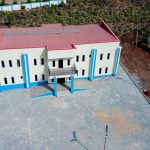
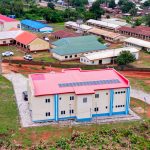
Perhaps no intervention has generated as much attention as the Forward Operating Base at Egbe in Yagba West.
The facility was privately initiated and funded by Senator Karimi and designed to strengthen security along the Kogi-Kwara-Ekiti axis. The Guardian reported in September 2024 that the senator had communicated plans to hand over the completed facility to the Nigerian Army.
The project is politically significant because insecurity remains one of the most consequential challenges confronting rural communities across Nigeria.
For Karimi’s supporters, the Egbe base represents a departure from the conventional expectation that elected representatives should limit their interventions to legislation and lobbying. It is presented instead as an example of direct investment in an area where security has immediate implications for farming, transportation, commerce and community life.
LEGISLATION BEYOND THE CONSTITUENCY
Karimi’s political profile is not confined to constituency projects.
National Assembly records show his sponsorship of legislation covering highways, electoral reform, higher education and other areas of public policy.
He also served as Chairman of the Senate Committee on Senate Services in the 10th Senate, according to the National Assembly’s official committee listing.
This legislative dimension is important because the Senate is ultimately a national institution. Constituency representation and national lawmaking are therefore two sides of the same mandate.
Karimi’s supporters argue that his record demonstrates an attempt to combine both responsibilities—bringing federal projects home while participating in legislation that affects the wider Nigerian polity.
HUMAN CAPITAL: INVESTING IN THE NEXT GENERATION
Education and youth empowerment have also featured prominently in the senator’s constituency narrative.
Scholarship and bursary interventions, alongside empowerment initiatives and agricultural support, have been presented as mechanisms for easing the economic pressure on young people, students, women and other vulnerable groups.
Recent reporting on Karimi’s town-hall engagements cited his office’s education initiatives and bursary interventions as part of the broader account of his constituency work.
For a region whose future depends heavily on the productivity and education of its younger population, such interventions carry political and socioeconomic significance beyond the immediate beneficiaries.
THE TINUBU FACTOR
Karimi has also positioned himself as a visible advocate of President Bola Ahmed Tinubu’s administration and its Renewed Hope Agenda.
His political messaging has increasingly linked his constituency interventions to the broader federal development framework, arguing that stronger collaboration between Kogi West and the Federal Government can produce greater access to infrastructure and development opportunities.
That alignment has also given Karimi a distinct position within Kogi State’s political landscape as the 2027 electoral cycle approaches.
His public advocacy for Tinubu’s continuation is therefore not merely a matter of party rhetoric; it forms part of the political argument he and his supporters are making about continuity between federal policy, legislative representation and constituency development.
WHEN PROJECTS BECOME POLITICAL LANGUAGE
Politics is ultimately a contest over trust.
Every election asks citizens to assess whether promises have translated into meaningful action.
This is where Karimi’s supporters believe his political story becomes particularly compelling.
They point to water infrastructure and ask communities to judge the difference.
They point to transformers and streetlights and ask residents to assess the impact.
They point to roads and ask farmers, traders and commuters what improved connectivity means.
They point to the Egbe Forward Operating Base and ask communities living along the border corridor what stronger security infrastructure means.
They point to scholarships, empowerment programmes and legislative interventions and ask beneficiaries whether representation has remained an abstract concept.
That is the essence of the phrase “when performance speaks, propaganda dies.”
It is, fundamentally, a political argument: that physical development creates its own evidence.
Yet claims about the overall ranking of any senator’s performance remain political assessments rather than objective measurements. What can be established more concretely are the documented projects, legislative records and government approvals associated with Karimi’s tenure.
2027 AND THE TEST OF THE PEOPLE
As 2027 draws closer, Senator Sunday Steve Karimi’s political future will ultimately be determined through the electoral process.
His supporters are already framing the contest around continuity, arguing that the scale of projects and interventions recorded during his current tenure provides a basis for another term.
Opponents and other political actors will inevitably present different assessments of the same period.
But the defining feature of the emerging debate is that Kogi West now has a substantial body of projects and legislative records against which claims can be tested.
And that may be the most important evolution in the politics of representation.
The era when political narratives could exist entirely on billboards, press statements and campaign podiums is giving way to a more demanding political environment—one where citizens increasingly ask: What changed? Where is it? Who benefited?
For Karimi, the answer his supporters are offering is visible across communities: water, light, roads, security, education, healthcare, empowerment and legislative advocacy.
Whether those achievements will translate into renewed electoral support in 2027 is a decision that belongs to the people of Kogi West.
For now, however, one fact is increasingly difficult to ignore: Senator Sunday Steve Karimi has made physical development and constituency intervention central to his political identity—and as the next electoral contest approaches, that record will be at the heart of the conversation.
DemocracyNewslineNewspaper September 19, 2026