




EFCC Arrests Eight, Confiscates Six Trucks for Illegal Mining in Kwara.
By Bala Salihu Dawakin Kudu
Democracy Newsline, February 24, 2026.
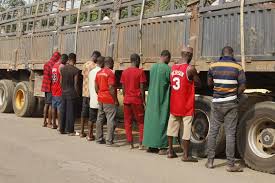
The Ilorin Zonal Directorate of the Economic and Financial Crimes Commission (EFCC) has intensified its crackdown on illegal mining in Nigeria’s North-Central corridor, arresting eight suspects and confiscating six trucks allegedly used for unlawful mineral excavation and transportation along the Ilorin–Ogbomoso axis spanning Kwara State and Oyo State.
The arrests, which took place on Saturday, February 20, 2026, followed what the Commission described as credible intelligence and days of painstaking surveillance across flashpoints notorious for illegal mining operations.
- Advertisement -
The suspects were intercepted while transporting six truckloads of assorted solid minerals suspected to be lithium and kaolin—two resources of significant commercial value in global markets.
In a statement issued on Monday by the EFCC’s Head of Media and Publicity, Dele Oyewale, the anti-graft agency disclosed that the latest operation brings to 18 the number of individuals apprehended within a month for suspected illegal mining activities in the zone.
“Operatives of the Ilorin Zonal Directorate of the Economic and Financial Crimes Commission have arrested eight persons and six trucks for alleged involvement in illegal mining activities along the Ilorin–Ogbomoso axis of Kwara and Oyo States,” the statement read.
“The suspects were arrested following credible intelligence and days of surveillance on unlawful mineral excavation and transportation across parts of the two states. They were intercepted alongside six truckloads of assorted minerals suspected to be lithium and kaolin.”
Illegal mining has increasingly become a major economic and environmental concern across Nigeria’s mineral-rich belts. Kwara and Oyo states, particularly communities along the Ilorin–Ogbomoso corridor, have witnessed a surge in unauthorized excavation activities driven by rising global demand for lithium—a critical component in the production of electric vehicle batteries, renewable energy storage systems, and electronic devices.
Kaolin, another mineral allegedly recovered during the operation, is widely used in ceramics, paper production, pharmaceuticals, cosmetics, and paint manufacturing. Its steady industrial demand has also made it attractive to illicit operators seeking quick profits outside regulatory frameworks.
Preliminary investigations by the EFCC revealed that the suspects allegedly operated without the requisite mining licences, permits, or regulatory approvals as mandated under Nigeria’s Minerals and Mining Act.
Authorities say such unlawful activities not only deprive the Federal Government of legitimate revenue but also expose host communities to environmental degradation, land erosion, and water contamination.
Security experts warn that illegal mining often overlaps with other forms of economic sabotage, including tax evasion, smuggling, and in some instances, the financing of organized criminal networks.
The destruction of farmlands and contamination of water sources have also sparked tensions between mining operators and local communities.
Residents along the Ilorin–Ogbomoso route have repeatedly raised concerns about heavy-duty trucks damaging rural roads and increasing accident risks.
Community leaders have called for sustained enforcement actions to deter further exploitation of natural resources.
The EFCC’s recent operations reflect a broader federal effort to sanitize the solid minerals sector, long considered an underdeveloped but potentially transformative component of Nigeria’s economy. With the Federal Government pushing for diversification away from oil dependency, authorities have emphasized stricter enforcement of mining regulations to protect revenue streams and attract legitimate investors.
“The suspects will be arraigned in court upon conclusion of the ongoing investigations,” the EFCC spokesman stated, reaffirming the Commission’s commitment to prosecuting offenders.
Observers note that consistent enforcement, collaboration with state governments, and stronger regulatory oversight will be crucial in curbing illegal mining operations. As Nigeria positions itself as a strategic player in the global energy transition—particularly in lithium production—ensuring transparency and lawful extraction practices remains imperative.
For now, the confiscated trucks remain in EFCC custody, while investigations continue to determine the full scope of the suspects’ operations and any possible collaborators.
The latest arrests send a clear message that the era of unchecked mineral exploitation may be drawing to a close as authorities tighten their grip on illicit activities threatening Nigeria’s economic future.
(DEMOCRACY NEWSLINE NEWSPAPER, FEBRUARY 24TH 2026)