


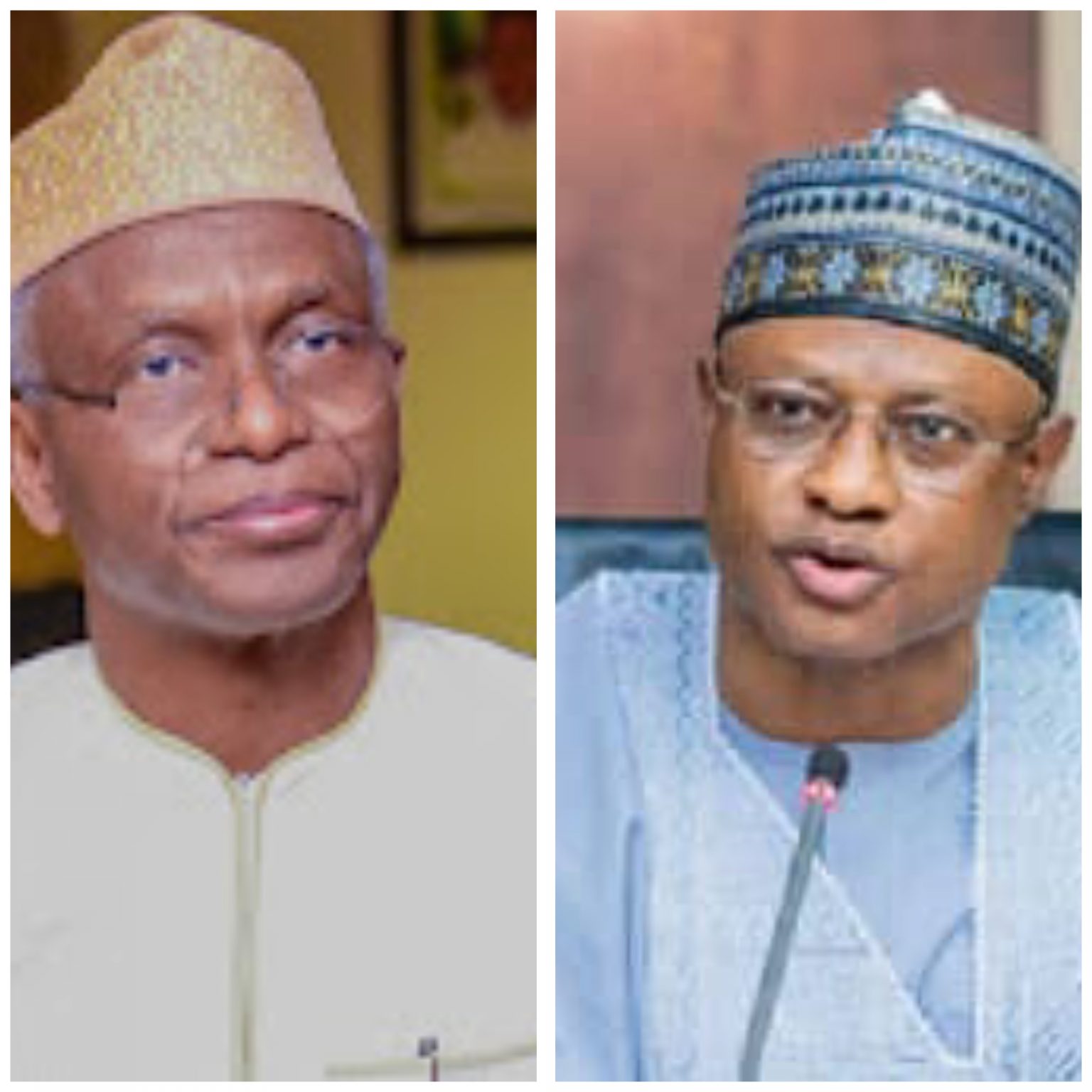

EL-RUFAI AND UBA SANI RECONCILE: What Next?.
By Bala Salihu Dawakin Kudu
Northern Bureau Chief
Democracy Newsline
March 29, 2026.
In a moment laden with symbolism and political undertones, former Kaduna State governor Nasir El-Rufai and his successor, Uba Sani, have reportedly reconciled—bringing an unexpected pause to a rift that has shaped the political atmosphere of Kaduna in recent months.
The setting of the reconciliation was as poignant as it was strategic: Gudu Cemetery, where El-Rufai’s late mother is buried. Observers note that the choice of venue added a deeply personal dimension to what is otherwise a high-stakes political development. The meeting was facilitated by Ali Pantami, whose intervention underscores the role of elder statesmen and political intermediaries in managing elite disputes within Nigeria’s power structure.
- Advertisement -
The tensions between El-Rufai and Sani have not merely been personal—they reflect deeper fractures within Kaduna’s political architecture. Once allies, the two men have diverged in governance style, political priorities, and alliances. The fallout has played out publicly, fueling speculation about factional divides within the ruling party and raising concerns about administrative continuity.
Compounding the situation are corruption allegations and ongoing investigations involving El-Rufai. While details remain fluid, anti-graft agencies have intensified scrutiny, placing the former governor under a cloud of legal uncertainty. Whether this reconciliation signals a softening of political hostilities or a strategic repositioning remains to be seen.
Pantami’s role in brokering peace is significant. Known for his influence across political and religious lines, his involvement suggests that the reconciliation may extend beyond personal forgiveness to broader political recalibration. Analysts argue that such interventions often aim to stabilize internal party dynamics, particularly in regions where political cohesion directly impacts governance and electoral outcomes.
Amid the turbulence, Bello El-Rufai has maintained a notably measured stance. By focusing on constituency development and avoiding entanglement in the feud, he has positioned himself as a pragmatic actor in Kaduna’s evolving political scene. His growing popularity and alignment with key party structures suggest a promising trajectory—one that could benefit from the easing of tensions between the state’s leading figures.
The immediate question is whether this reconciliation will translate into tangible political outcomes. Will Governor Sani’s supporters heed the call for restraint and recalibrate their stance toward El-Rufai? Can this truce foster greater unity within the ruling establishment, or is it merely a temporary détente?
Equally is the legal dimension. Political reconciliation does not necessarily equate to legal absolution. Anti-graft agencies operate within institutional frameworks that may remain unaffected by elite agreements. As such, El-Rufai’s legal battles could proceed independently of this new found peace.
For now, the reconciliation represents a pause in hostilities rather than a definitive resolution. It offers a window of opportunity—for healing, strategic alignment, and perhaps a reimagining of Kaduna’s political future. Yet, as history often shows, such moments are fragile. Their durability depends on consistent actions, mutual trust, and the willingness of both camps to move beyond past grievances.
In Kaduna, the story is far from over. The handshake at Gudu Cemetery may mark the end of one chapter—but the next is already unfolding.
(DEMOCRACY NEWSLINE NEWSPAPER, MARCH 30TH 2026)