





Ministerial Authority and Military Overreach: A Cautionary Signal to Nigeria’s Democracy
By Hon. Prince Oluwakayode Emmanuel Eseyin, PDP National Youth Leader Aspirant
Abuja, November 11, 2025—
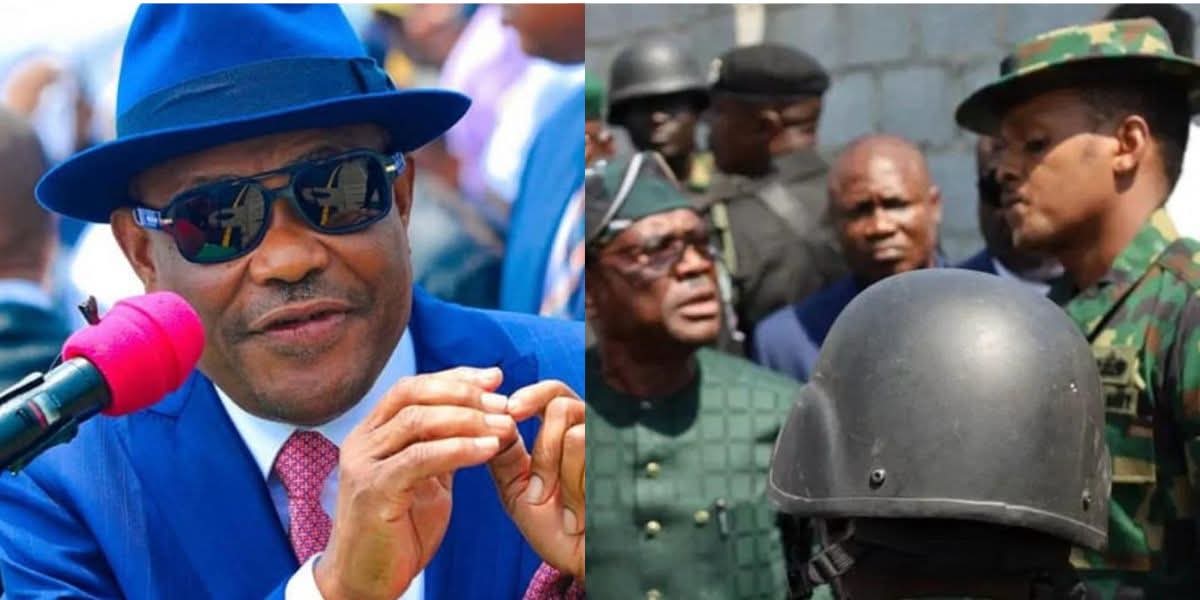
A disturbing incident unfolded in the Federal Capital Territory when a Naval Officer, Lt. Yerima, reportedly obstructed the Honourable Minister of the FCT, Nyesom Wike, from accessing a parcel of land lawfully under his ministerial jurisdiction.
What may appear on the surface as a mere confrontation is, in fact, a grave assault on constitutional order — one that challenges the very foundation of Nigeria’s democracy and hints at a worrisome resurgence of military defiance.
- Advertisement -
⸻
*The Law is Unequivocal — The Minister Acted Within His Rights*
Section 11 of the Land Use Act vests in the Minister of the FCT the same statutory powers as a State Governor, including the right to enter, inspect, and supervise any land within the Territory. The law further mandates that every occupier must grant unhindered access to the Governor or any duly authorized officer.
By this provision, Minister Wike was acting fully within his legal authority. Conversely, the Naval Officer had no lawful grounds to obstruct, confront, or deny the Minister entry — regardless of his uniform or service rank.
⸻
*Military Discipline Is a Democratic Imperative*
Section 55 of the Armed Forces Act clearly stipulates that any officer who quarrels, fights, or conducts themselves in a disorderly manner toward any person, including civilians, commits an offence punishable by up to two years’ imprisonment.
Lt. Yerima’s actions not only constitute a breach of military discipline but also represent a symbolic defiance of civilian oversight — the very principle that anchors democratic governance over military authority.
⸻
*A Troubling Pattern — Democracy at Risk*
This incident emerges at a time of growing public unease over whispers of military restiveness and undemocratic tendencies. For a junior officer to openly defy a sitting Minister of the Federal Republic is more than insubordination; it is a subtle yet dangerous affront to Nigeria’s democratic framework.
*The 1999 Constitution* (as amended), under Section 217(2)(c), is explicit:
“The Armed Forces shall be subject to the authority of the elected government.”
If this constitutional command structure can be ridiculed in public view without consequence, silence from leadership may inadvertently embolden further acts of recklessness.
⸻
*Civil Authority Must Remain Supreme*
Nigeria’s democracy—still delicate and evolving—cannot endure a culture where armed officers assume the posture of landlords over public property or gatekeepers of ministerial functions.
The rule of law, not the rule of rank, must prevail.
⸻
*In Summary*
• The FCT Minister acted within the bounds of the law.
• The Naval Officer acted outside it.
• Failure to address this act decisively could signal a dangerous slide toward institutional indiscipline — the same path that once derailed Nigeria’s democratic journey.
The Nigerian Armed Forces exist to defend democracy, not to undermine it.
Civil authority must be upheld, discipline enforced, and democratic principles protected at all times.
⸻
*Signed*
*Hon. Prince Oluwakayode Emmanuel Eseyin*
PDP National Youth Leader Aspirant