




President Tinubu Presents ₦58.4 Trillion 2026 Budget to National Assembly
Budget of Consolidation, Renewed Resilience, and Shared Prosperity
Dec. 20, 2025
By Bala Salihu Dawakin Kudu.
In a moment that may come to define a new chapter in Nigeria’s fiscal history, President Bola Ahmed Tinubu on Thursday formally presented the 2026 Appropriation Bill to a joint sitting of the National Assembly, unveiling a record-breaking ₦58.4 trillion budget proposal aimed at consolidating reforms and accelerating national development.
Branded the “Budget of Consolidation, Renewed Resilience, and Shared Prosperity,” the proposal reflects the administration’s confidence that Nigeria has crossed the most turbulent phase of its economic adjustment and is now positioned for structured, sustainable growth.
- Advertisement -
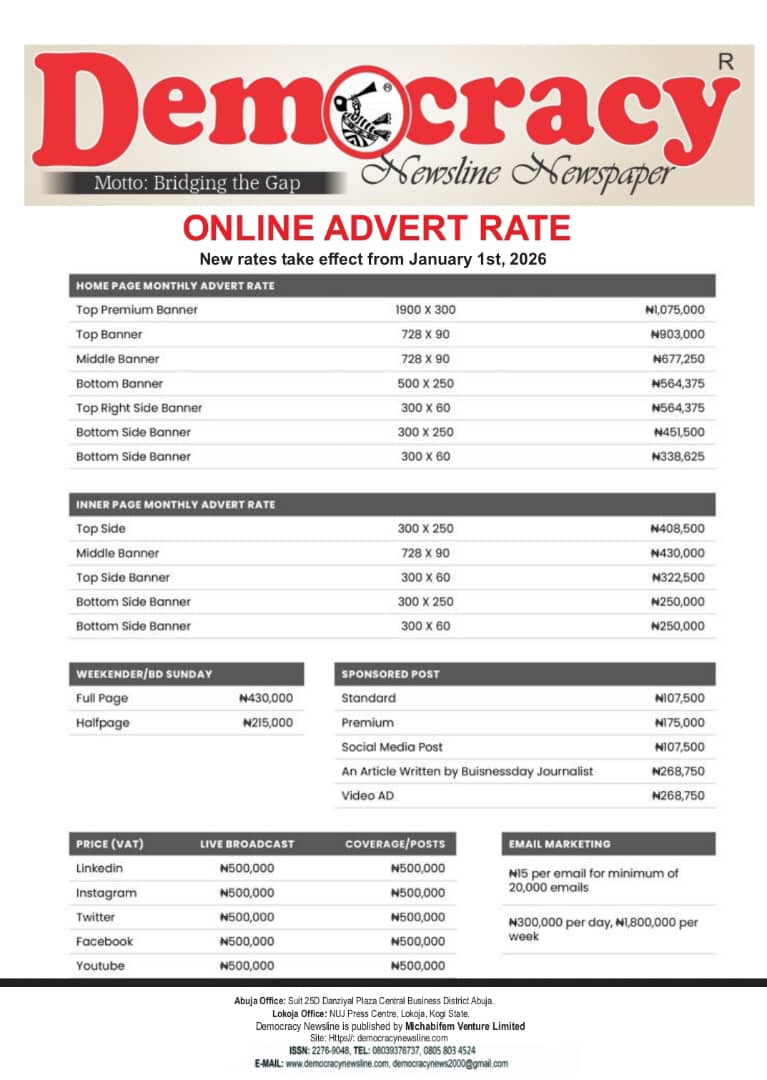
Standing before lawmakers, cabinet members, and top government officials in the hallowed chambers of the National Assembly, President Tinubu described the budget as both a reckoning with the past and a bold promise for the future.
“This is a defining moment in our national journey,” the President declared. “Over the past two years, we have confronted economic challenges head-on and laid a durable foundation for a more resilient and dynamic Nigeria.”
One of the most consequential announcements of the address was the President’s commitment to end the era of lingering capital liabilities. Tinubu revealed that all outstanding capital obligations inherited from previous fiscal years would be fully settled by March 31, 2026. From April onward, Nigeria will operate under a single, unified budget framework, eliminating the long-standing practice of rolling over unpaid projects and obligations.
According to the President, this reform is designed to restore credibility to public finance, improve project delivery, and strengthen investor confidence.
“The reforms have tested us all,” he acknowledged, referencing subsidy removal, exchange rate adjustments, and fiscal tightening measures. “But Nigerians should know that their sacrifices are not in vain. This budget takes us from survival to sustainable growth.”
The 2026 budget is anchored on conservative but strategic macroeconomic assumptions, including an oil benchmark price of $68 per barrel and an exchange rate of ₦1,400 to the US dollar.
The proposed spending framework includes:
Capital Expenditure: ₦26.8 trillion.
Recurrent Expenditure: ₦15.2 trillion.
Projected Revenue: ₦34.33 trillion.
Budget Deficit: ₦23.45 trillion.
The size of the capital component underscores the administration’s focus on infrastructure, productivity, and long-term growth, signaling a shift from consumption-driven spending to investment-led development.
Security as the Bedrock of Growth
In a country grappling with terrorism, banditry, and communal tensions, President Tinubu placed security at the heart of the 2026 fiscal plan. A massive ₦5.41 trillion allocation has been earmarked for the security sector—one of the largest in Nigeria’s history.
The funds, according to the President, will support technology-enabled surveillance, enhanced intelligence gathering, troop welfare, and community-based peacebuilding initiatives, particularly in conflict-prone regions.
“National security remains the bedrock of peace, development, and unity,” Tinubu said. “We cannot build prosperity on the foundation of fear.”
Investing in People and Infrastructure
Beyond security, the budget prioritizes sectors critical to human capital and economic competitiveness. Proposed allocations include:
Infrastructure Development: ₦3.56 trillion.
Education: ₦3.5 trillion.
Health and Social Services: ₦2.48 trillion.
The President noted that these investments aim to bridge infrastructure gaps, strengthen public education, improve healthcare access, and expand social safety nets—particularly for vulnerable populations affected by past economic shocks.
In his welcome address, Senate President Godswill Akpabio lauded the Tenth National Assembly for what he described as one of the most productive legislative years in Nigeria’s democratic history. He highlighted the passage of landmark bills spanning security, economic reform, judicial administration, electoral integrity, and social protection.
“We must remain faithful to our democratic ideals, steadfast in our values, and united in purpose,” Akpabio said. “I hold an unshakable belief that the finest chapters of Nigeria’s story still lie ahead.”
Similarly, Speaker of the House of Representatives, Rt. Hon. Tajudeen Abbas, praised the President’s resolve to implement a unified fiscal framework, calling it a critical step toward restoring order, clarity, and accountability in public finance.
He emphasized that the introduction of new National Tax Acts would expand the revenue base, strengthen non-oil income, and improve transparency across government institutions.
“This budget is guided by clear objectives,” Abbas said. “To consolidate macroeconomic gains, improve the business environment, create jobs, reduce poverty, and strengthen human capital development.”
Both legislative leaders assured Nigerians that the National Assembly would subject the proposal to rigorous scrutiny, ensuring that every allocation delivers measurable value and aligns with national priorities.
President Tinubu, in his closing remarks, reiterated that the 2026 budget is more than a financial document—it is a social contract.
“This budget is a commitment to our people,” he concluded. “It is a promise that we will build a nation where prosperity is shared, resilience is renewed, and progress is sustained.”
As Nigeria stands at the crossroads of reform and recovery, the ₦58.4 trillion 2026 budget now moves to legislative consideration, carrying with it the hopes of millions for stability, opportunity, and a more prosperous future.
(Democracy Newsline Newspaper, December 20th 2025)