



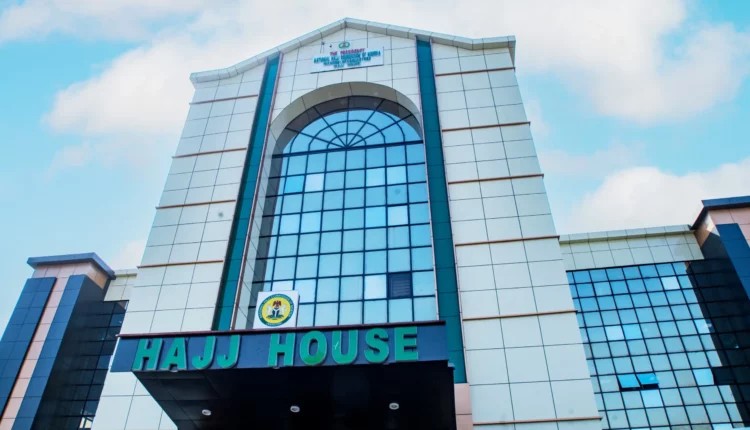

NAHCON Clarifies Nigeria’s Hajj Quota Cut by Saudi Authorities.
By Bala Salihu Dawakin Kudu, Democracy Newsline – February 24, 2026.
The Chairman of the National Hajj Commission of Nigeria (NAHCON), Amb. Ismail Yusuf, has clarified that the reduction in Nigeria’s 2026 Hajj quota by Saudi authorities is part of a broader global adjustment and not a measure specifically targeted at Nigeria.
Yusuf made the clarification on Monday during a strategic stakeholders’ meeting held in Abuja, where commissioners, board members, chairmen of State Pilgrims Welfare Boards, executive secretaries, medical mission officials and senior management staff converged to fine-tune preparations for the 2026 pilgrimage.
- Advertisement -

According to a statement issued by the Commission’s Information Officer, Abdulbasit Abba, the NAHCON chairman explained that the quota adjustment was influenced by logistical capacity considerations and evolving regulatory frameworks introduced by Saudi authorities to enhance crowd management, safety and service efficiency during Hajj operations.
Yusuf stressed that the reduction should not be misconstrued as a diplomatic or administrative sanction against Nigeria. He urged state officials to correct public narratives suggesting that Nigeria was singled out.
“This is a global review affecting several countries,” Yusuf stated. “It is driven by capacity realities in Makkah and Madinah, accommodation constraints, transportation logistics, and new compliance benchmarks introduced by Saudi authorities.”
Nigeria’s allocation for the 2026 Hajj stands at 40,250 pilgrims, excluding private tour operators. However, the chairman revealed that data uploaded by some states reportedly exceeded the approved figure, prompting the need for urgent reconciliation.
He directed State Pilgrims Welfare Boards to immediately audit their submissions and withdraw excess entries to prevent administrative bottlenecks that could jeopardize visa processing.
Yusuf disclosed that Saudi authorities have fixed 1st Shawwal as a firm deadline for visa processing, with no indication of extension. He warned that failure to meet documentation and upload timelines could result in automatic disqualification of affected pilgrims.
“To beat the deadline, states must conclude medical screening, documentation and data uploads within the operational window to ensure timely visa issuance,” he said.
He also cautioned against last-minute substitutions on flight manifests, noting that airline booking systems are now digitally integrated with accommodation and visa platforms. Any discrepancy, he warned, could trigger automatic rejection.
Board member representing the Federal Ministry of Health, Dr. Said Dumbulwa, briefed stakeholders on newly strengthened health certification requirements.
He explained that screening must be conducted strictly at recognised public hospitals, with mandatory inclusion of Medical and Dental Council registration numbers of attending physicians. Certificates must be digitally uploaded for verification, and strict adherence to disqualifying medical conditions will be enforced.
“Private hospitals are not permitted to conduct Hajj certification,” Dumbulwa emphasized.
He further announced plans for a national coordination platform that will harmonize medical screening processes, improve transparency, and eliminate fraudulent certifications.
The enhanced medical measures align with Saudi Arabia’s broader public health strategy aimed at safeguarding millions of pilgrims who converge annually in the holy cities.
Relief on Yellow Card Fee
In a move that brought relief to intending pilgrims, Yusuf announced a reduction in the Yellow Card vaccination fee from ₦5,000 to ₦2,000 for the 2026 Hajj exercise.
He disclosed that Port Health Services will directly supervise vaccination certification due to stricter Saudi verification procedures, including biometric validation and cross-checking of immunization records.
The fee reduction, stakeholders noted, reflects NAHCON’s effort to ease the financial burden on pilgrims amid prevailing economic pressures.
NAHCON also signaled a new era of performance-based evaluation for airlines participating in the Hajj airlift.
Yusuf warned that underperforming carriers risk losing future allocations to better-performing operators, stressing that punctuality, safety compliance and passenger welfare would serve as key assessment benchmarks.
In addition, the Commission plans to deploy independent monitoring teams to Saudi Arabia to evaluate feeding arrangements, accommodation standards, sanitation, transportation logistics and overall service delivery.
“Best-performing states may receive national recognition, while non-compliance will attract sanctions,” Yusuf stated.
Reaffirming institutional roles, the chairman stressed that State Pilgrims Welfare Boards remain the primary custodians of intending pilgrims, responsible for their welfare and documentation. NAHCON, he said, serves strictly as a regulatory and supervisory authority to ensure compliance with international standards and bilateral agreements.
States were also advised to promptly refund intending pilgrims who may not travel due to quota limitations, to prevent disputes and maintain public confidence in the Hajj administration process.
Throughout the meeting, Yusuf reiterated NAHCON’s commitment to transparency, professionalism and strict regulatory oversight as preparations intensify.
He called for unity and collective responsibility among all stakeholders, emphasizing that the success of Nigeria’s 2026 Hajj operation depends on discipline, coordination and adherence to timelines.
“Our focus is to ensure a timely, orderly and spiritually fulfilling Hajj for Nigerian pilgrims,” he said. “With cooperation and compliance, we will meet global standards and protect the integrity of our Hajj operations.”
As preparations continue, NAHCON’s message remains clear: the quota adjustment is a global operational decision, and Nigeria is poised to comply fully while safeguarding the welfare and expectations of its pilgrims.
(DEMOCRACY NEWSLINE NEWSPAPER, FEBRUARY 24TH 2026)