


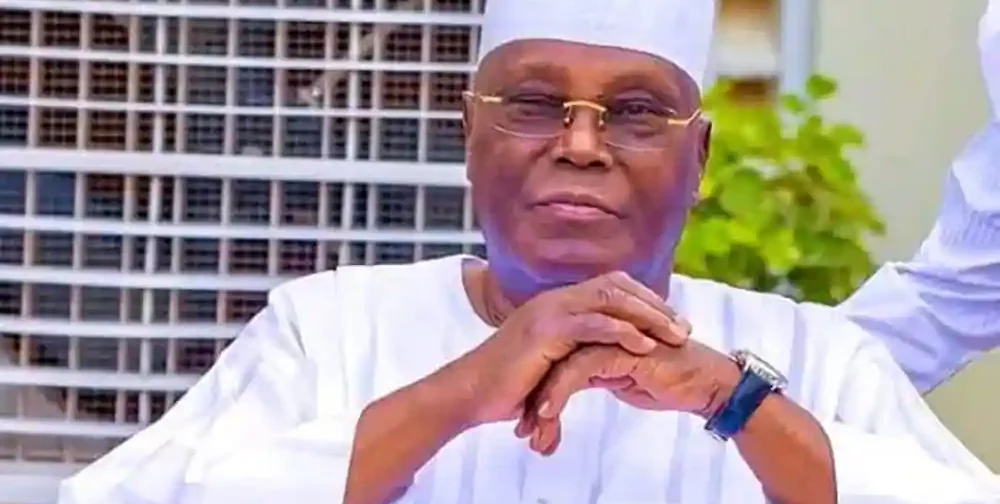

The Man of the Moment, Again: Atiku Abubakar keeps resurfacing because Nigeria keeps asking the same hard questions about economy, age, and power.
In Nigerian politics, there is a rhythm you can set your watch to. As soon as INEC’s calendar starts moving, as soon as coalitions begin to form in hotel lobbies and WhatsApp groups, one name resurfaces with the force of habit: Atiku Abubakar.
He is not the viral candidate. He is not the one dominating street slang or dance challenges. But he is, again and again, “the man of the moment” — because in a country that argues constantly about direction, he forces the argument to happen.
1. The Timeliness: Why Now Feels Like His Conversation
Nigeria in 2026 is not a new country. It is a country stuck on repeat with new data. Inflation is squeezing households. Youth unemployment is still a crisis. Everyone is talking about restructuring, investment, and how to make government work with less waste.
- Advertisement -
Atiku’s political identity was built on that exact terrain. As Vice President from 1999 to 2007, he was the face of economic liberalization: telecoms opened up, debt was renegotiated, and the case for a smaller, more business-oriented federal government was made loudly from Aso Villa.
Today, his talking points haven’t changed much: privatize to raise efficiency, deregulate to attract capital, create jobs by getting government out of the way. Whether you agree with the prescription or not, it is the same prescription the national mood keeps demanding.
That is why he feels timely. Not because he invented the moment, but because the moment keeps returning to him.
2. The Visibility: He Is Unavoidable
You cannot map Nigeria’s opposition terrain without Atiku showing up on the map.
First, the ballot history. PDP. ACN. Back to PDP. Six presidential attempts across four decades. In any democracy, that kind of persistence is either stubbornness or strategy. In Nigeria, it is brand equity. Every election cycle, the press, the parties, and the public have to account for him.
Second, the coalition factor. Nigerian politics is not run by manifestos alone. It is run by alignments. When parties merge, when blocs are negotiating, Atiku’s camp is usually one of the tables where deals are tested. He is a political gravitational pull. Other aspirants measure themselves against him.
Third, the reach. Yola is home, but his network runs to Abuja boardrooms, Lagos business circles, and PDP structures across the North, South-South, and Middle Belt. Add his business background — logistics, education, hospitality — and you have a profile that speaks to both political elites and traders who care about the economy first.
Visibility is not the same as popularity. But in politics, visibility sets the agenda. Even his opponents end up debating on his terms.
3. The Mirror: What He Reveals About Nigeria
The “man of the moment” is never just a person. He is a mirror. Atiku reflects three unresolved tensions in the country:
Economy vs. Ideology: Nigeria has never fully decided if it wants a developmental state, a welfare state, or a market state. Atiku keeps forcing the market argument: less government, more private sector, more FDI. That keeps the ideological fight alive. You cannot be neutral when he’s on the ballot.
Experience vs. Youth: The median Nigerian is under 20. The median candidate is not. Atiku’s repeated runs make that gap impossible to ignore. His campaigns ask: _Is experience the antidote to trial-and-error governance?_ His critics ask: _Is it time to pass the baton?_ That clash is now central to how young people engage with politics.
Stability vs. Change: His career is a case study in how Nigerian democracy works in real time: defections, primaries, legal battles, last-minute coalitions. He shows that power here is not won in a single speech. It is negotiated, contested, and tested over years. For better or worse, that is the system.
4. The Temporariness: Moments Do Not Last
Here is the truth about “the man of the moment”: the moment always ends.
A new economic shock can make his message feeling outdated overnight. A new security crisis can shift voter priorities. A new generation of organizers can decide they are done waiting.
Atiku’s relevance is tied to how long Nigeria stays in this particular chapter — the chapter about economic reform, party realignment, and the trade-off between experience and renewal. When the chapter changes, the cast changes too.
Final Take: The Man, The Moment, The Country
To be the man of the moment in Nigeria is to stand under a national microscope. Two hundred million people will tell you what you mean, whether you like it or not.
Atiku’s moment is not really about Atiku. It is about us. It is about a country that is still arguing with itself over the economy, over generational power, and over what kind of leadership can hold a fractious federation together.
Moments pass. Candidates rise and fall. But each “man of the moment” leaves a record: the debates he forced, the alliances he built, and the version of Nigeria he asked us to imagine.
The question for 2026 and beyond is simple: Is Nigeria still asking the questions Atiku is answering? The moment will tell us.
Written by:
Hassan Mustapha Oluwatoyin
+2347038010300
moh4664@gmail.com
(DEMOCRACY NEWSLINE NEWSPAPER, JUNE 29TH 2026)