

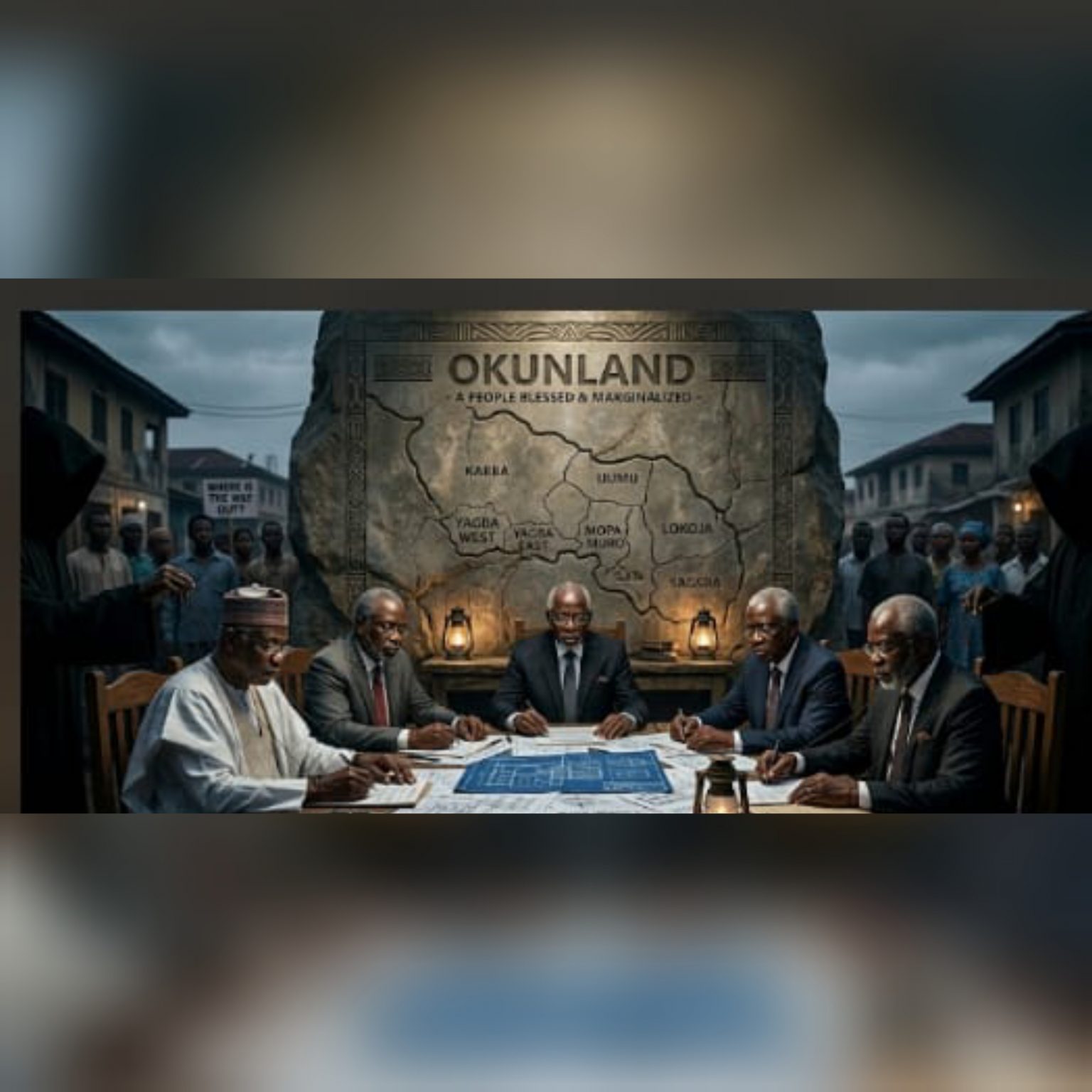

The Paradox of the Intellectual: How Ambition and Division Turned Okunland into a Political Testing Ground
Okunland, a region historically revered as the intellectual powerhouse of Kogi State, is facing a severe existential crisis. Renowned for its dense concentration of professors, seasoned administrators, and formidable political pioneers, the region’s vast intellectual capital is being systematically neutralized.
A growing chorus of community leaders, youth groups, and political analysts is sounding the alarm over what is being described as the rise of a “Legion of Brilliant Political Morons”—a highly educated political elite whose unbridled ambition, greed, and self-centeredness have blinded them to the collective future of their people.
For decades, Okun land boasted leaders who stood as towering figures in Nigeria’s administrative and political landscapes. They were formidable negotiators who commanded respect and ensured the region’s interests were protected.
- Advertisement -
Today, that legacy is under siege. Contemporary Okun political actors have traded their rich heritage for the crumbs of political patronage. Observers note a disheartening trend: highly sophisticated intellectuals transforming into “happy servants,” willingly executing agendas that directly undermine their home constituency.
“It is a tragic paradox,” says an Abuja-based political analyst from the region, who spoke on the condition of anonymity. “We have the brains to lead, but our politicians possess a zombie-like obedience to external directives. Even when an instruction is clearly detrimental to the Okun people, they comply without question, driven by the desperate hope of securing personal political favors.”
This strategic compliance has turned Okunland into a vulnerable political laboratory. Increasingly, outsiders view the region as a friction-free test station where risky or divisive political experiments can be conducted with zero resistance from the local leadership.
The mechanism of control is ancient but effective: divide and conquer. External political forces routinely sow seeds of discord among Okun leaders, ensuring they remain too fragmented to mount a unified front.
By exploiting personal rivalries and dangling short-term appointments, external actors have successfully kept Okunland politically neutralized, leading to what locals describe as “insane marginalization” despite their immense human resource capacity.
As frustration reaches a boiling point among the populace, community stakeholders are beginning to outline a path toward political emancipation. The consensus is clear: Okunland cannot forge its way out of marginalization without a radical shift in political culture.
The emerging strategy focuses on three critical pillars:
Enforcing Collective Accountability: The Okun diaspora and local civic groups must establish a strict mechanism to socially and politically isolate leaders who betray community interests for personal gain.
Forging a Non-Partisan Agenda: Establishing a unified, non-negotiable “Okun Charter” that cuts across party lines. Any politician seeking local support must pledge allegiance to this collective blueprint first, before any external political loyalty.
Empowering a New Vanguard: Deliberately shifting support away from the compromised political class toward untainted, community-minded youths and professionals who value structural development over tokenistic appointments.
The tragedy of Okunland is not a lack of capacity, but a lack of collective character among its political representatives. Until the region’s elite realize that a servant’s loyalty rarely earns a master’s respect, Okunland will remain a blessed but marginalized spectator in the theater of power. The power to break the spell lies not with the “brilliant morons,” but with the people they have left behind.
Ponle Adeniyi
ponleadeniyi457@gmail.com
(DEMOCRACY NEWSLINE NEWSPAPER, MAY 19TH 2026)