





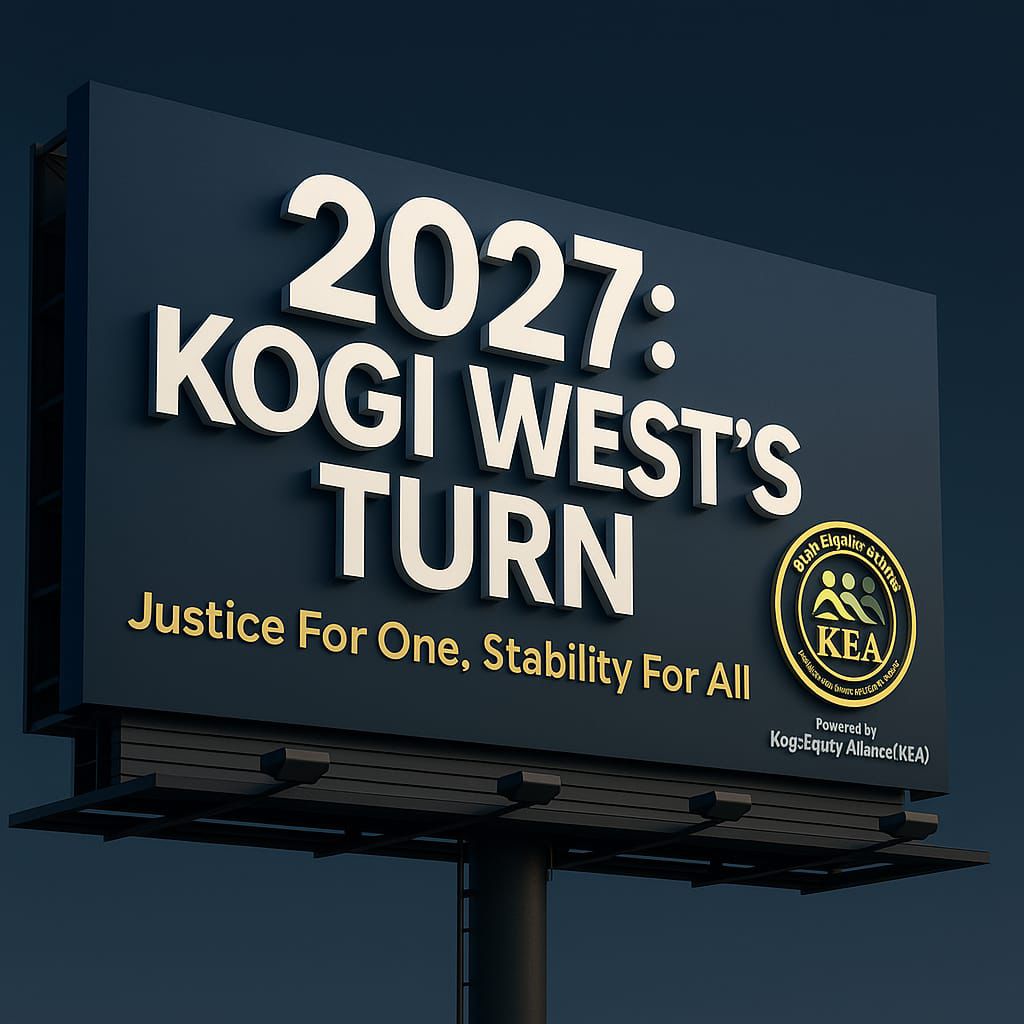

Why Kogi’s Injustice Survived for 30 Years—and Why It’s Failing Now
— Kogi Equity Alliance
For three decades, Kogi State lived with an injustice so familiar it stopped attracting attention. It did not survive because it was just, efficient, or even widely loved. It survived because it was never directly confronted. What endures in Nigerian politics is not always what is right, but what is repeated long enough to be mistaken for normal.
Since its creation in 1991, Kogi West has never produced an elected governor. This fact is not controversial. What is remarkable is how little it mattered for so long.
- Advertisement -

The survival of this imbalance was not accidental. It was sustained by a combination of silence, fragmentation, and political convenience. Kogi West was expected to protest, not organize; to complain, not coordinate. And in a political system that rewards numbers over narratives, protest without alignment was easily ignored.
Power, meanwhile, circulated between Kogi East and Kogi Central, gradually acquiring the aura of inevitability. Over time, dominance was rebranded as “electability,” monopoly disguised as “political structure,” and exclusion reframed as coincidence. The language of politics did the work that law and morality could not.
Another factor was oil-era governance. For decades, the Nigerian state was funded largely by rents rather than taxes. Governments did not depend on broad consent; they relied on institutional control. Citizens, insulated from the fiscal consequences of governance, had limited leverage to demand fairness. In such an environment, exclusion could persist without provoking sustained resistance.
But structures that rely on silence eventually confront memory.
What has changed is not merely politics, but perception. Younger Nigerians are less willing to inherit old silences. They count. They compare. They ask why patterns repeat and who benefits from repetition. When arithmetic enters political conversation, excuses weaken.
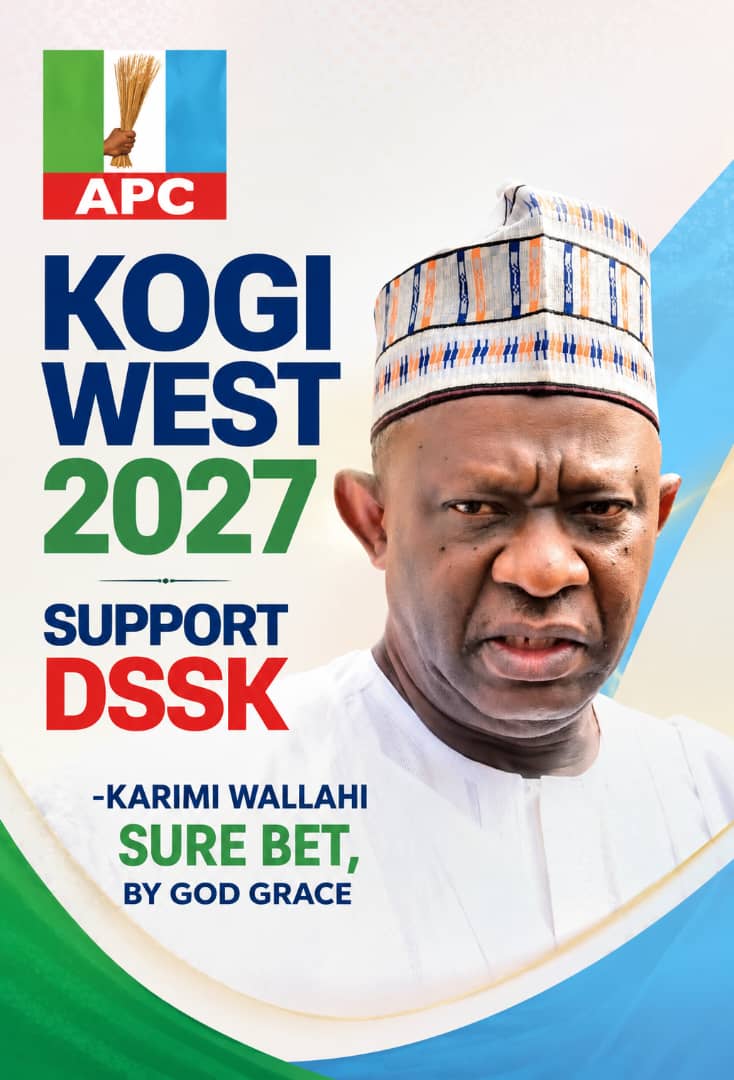
The intervention by Senator Sunday Steve Karimi on Kabba Cultural Day captured this shift. He did not invent a grievance; he named a pattern. By calmly stating that Kogi West has never produced a governor and by signalling coordination with Kogi East ahead of 2027, he transformed a private complaint into a public question.
That question is destabilizing because it reframes the debate. It moves the issue from emotion to structure, from grievance to logic. It asks not who should rule, but why one region has been permanently excluded from even trying.
Equally important is the emergence of cross-regional alignment. Injustice survives best when its victims are isolated. It weakens when coordination replaces complaint. The developing Kogi East–Kogi West understanding is not rebellion; it is democratic arithmetic asserting itself.
There is also a broader national context. Nigeria’s economic crisis has made governance more intimate. As citizens pay more and endure more, they are less tolerant of arrangements that appear closed or unfair. Accountability grows when sacrifice is widely felt. Political exclusion becomes harder to defend when legitimacy itself is under strain.
This is why Kogi’s long-standing imbalance is failing now—not because of anger, but because of clarity; not because of noise, but because of counting; not because power has collapsed, but because silence no longer protects it.
The state now faces a choice familiar to many federations at moments of reckoning: correct the imbalance deliberately, or defend it until it collapses under its own weight. History offers no neutral ground between the two.
History suggests that when exclusion is finally confronted, the outcome is rarely negotiated at the convenience of those who benefited from it. States either correct imbalances early, on their own terms, or are forced to confront them later under far less forgiving conditions. Kogi is now at that fork in the road.
What is unfolding in Kogi is not chaos. It is an overdue conversation. And conversations that begin with facts, sustained by coordination, rarely end the way entrenched power expects.
In politics, injustice often survives longer than it deserves. But it rarely survives the moment when people stop whispering it and start explaining it to one another—clearly, calmly, and with numbers.
(Democracy Newsline Newspaper, December 13th 2025)