
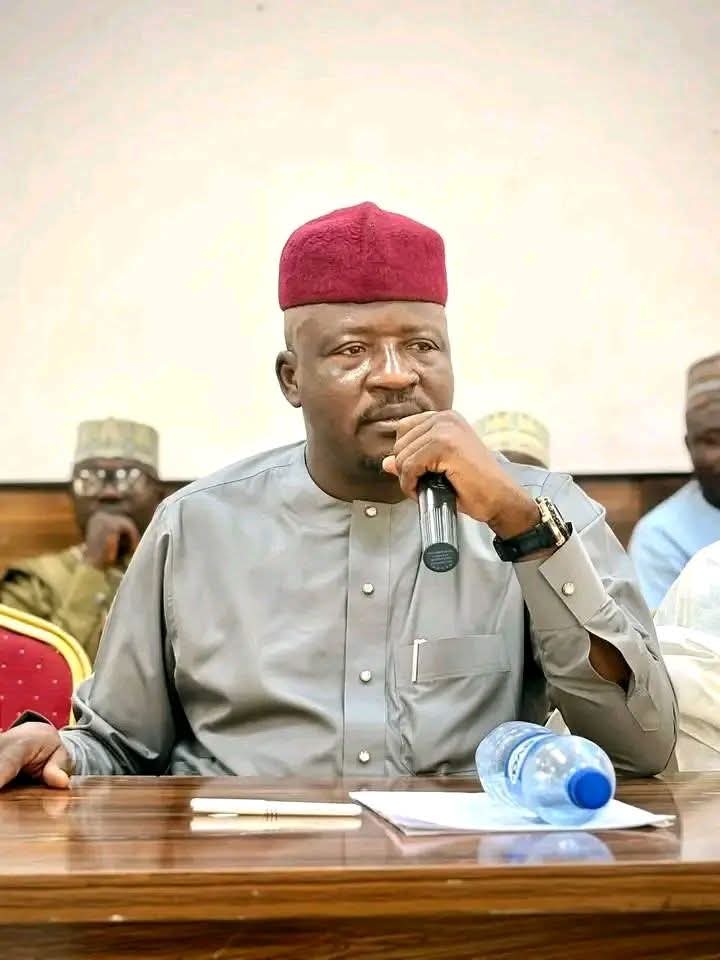

Grassroots Leadership in Action: How Senator Kawu Sumaila is Redefining Development in Gaya.
By Bala Salihu Dawakin Kudu Democracy Newsline Northern Bureau Chief
April 18, 2026
In an era where citizens increasingly demand tangible results from elected officials, the story emerging from Gaya Local Government Area stands out as a compelling example of people-oriented governance.
At the center of this transformation is Senator Sulaiman Abdulrahman Kawu Sumaila, the distinguished lawmaker representing Kano South Senatorial District, whose growing portfolio of developmental projects continues to impact lives at the grassroots.
- Advertisement -

Across Gaya, development is no longer confined to campaign rhetoric—it is visible, measurable, and increasingly felt by ordinary citizens. From improved school facilities to access to clean water and economic empowerment programs, the senator’s interventions reflect a deliberate strategy anchored on inclusiveness and sustainability.
One of the defining features of Senator Kawu Sumaila’s leadership is his strong emphasis on education. Recognizing it as the bedrock of societal progress, he has invested in both formal and informal learning systems. The renovation of Islamiyya schools in communities such as Yan Audu and the construction of new ones in Yan Kau demonstrate a commitment to preserving religious education while enhancing learning environments.. These projects are particularly significant in rural areas where infrastructure deficits have historically hindered access to quality education.
Complementing these efforts are substantial investments in educational support and infrastructure. Students from Gaya studying at Kano University of Science and Technology and Al-Istiqama University have benefited from scholarships and financial assistance, easing the burden on families and encouraging higher enrollment. At the secondary level, Gaya Government Girls Secondary School has received classroom furniture, teaching aids, and office equipment—an intervention aimed at improving both teaching conditions and student outcomes.
Healthcare development has also received strategic attention. Through scholarship programs targeting health-related courses, the senator is investing in the future of medical services in the region. Beneficiaries trained in health institutions are expected to fill critical gaps in local healthcare delivery, creating a sustainable cycle of community-based service.
Beyond social services, Senator Kawu Sumaila’s initiatives in economic empowerment have had far-reaching implications. By distributing sewing machines, grinding machines, irrigation pumps, and providing direct financial assistance—particularly to women—he has enabled many households to build small businesses and achieve financial independence. These interventions are crucial in a region where informal enterprise plays a central role in economic survival.
Employment generation remains another key highlight. Through facilitation and advocacy, qualified individuals from Gaya have secured permanent and pensionable employment opportunities at institutions such as the Federal Medical Centre in Birnin Kudu. This not only addresses unemployment but also strengthens institutional capacity within the healthcare sector.
Infrastructure development, often a critical indicator of governance performance, has not been left behind. The installation of solar-powered streetlights has enhanced security and extended productive hours in several communities. Water scarcity, a persistent challenge in many parts of northern Nigeria, is being addressed through the construction of boreholes for both drinking and irrigation purposes. Farmers, in particular, stand to benefit from over 300 irrigation facilities, which promise to boost dry-season farming and local food production.
In addition, the ongoing renovation and expansion project at Maitama Sule Science College—valued at approximately ₦1.5 billion—signals a forward-looking vision for science and technical education. When completed, the institution is expected to serve as a hub for academic excellence in the region.
The senator’s approach also recognizes the importance of youth engagement beyond academics. The revival of a previously abandoned stadium project in Gaya offers young people a platform for sports development, recreation, and social cohesion—factors increasingly linked to community stability and youth empowerment.
Seasonal interventions further highlight his responsiveness to immediate community needs. During Ramadan, the distribution of food items, including hundreds of bags of rice, provides critical support to vulnerable families, reinforcing a sense of solidarity and shared responsibility.
Equally noteworthy is Senator Kawu Sumaila’s contribution to strengthening political inclusion. By facilitating federal-level opportunities for indigenes of Gaya, he has helped amplify the region’s representation within national institutions—ensuring that local voices are not excluded from broader governance conversations.
While no development effort is without its challenges, the case of Gaya illustrates what can be achieved through consistent, targeted, and people-centered leadership. Senator Kawu Sumaila’s interventions cut across multiple sectors—education, healthcare, infrastructure, and economic empowerment—forming a holistic model of development that addresses both immediate needs and long-term aspirations.
As Nigeria continues to grapple with the demands of equitable development, the evolving story of Gaya offers valuable lessons. It underscores the impact of leadership that listens, plans, and delivers—transforming governance from distant policy into lived reality.
For many residents, the changes are already evident. And as these efforts continue to unfold, Gaya stands as a growing testament to the power of purposeful representation in shaping a better future.
(DEMOCRACY NEWSLINE NEWSPAPER, APRIL 18TH 2026)