





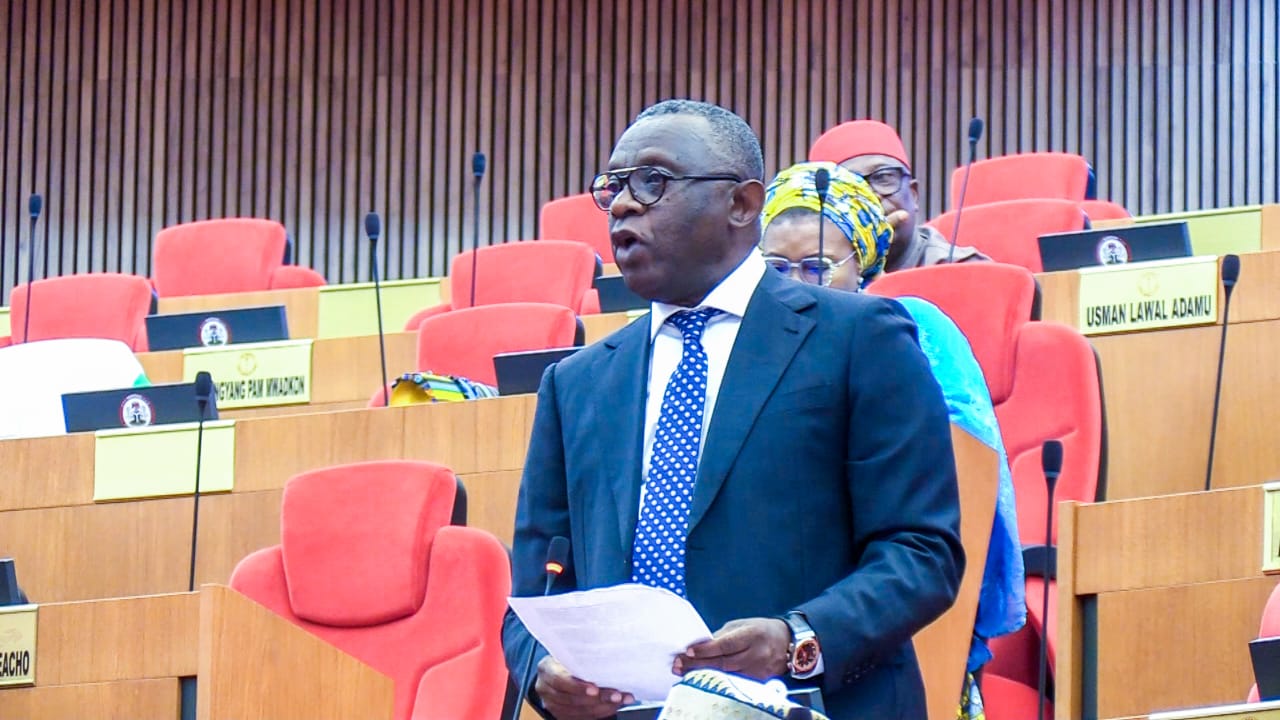

Senator Sunday Karimi: Okunland’s Voice in the Quest for Rotational Justice
Senator Sunday Karimi’s declaration for a power shift to Kogi West is a direct challenge to the 34-year history of exclusion in Kogi State politics. His position as the “Voice of Conscience” re-ignited the quest for equity among the Okun people.
Since its creation in 1991, the governorship has systematically bypassed the Okun (Kogi West) people.
The critical issue is that if the incumbent, Alhaji Ahmed Usman Ododo, secures a second term, the Central district will match the East’s 16-year cycle, locking out Kogi West for a continuous 32-year cycle. Karimi frames the power shift as a demand for corrective justice, not privilege.
- Advertisement -
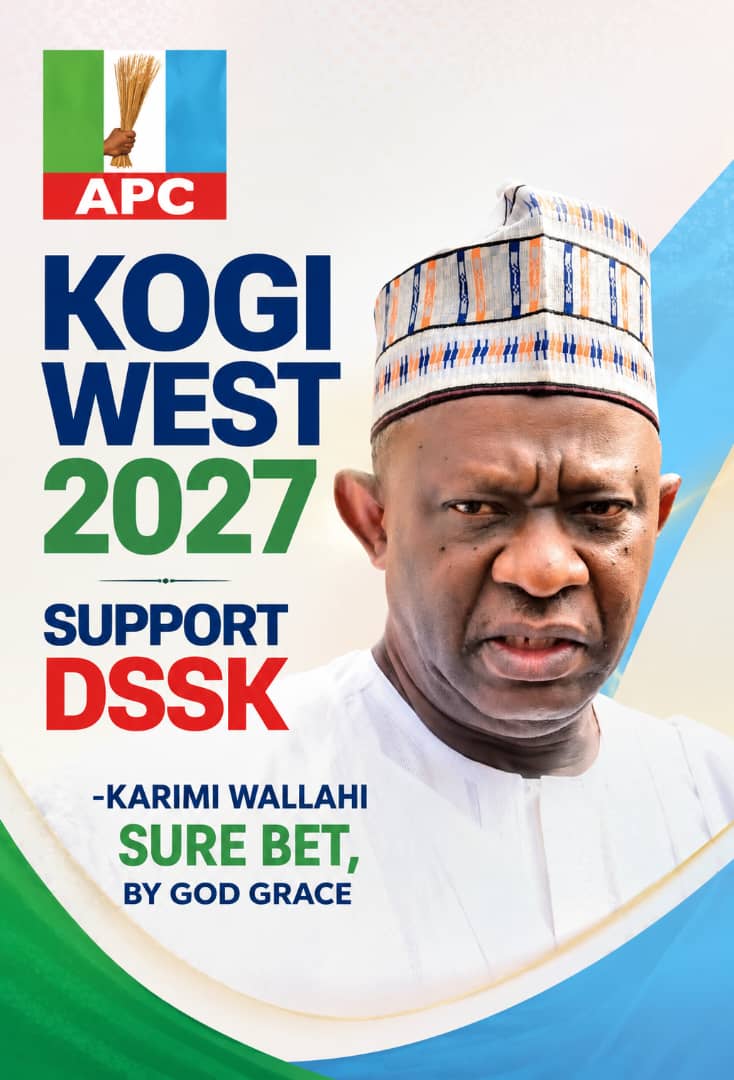
Karimi’s proclamation (“the time for power to shift to the Kogi West is overdue”) was met with a fierce backlash from government appointees and stakeholders. Their arguments, which prioritize the incumbent’s ambition over regional fairness, rest on two contentious pillars:
“Sacrosanct Mandate”: Claiming the incumbent must complete a second term. This elevates the personal political right to seek re-election above the principle of rotational justice, which is required for multi-ethnic stability.
“Wait Till 2031”: Demanding Okun agitation be postponed. This deadline institutionalizes the marginalization, forcing the Okun to wait until the two other districts have ruled for a cumulative 32 years before they can legitimately claim a turn.
Karimi’s intervention has had a dual, polarizing effect on Kogi West:
Unifying the Populace: His bold stance has served as a Political Barometer and Emboldening Force, unifying the broader Okun masses around a common, urgent goal. He has provided a single focal point, helping to overcome the historical hurdle of fragmented leadership.
Dividing the Elite: The intervention created a sharp Loyalty Schism among Okun politicians. The Pro-Karimi Faction prioritizes ethnic destiny, while the Pro-Incumbent Faction (appointees and beneficiaries) prioritizes political loyalty and self-preservation. This split risks internal sabotage, as the opposing elite work to discredit the power shift and distract from the central message of marginalization.
Karimi’s strength lies in his message resonating deeply with the collective sense of exclusion, prompting a critical debate on geopolitical fairness within the state.
The faction, spearheaded by Senator Karimi and advocacy groups like the Kogi Equity Alliance (KEA), must move from rhetoric to a structured political campaign focused on the 2027 election cycle.
To consolidate and Unify Kogi West, the immediate and most critical step is to close the internal political schism that has historically sabotaged Okun candidates.
Those who share Senator Sunday Karimi’s vision must maintain the grassroots movement generated by his declaration. This involves continuous grassroots campaigns to educate the populace on the “32-year exclusion formula” of the opponents (16 years East + 16 years Central) and to reinforce the justice argument
They must actively campaign against the Okun appointees and politicians who are vocal critics. This can be done by:
Framing their loyalty as a betrayal of the Okun collective destiny
Using community structures tactics to isolate the critics politically, thereby reducing their influence and ability to secure resources for the opposition.
They must work to ensure that all credible governorship aspirants from Okunland ultimately coalesce around a single, consensus candidate to avoid the internal vote-splitting that plagued past attempts.
Since Okunland cannot win the governorship on its vote alone, the strategy must pivot to building a cross-ethnic alliance, framed around the principle of Rotational Justice.
This is paramount. The clamour must convince the Igala political elite that their long-term interest lies in supporting the Okun rotational demand, thereby preventing the Central district from consolidating power for a full 16-year term and potentially sidelining both East and West in the future. The message is: “Support us now, and rotational justice is preserved for all.”
While the hardliners are fixed on the “2031” timeline, the pro-Okun agitators must identify and court moderate politicians and youth leaders in the Central district who are sympathetic to the need for equity and stability.
Formal and advocacy channels must be deployed to legitimize its demand and increase pressure on the political system.
They must continue to issue powerful, well-researched statements and petitions to national political party leaders, the Presidency, and civil society organizations, arguing that a refusal to shift power to Kogi West undermines the democratic stability of the state.
They must proactively manage the narrative, constantly framing their cause as a fight for “Democratic Right” and “Stability,” counteracting the opponents’ framing of Karimi as being “divisive” or “self-serving.”
Success in this quest hinges on the ability to translate the widespread “unity of purpose” into a concrete “unity of action” across the political, ethnic, and grassroots fronts.
Ponle Adeniyi
ponleadeniyi457@gmail.com