





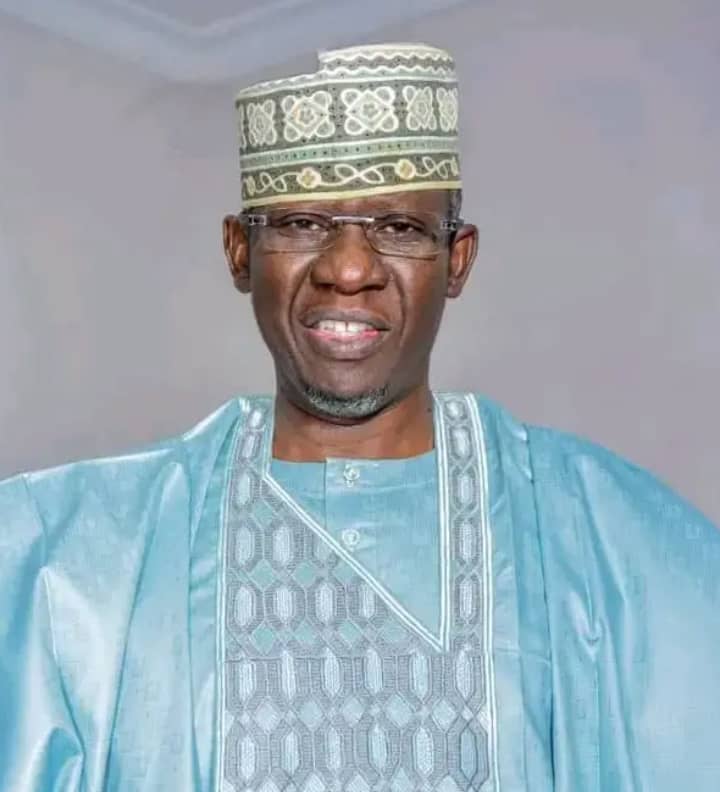

Kano ADC Chieftain Ibrahim “Little” Files Suit Against Ganduje’s Parallel Hisbah
By Bala Salihu Dawakin Kudu
December 15, 2025
A chieftain of the African Democratic Congress (ADC) in Kano State, Alhaji Ibrahim Ali Amin, popularly known as “Little,” has approached the Kano State High Court to challenge the legality and propriety of moves to establish what he described as an independent or parallel Hisbah body in the state.
The suit, filed early this week, names several prominent political and security stakeholders as respondents, including former Kano State Governor, Dr. Abdullahi Umar Ganduje; the incumbent governor, Alhaji Abba Kabir Yusuf; a key political figure, Alhaji Baffa Babba Danagundi; Dr. Haruna Ibn Sina; and the Department of State Services (DSS).
- Advertisement -
According to court filings sighted by this reporter, Little is asking the court to determine whether the establishment of a separate Hisbah structure—outside the framework recognized by existing state laws—does not amount to a violation of constitutional order and a potential threat to public peace.
Hisbah, an Islamic moral enforcement body, has operated in Kano State for years under a legal framework established by the state government. However, recent moves by certain groups to form an alternative Hisbah outfit have generated controversy, with critics warning that the existence of parallel structures could lead to confusion, rivalry, and possible breakdown of law and order.
Alhaji Ibrahim “Little,” a long-time grassroots politician and community mobilizer in Kano, had earlier raised concerns over the development. In a series of formal letters addressed to key political actors and security agencies, he appealed for restraint and dialogue.
Those letters, according to his camp, were sent to former Governor Ganduje, Governor Abba Kabir Yusuf, influential political stakeholders, and the DSS, urging them to halt the process in the interest of peace, unity, and stability in the state.
Speaking through his Executive Assistant and Media Aide, Adnan Mukhtar, Little said the decision to seek judicial intervention became inevitable after all appeals were ignored.
“Alhaji Ibrahim Ali Amin strongly believes in due process and the rule of law,” Mukhtar said. “He exhausted all peaceful and consultative channels by writing to the relevant authorities. Unfortunately, despite the sensitivity of the matter and its implications for security in Kano, there was continued insistence on going ahead with the plan.”
Mukhtar explained that the suit is not an attack on Hisbah as an institution but a challenge to what he described as an unlawful duplication of authority.
“This case is about legality, not religion,” he added. “Kano State already has a recognized Hisbah board established by law. Creating a parallel structure raises serious constitutional and security questions, and that is what the court is being asked to address.”
In the originating summons, Little reportedly warned that rival Hisbah groups could spark tension at the community level, especially if their mandates clash.
Kano, as one of the most populous states in Nigeria, has in the past experienced episodes of political and religious tension. Analysts say the emergence of multiple enforcement bodies claiming similar authority could complicate security management and strain relations between citizens and the state.
Little, who is known for his outspoken positions on governance and social justice, emphasized that his action was motivated by concern for ordinary Kano residents.
“This is about protecting the peace of Kano,” Mukhtar said on his behalf. “Any action that may divide society or create competing centers of authority must be carefully examined within the law.”
Legal observers say the Kano State High Court is expected to determine whether the establishment of an independent Hisbah body is consistent with existing state laws and the Nigerian Constitution, and whether the respondents acted within their powers.
No date has yet been fixed for the hearing of the suit, and none of the respondents had publicly reacted as of the time of filing this report.
For now, the case adds a new legal and political dimension to the ongoing debate over governance, religion, and security in Kano State—one that many residents will be watching closely as it unfolds in the courtroom.
(Democracy Newsline Newspaper, December 15th 2025)